Blog

  • How to Upgrade Your Bathroom Fixtures in a Dubai Apartment

    Upgrade Your Bathroom Fixtures in a Dubai Apartment

    Want to upgrade your bathroom fixtures in a Dubai apartment?

    If you want to upgrade your bathroom fixtures in a Dubai apartment, the fixture you pick matters less than most people think. What matters more is whether it survives the water coming out of your tap. Dubai’s water supply runs hard, the pressure in high-rise towers swings depending on your floor, and a fixture that works beautifully in a villa in Jumeirah can fail within a year in a 40th-floor unit in Downtown.

    This guide walks through what actually changes when you’re upgrading fixtures inside an apartment building rather than a standalone home, what building management will and won’t let you touch, and what the honest cost looks like once you strip away the marketing.

    Most renovation content written for the UAE market talks about bathrooms in general terms: pick a style, choose a finish, call a contractor. None of that tells you why your new mixer tap seized up after eight months, or why your building’s facilities team rejected your plumber’s access request. That’s the gap this piece fills.

    Why Apartment Bathrooms in Dubai Fail Fixtures Faster Than Villas

    Dubai’s water is hard. Calcium and magnesium levels are high enough that mineral deposits build up inside cartridges, aerators, and shower valves well before the fixture’s rated lifespan runs out. In a villa, water usually comes straight from a ground-level tank with fairly stable pressure. In an apartment tower, water travels up through a shared riser system, often boosted by a pump, and pressure at your unit depends on your floor and the building’s plumbing design.

    That difference matters for fixture selection. A basic mixer with a plastic cartridge might handle villa conditions fine. Put the same mixer on a booster pump system on the 25th floor of a Downtown tower, and the pressure spikes wear down the cartridge seats far faster. Ceramic disc cartridges hold up better here, and they’re worth the extra cost on any fixture upgrade in a high-rise unit.

    Coastal towers add a second layer. Buildings in Dubai Marina and JBR sit close enough to the sea that salt-laden air works its way into bathroom exhaust systems and window gaps. Chrome finishes with a thin plating layer pit and discolour faster in these buildings than the same fixture installed inland. If your apartment faces the water, ask for a finish rated for coastal exposure. It costs a little more upfront and saves you a replacement in two years.

    What You Can and Can’t Change Without Building Approval
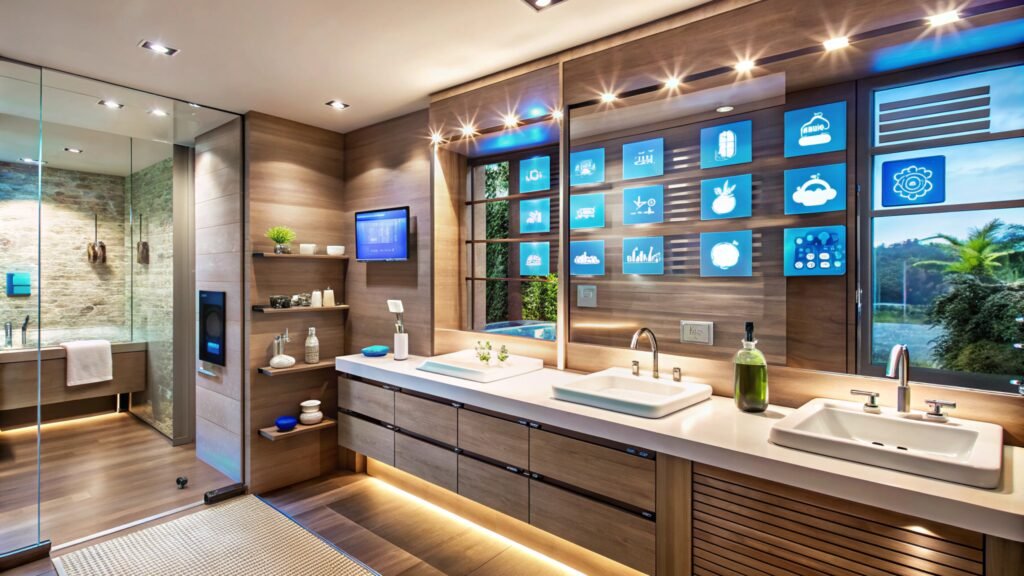
    Upgrade Your Bathroom Fixtures in a Dubai Apartment

    This is where apartment upgrades diverge sharply from villa renovations, and it’s the part most guides skip entirely.

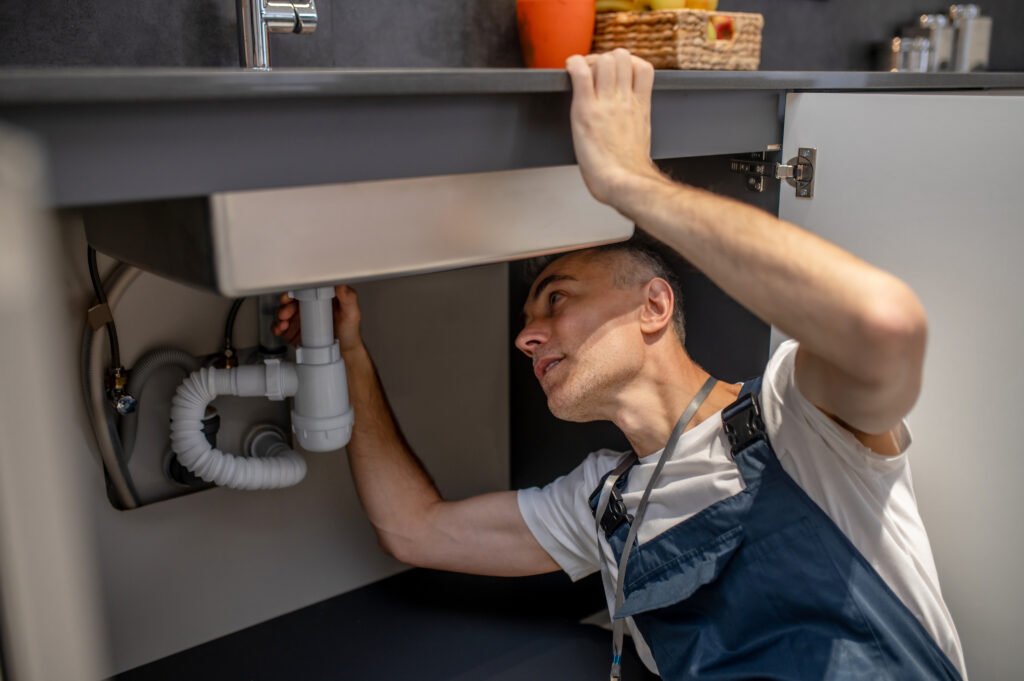
    Swapping a showerhead, replacing a mixer tap, or fitting a new shattaf generally doesn’t touch shared infrastructure, so most Dubai buildings won’t ask for paperwork. But the moment work involves moving a drain line, altering a riser connection, or drilling into a structural wall, you’re in different territory. Many towers in Downtown, Business Bay, and the Marina use post-tension concrete slabs, where steel cables run through the floor under tension. Drilling into the wrong spot doesn’t just crack tile; it can compromise the slab. A licensed technician checks for post-tension cable zones before drilling anything beyond a standard fixture bracket.

    Buildings managed under Emaar, Nakheel, or Trakhees typically require a No Objection Certificate for any plumbing work that touches shared risers or waste stacks, even inside your own unit. Skipping this step doesn’t just risk a fine. It can leave you liable if a downstairs unit floods because a connection wasn’t sealed to code. Before you upgrade fixtures that go beyond a straight swap, check with your building’s facilities office and confirm whether an NOC applies to your specific job.

    Freight elevator booking is the other practical snag. Most towers restrict fixture deliveries and waste removal to service elevators during set hours, and some require advance booking through building management. A plumber can turn up on time and still lose half a day waiting on lift access if this isn’t arranged beforehand.

    Upgrade Your Bathroom Fixtures in a Dubai Apartment

    Fixtures Worth Upgrading First

    Not every fixture needs replacing at once. Based on what actually fails first in Dubai apartments, prioritise in this order.

    Mixer taps and shower valves. These take the most direct hit from mineral buildup and pressure variation. A seized cartridge or a mixer that only delivers scalding or freezing water, with nothing in between, is one of the most common service calls in apartment buildings across the city.

    Shattaf units. Hand-held bidet sprayers see constant daily use, and the hose and trigger mechanism wear out well before the rest of the bathroom shows its age. This is a low-cost, high-frequency upgrade.

    Showerheads and aerators. Mineral scale clogs the small nozzles in showerheads and tap aerators within a year or two with hard water. A flow restriction that feels like a plumbing problem is often just scale buildup in a fixture that needs replacing rather than repairing.

    Drain fittings and traps. Slow drains in apartment bathrooms are frequently a fitting problem, not a blockage. Corroded or poorly sealed fittings let debris collect faster than they should.

    Toilet flush mechanisms. Older flush valves waste water and often start running continuously as seals degrade. Dual-flush replacements pay for themselves in utility savings within a couple of years, particularly under DEWA’s tiered water pricing.

    Choosing Finishes and Materials That Actually Hold Up

    Fixture shopping to upgrade your bathroom fixtures in a Dubai apartment tends to focus on style first and material second. Flip that order, and your upgrade lasts longer.

    Chrome is the default finish on most fixtures sold locally, and cheap chrome is thin electroplating over a plastic or zinc alloy base. It looks fine in the showroom and starts flaking within a year under hard water and, in coastal buildings, salt air. Thicker chrome plating over brass costs more but resists pitting far longer. If a fixture feels unusually light for its size, that’s often a sign of a thin plating job over a lower-grade base metal.

    Matte black and brushed nickel finishes have become popular in newer Dubai apartment renovations, and they hide water spotting better than polished chrome between cleanings. That’s a genuine practical advantage in hard water conditions, not just an aesthetic trend. The tradeoff is that lower-quality matte finishes can wear unevenly at contact points, like the lever of a mixer tap, showing brighter patches where fingers grip it daily.

    Brass fixtures with a solid body, rather than a brass-plated base, cost more upfront but resist both mineral scale and corrosion the longest. For a coastal tower in Dubai Marina or JBR, or for any fixture that sees heavy daily use like a kitchen mixer or shower valve, solid brass is worth the premium.

    Ceramic disc cartridges deserve a separate mention because they solve a problem specific to apartment plumbing. Standard rubber-washer taps degrade under the pressure spikes that come from booster-pump riser systems. Ceramic disc mechanisms handle those spikes without the drip and stiffness that rubber-washer taps develop within a year or two on the same system.

    Villa Fixtures vs. Apartment Fixtures: Why the Same Product Behaves Differently

    Buy the identical mixer tap for a villa in Arabian Ranches and an apartment in Business Bay, and you’ll likely see different failure timelines within eighteen months. The fixture isn’t the variable. The plumbing system feeding it is.

    Villas typically draw from a private tank at or near ground level, so pressure stays fairly constant and predictable. Apartment towers push water up through shared risers using booster pumps, and pressure fluctuates by floor, by time of day, and by how many units are drawing water at once. A fixture rated for standard residential pressure can sit right at the edge of its tolerance on a high floor during peak morning hours, when everyone in the building is showering at once.

    This is also why the same repair call in a villa and an apartment can carry very different price tags. A villa leak is usually isolated to that property. An apartment leak, especially anything touching a shared riser or waste stack, can involve building management, insurance for the unit below, and sometimes strata approval before work even starts. Factor that distinction into your budget and your timeline, not just your fixture choice.

    DIY vs. Calling a Professional

    Some of this you can do yourself. Replacing a showerhead or swapping an aerator takes a wrench and ten minutes. Anything involving the water supply line, drain connections, or fixture mounting into tiled walls is a different matter.

    Dubai apartments use a mix of copper and PEX piping depending on the building’s age, and connecting the wrong fitting type to existing pipework causes leaks that don’t show up immediately; they show up as water damage in the ceiling of the unit below. Given how NOC and liability rules work in shared buildings, a leak traced back to unlicensed DIY plumbing work becomes a dispute with your building management, not just a repair job.

    For mixer installation, shattaf replacement, and anything touching a drain line, book a licensed plumber. It costs more than doing it yourself over a weekend, but it protects you from the liability that comes with shared-building plumbing.

    What Fixture Upgrades Actually Cost in Dubai

    Pricing varies by scope, but here’s what a straightforward apartment fixture upgrade runs through quickresponse, based on our current rate card.

    ServicePrice (AED)
    Hourly plumber99
    Bathroom fixture install/repair119
    Shattaf replacement (up to 2)49
    Drain-related services109
    Leakage repair119
    Plumber, 4-hour call-out349
    Plumber, 8-hour call-out639

    These figures cover labour for standard fixture work. If your building requires an NOC, add the time your facilities office needs to process it, usually a few working days, into your project timeline before booking a technician.

    For a full bathroom refit involving new tiling, waterproofing, or structural changes, pricing depends on the scope of the job and needs a site visit for an accurate quote.

    A Realistic Upgrade Sequence for Apartment Owners

    Start with a walkthrough. Check every tap, the shower valve, the shattaf, and the toilet flush for the specific failure signs above. Slow flow, temperature swings, running water, or visible scale. That tells you which fixtures need replacing now and which can wait.

    Next, confirm what your building requires. A quick call to facilities settles whether your planned work needs an NOC or just a delivery booking through the service elevator. Skipping this step is the single most common reason apartment fixture upgrades in Dubai run over schedule.

    Then book the work in order of urgency: anything actively leaking first, followed by fixtures showing scale or pressure problems, then cosmetic swaps. Bundling multiple small jobs into one visit, a mixer tap plus a shattaf plus an aerator, for example, is usually cheaper than booking separate call-outs.

    Finally, ask your technician about the water hardness at your specific address. Some buildings run in-line filtration at the riser level; others don’t. That single fact changes how often your new fixtures will need descaling.

    Keeping New Fixtures Working Longer

    An upgrade only pays off if it lasts. Wipe down chrome and brass finishes after use rather than letting water spots dry and harden into mineral film. A weekly vinegar soak on showerheads and tap aerators, five to ten minutes, clears early-stage scale before it seizes a cartridge. It’s a small habit, but it’s the difference between a fixture that lasts three years and one that lasts six.

    If your building doesn’t run filtration at the riser level, a point-of-use inline filter fitted at the shower or tap supply line is a low-cost way to slow scale buildup without waiting on building-wide infrastructure changes. Ask your plumber whether this makes sense for your unit before you commit to premium fixtures that hard water will wear down regardless of price point.

    Do I need building approval to replace a bathroom mixer tap in my Dubai apartment?

    No, in most buildings a straight mixer tap swap doesn’t require an NOC since it doesn’t touch shared risers or structural elements. Confirm with your specific building’s facilities office, since rules vary between Emaar, Nakheel, and independently managed towers.

    Why do bathroom fixtures wear out faster in Dubai apartments than in villas?

    Hard water mineral buildup combines with pressure variation from booster-pump riser systems in high-rise towers, wearing down cartridges and aerators faster than the same fixtures experience in ground-level villa plumbing.

    Can I install a new shower valve myself in a rented Dubai apartment?

    It’s technically possible, but any work on the water supply line risks leaks that can affect the unit below you. Most tenancy agreements also require landlord consent for plumbing changes, so check your contract before starting.

    How much does it cost to upgrade bathroom fixtures in a Dubai apartment?

    Individual fixture jobs, such as a shattaf replacement or a bathroom fixture repair, typically run between AED 49 and AED 119 in labour. Full call-out blocks for multiple jobs range from AED 349 for four hours to AED 639 for a full day.

    Do coastal apartments in Dubai Marina need different bathroom fixtures than inland units?

    Yes. Salt-laden air in coastal towers accelerates corrosion on standard chrome finishes. Fixtures rated for coastal or marine exposure hold their finish and function longer in Marina and JBR buildings.

    How long do bathroom fixtures typically last in a Dubai apartment?

    A standard mixer tap or shower valve on hard water without filtration often shows scale-related performance issues within two to three years, compared with five or more years for the same fixture on a filtered or softened supply. Ceramic disc cartridges and solid brass bodies extend that window noticeably.

    What’s the difference between repairing and replacing a bathroom fixture?

    Repair makes sense when the fixture body is sound, and the issue is a worn washer, seal, or blocked aerator. Replacement is the better call once a cartridge has seized from scale buildup or the fixture body itself shows corrosion, since repeated repairs on a failing fixture usually cost more over a year than one upgrade.

    Get Your Bathroom Fixtures Upgraded the Right Way

    Upgrading bathroom fixtures in a Dubai apartment isn’t just a shopping decision. It’s a question of what your building’s water pressure and mineral content will do to whatever you install, and whether the job needs sign-off before a plumber even walks in. Get both of those right, and your new fixtures last years longer than fixtures picked on style alone.

    quickresponse’s licensed plumbing technicians handle fixture assessments, NOC-compliant installations, and same-week bookings across Dubai apartment buildings. Book a fixture upgrade visit today and get pricing confirmed before any work starts.
  • How to Get Your IKEA Furniture Installed in Dubai the Easy Way

    How to Get Your IKEA Furniture Installed in Dubai the Easy Way

    You got the flat-pack boxes home, cracked one open, and found forty screws, a hex key the size of a toothpick, and instructions with no words on them. That’s the moment most people in Dubai give up on doing IKEA furniture installation Dubai themselves and start looking for a professional service provider.

    Fair move. A PAX wardrobe alone can run two people three hours if it’s their first one. IKEA furniture installation Dubai done wrong means you’re not just losing a weekend — you’re risking a wardrobe that leans, a bed frame that creaks, or a bookshelf that isn’t anchored and becomes a tip-over risk if you’ve got kids or pets in the apartment.

    IKEA furniture installation Dubai

    Why IKEA Assembly Trips People Up in Dubai Specifically

    IKEA’s instructions are built for a generic wall. Dubai apartments aren’t generic. Older buildings often have solid concrete partition walls, while newer towers lean on drywall or lightweight block for interior partitions. Anchor a PAX wardrobe or a floating shelf into drywall the way you’d anchor it into concrete, and it comes loose within a month. A technician who works Dubai buildings daily checks the wall type before drilling, not after something falls.

    Then there’s the climate angle. Chipboard and MDF, which most flat-pack IKEA pieces are made from, swell slightly in humidity. When you book IKEA furniture installation Dubai service, pieces are assembled with the right tolerance for Dubai’s humidity. It’s a small detail competitors rarely mention, but it’s the difference between a wardrobe door that closes flush a year from now and one that doesn’t.

    What Actually Needs a Professional vs. What You Can DIY

    Small stuff, a LACK side table, a single kitchen chair, a basic shelf, most people can handle solo with the included hex key and twenty spare minutes. Where it gets genuinely hard is anything with a hanging rail, a mirrored door, or a wall-mounted component. PAX and PLATSA wardrobe systems, BILLY bookcases over a certain height, MALM bed frames with integrated storage, and anything going on a wall (KALLAX units mounted vertically, floating shelves, TV consoles) are where a second set of hands and the right anchors actually matter.

    Wall-mounted BILLY bookcases and KALLAX units are the ones people underestimate most. IKEA requires anti-tip wall anchoring on tall storage units for a reason, and skipping that step because the included anchor didn’t fit your wall type is how injuries happen, not just wobble.

    IKEA Furniture Installation Dubai: Pricing & What to Expect

    Pricing for IKEA furniture installation Dubai runs a wide range depending on who you book, how many pieces, and whether it’s billed hourly or per item. Through quickresponse, furniture installation is priced at 109 AED per item, or 99 AED per hour for a handyman if you’ve got a mixed batch of smaller pieces that don’t fit a flat per-item rate. Drilling and wall-mounting work, including up to 15 holes for anchoring shelves or wardrobes, runs 99 AED as a separate line if it’s not already bundled into the installation.

    For a typical one-bedroom move-in, a bed frame, a wardrobe, and a couple of shelving units, most residents land somewhere in the 300 to 450 AED range total, tools and anchoring included.

    How to Book IKEA Furniture Installation the Easy Way

    When you book IKEA furniture installation Dubai service, the fastest path is to have your flat-pack boxes already delivered and unopened when the technician arrives. Confirm the item names or model numbers (PAX, MALM, BILLY, whatever’s on the box) when you book, since that’s what determines whether it’s a one-technician job or needs two people on-site. If you’re mounting anything to a wall, mention it upfront. That’s the detail that decides whether the technician brings concrete anchors, drywall toggles, or both.

    Same-day IKEA furniture installation Dubai bookings are realistic for most areas if you get the request in during the morning. Evening and weekend slots fill fastest, particularly around move-in season when new IKEA deliveries spike across the city.

    How long does IKEA furniture installation take in Dubai?

    A single wardrobe or bed frame usually takes one to two hours. A full bedroom setup, wardrobe, bed, and shelving, typically runs two to four hours depending on wall type and how many pieces need wall anchoring.

    Can one technician assemble a PAX wardrobe alone?

    It’s possible, but two technicians finish it faster and reduce the risk of a panel shifting mid-build. For anything over two meters tall, two people is the safer call.

    Does IKEA furniture installation in Dubai include wall mounting?

    Not automatically. Wall mounting and anchoring are billed as a separate line since they need different tools and anchors depending on whether the wall is concrete or drywall. Flag it when booking so the technician arrives prepared.

    Is it cheaper to use IKEA’s own assembly service or an independent provider?

    IKEA typically charges a percentage of the item’s price for assembly, which adds up fast on multiple pieces. For IKEA furniture installation Dubai, an independent, per-item or hourly rate is usually the lower-cost route once you’re assembling more than one or two things.

    What happens if parts are missing from the box?

    A technician who assembles IKEA furniture regularly can usually spot a missing part before starting and flag it, saving you a wasted visit. Keep the original packaging until assembly is confirmed complete, since IKEA replacement parts are easiest to request with the box reference number on hand.

    Book Your IKEA Furniture Installation Service in Dubai Today

    Whether you’re moving into a new apartment or finally setting up that bedroom, professional IKEA furniture installation Dubai makes the difference between furniture that looks right and furniture that stays right. QuickResponse technicians handle PAX wardrobes, HEMNES bed frames, KALLAX shelving, BILLY bookcases, and everything else IKEA delivers with wall anchoring, cable routing, and cleanup included.

    Skip the hex key standoff. quickresponse handles IKEA furniture installation across Dubai with technicians who know the difference between a concrete wall and a drywall partition before they ever pick up a drill. Book online or through the app for same-day or next-day assembly, priced upfront.

  • Home Services in Dubai Marina: AC Cleaning, Plumbing & Maintenance

    home services Dubai Marina technician working in high-rise apartment

    Home services Dubai Marina residents rely on come with a set of challenges most inland communities never deal with. Salt air off the canal eats through AC coils and window seals faster than it would in Downtown or Al Barsha. Over 200 residential towers mean every job, whether it’s a plumber or an AC technician, starts with a building access protocol before it starts with a wrench. And with one of the highest tenant turnover rates in Dubai, Marina apartments get handed over, cleaned, and re-lived-in on a cycle most other neighborhoods don’t see.

    quickresponse handles home services Dubai Marina with that reality built in, not bolted on. Here’s what that actually covers, tower by tower.

    Why Marina Homes Wear Differently

    Marina sits directly on a 3.5-kilometre man-made canal, and that waterfront position changes how fast things break. Salt particulates in the air accelerate corrosion on AC coils, window frames, and exposed metal fittings, which is why AC units here need cleaning more often than the standard Dubai schedule suggests. Humidity from the canal keeps bathroom and kitchen surfaces damper for longer after use, which speeds up grout staining and mildew buildup between cleans.

    Then there’s the building itself. Marina towers like Princess Tower, Cayan Tower, Marina Gate, and Botanica each run their own visitor and contractor access protocols, and a technician who hasn’t dealt with tower security before can burn half an hour just getting to the unit. A team that knows the Marina works around that instead of getting stuck on it. According to Dubai Marina’s official guide, the area has over 200 towers making it one of the world’s largest man-made marinas.

    Turnover adds a third layer. Marina has some of the highest tenant churn in the city, driven by its concentration of short-term renters and working professionals on flexible leases. That means move-in and move-out cleaning volume stays high year-round, and AC and plumbing systems get handed between occupants without always getting serviced in between.

    AC Cleaning Dubai Marina

    Marina’s coastal air is the single biggest reason AC cleaning Dubai Marina needs to happen more frequently than in inland communities. Salt residue builds inside coils and ducts, and left alone it corrodes components and drags down cooling efficiency well before the unit would otherwise need attention. A basic seasonal wipe doesn’t touch what’s actually accumulating inside the system.

    quickresponse’s AC cleaning covers hourly technician callouts at AED 79, single split or basic AC cleaning at AED 79, deep AC cleaning at AED 229, and full AC cleaning at AED 349. For Marina apartments running multiple units, which is common in the larger two- and three-bedroom towers, multi-unit deep cleaning runs AED 229 for one unit up to AED 824 for five, and multi-unit coil cleaning, the service that specifically targets salt buildup, runs from AED 489 for one unit to AED 1,999 for five. Given the coastal exposure, Marina residents get more value scheduling coil cleaning on a shorter interval than the general Dubai recommendation.

    Plumbing Services Dubai Marina

    Plumbing Dubai Marina jobs sit almost entirely inside high-rise units, which means shared risers, pressure systems calibrated for tall buildings, and drainage that runs through common building infrastructure rather than a private line. A slow drain in a Marina tower can trace back to something in the shared stack, not just your unit, so diagnosis matters more here than in a standalone villa.

    quickresponse prices hourly plumbing at AED 99, drain-related services at AED 109, leakage repair at AED 119, and bathroom fixture install or repair at AED 119. For larger jobs or ongoing building issues, half-day plumber callouts run AED 349 for four hours and full-day callouts run AED 639 for eight. Marina’s water heater and low-pressure complaints are common enough in older towers that a technician familiar with the community’s plumbing layout, rather than a general callout, saves a second visit more often than not.

    Home Maintenance Services Dubai Marina

    Home maintenance in Marina Dubai usually means handyman work, electrical fixes, and the smaller jobs that pile up between bigger services. Furniture installation and TV or entertainment system mounting both run AED 109, drilling and hanging up to 15 holes runs AED 99, and curtain or blind installation runs AED 99. Electrical work, switches, lights, and chandelier installs, runs AED 109, with wiring work at AED 119.

    For Marina’s high-turnover apartments, the 30-minute call-out tier covers quick jobs like wall frame hanging, dining chair assembly, or shattaf replacement at AED 49 each, which suits the pace of move-ins and quick fixes that come with the community’s rental cycle. Home deep cleaning for furnished apartments runs from AED 299 for a studio to AED 999 for a three-bedroom, and unfurnished apartment deep cleaning runs AED 249 to AED 849 across the same range, both relevant given how often Marina units change hands.

    Choosing a Home Services Dubai Marina Provider

    Not every provider that services Downtown or JLT handles Marina well, and the difference usually shows up in two places: tower access and coastal-specific know-how. Ask whether the technician has worked in your specific building before, since access protocols and elevator booking rules vary tower to tower and slow down a team that’s improvising. Ask whether AC servicing includes coil-level cleaning, not just a filter wipe, since that’s the part salt air actually damages.

    For move-out cleaning tied to a lease turnover, confirm the provider works to your building management’s handover standard, since deposit disputes in Marina often come down to a cleaning checklist the landlord expects and the tenant didn’t know about. The right home services Dubai Marina team will already know these standards.

    Frequently Asked Questions

    How often should AC units be cleaned in Dubai Marina?

    More often than inland areas. Salt air accelerates coil and duct contamination, so coil cleaning on a shorter cycle than the standard citywide recommendation protects both cooling efficiency and unit lifespan.

    Do Marina towers require special access for home service technicians?

    Most do. Buildings like Princess Tower, Marina Gate, and Cayan Tower each have their own visitor registration and lift booking rules, and confirming access in advance avoids delays on the day of service.

    What causes low water pressure in Marina apartments?

    It’s often a building-level pressure system issue rather than a fault inside the unit, especially in older towers. A plumber familiar with high-rise systems can diagnose whether the fix is inside your apartment or needs building management involvement.

    Is move-out cleaning different for Marina apartments?

    Often, yes. Marina’s landlords and property managers tend to work from a defined handover checklist tied to deposit return, so a cleaning service that knows the local standard reduces the risk of a dispute.

    Book Home Services Dubai Marina

    Whether it’s AC coil cleaning before summer, a plumbing issue in a shared riser, or a full move-out clean, quickresponse’s Marina technicians know the towers, the access rules, and what the coastal air actually does to a home. Book home services Dubai Marina online with AED pricing shown upfront, no inspection-first guesswork.

  • Pest Control in Dubai: Which Treatments Work for UAE Homes

    Pest Control in Dubai

    Pest control Dubai isn’t a one-size-fits-all service, and treating a cockroach problem the same way you’d treat termites is why so many households end up calling the same company twice. Dubai’s climate, its central AC systems, and the mix of high-rise apartments and sprawling villas all create different pest pressure points, and each pest type needs a different chemical, application method, and follow-up schedule to actually go away.

    This guide breaks down what works, what doesn’t, and what a fair AED price looks like for each situation.

    Why Dubai Homes Are a Magnet for Pests

    Heat and humidity are the obvious culprits, but the real driver in Dubai is building design. Apartment towers run centralised AC and shared ducting, which means a cockroach or bedbug problem in one unit can travel through wall cavities and shared risers into a neighbour’s home even if that neighbour keeps a spotless kitchen. This is why pest control in Dubai apartment blocks sometimes needs a building-wide approach rather than a single-unit treatment, especially in older towers in Deira, Bur Dubai, and parts of Al Barsha where ducting and pipe seals haven’t been upgraded in years.

    Villas face a different set of triggers. Garden irrigation, soil contact with the foundation, and timber elements in older villas in Jumeirah, Mirdif, and Al Barsha create ideal termite conditions. A villa with a well-watered lawn right up against the building wall is, structurally speaking, inviting termites to the foundation.

    Seasonal patterns matter too. Cockroach and ant activity spikes as outdoor temperatures climb past 40°C and pests move indoors chasing shade and moisture. Mosquito activity tracks standing water after rare but heavy rain events. None of this is unique to Dubai in concept, but the scale and speed of it are, given how quickly a small infestation multiplies in a warm, humid kitchen.

    Cockroach Treatment: Gel Baiting Beats Spraying

    Spray-only treatments kill what’s visible and leave the nest untouched, which is why DIY cans of insecticide rarely solve a real cockroach problem. Professional cockroach treatment in Dubai relies on gel baiting combined with crack-and-crevice application. The gel gets carried back to the colony by the roaches that feed on it, which knocks out the nest instead of just the roaches you can see.

    Most licensed providers pair gel baiting with a residual spray in high-traffic zones like under the fridge, behind the stove, and inside cabinet hinges. Expect visible improvement within two to three days and near-complete elimination of adult roaches within a week, with a follow-up visit built into most service packages to catch the egg cycle that survived the first round. An active infestation typically needs monthly treatment until it clears, then a quarterly maintenance visit to keep it that way.

    Bed Bug Treatment: Heat or Chemical, Rarely Both at Once

    Bed bugs are the one pest where DIY intervention almost always fails and often makes things worse, since disturbing a mattress or moving furniture without treating it first just spreads the infestation to a new room. Two professional methods dominate in Dubai: chemical spray treatment on mattress seams, bed frames, and upholstery and heat treatment that raises room temperature above 55°C to kill bugs and eggs without any chemical residue.

    Heat treatment costs more but suits properties where chemical exposure is a concern, such as homes with infants, or where speed matters, since it can clear a room in a single session versus the two-visit cycle typical chemical treatment requires. Chemical treatment is the more common and more affordable route for standard apartments and remains highly effective when the technician treats every piece of furniture in the room, not just the bed.

    Termite Control: Soil Treatment for Villas, Baiting for Everyone Else

    Termites are almost exclusively a villa problem in Dubai because they need soil contact to reach a structure, and most apartment towers sit on concrete slabs with no direct earth access. For villas, the standard approach is a soil treatment with termiticide applied around the entire foundation perimeter, sometimes combined with baiting stations placed at intervals around the garden to intercept colonies before they reach the building.

    Pre-construction termite treatment during a villa build is far cheaper and more effective than post-construction remediation, so if you’re renovating or extending a villa, ask your contractor whether termiticide barrier treatment is included in the groundwork. For existing villas, an annual termite inspection catches early activity before it becomes structural, and property owners in older villa communities should treat the inspection as a standing item on the maintenance calendar rather than a reactive call.

    Rodent, Ant, and Mosquito Control: Different Pests, Different Playbooks

    Rodents respond to bait stations and mechanical traps placed along walls and near entry points, not spray treatment, since the goal is exclusion and elimination rather than surface kill. A technician worth hiring will also flag the actual entry point, whether that’s a gap under a garage door or a service duct penetration, because trapping without sealing just means the next rat finds the same hole.

    Ants get gel bait and targeted spray along trail lines, usually in kitchens and bathrooms where food and moisture overlap. Mosquito control in Dubai is handled through thermal fogging or misting around outdoor areas, gardens, and balconies, and it’s one of the few pest categories where Dubai Municipality also runs its own public spraying in common outdoor areas, though that only covers shared spaces, not your private balcony or garden.

    Cost of Pest Control Dubai (AED)

    Pricing depends heavily on property size, pest type, and infestation severity, and quotes across the market vary widely depending on what’s actually included. As a general reference for standard residential treatments in Dubai:

    Property / ServiceTypical Range (AED)
    Studio apartment, general treatment140 – 300
    1–2 bedroom apartment, general treatment250 – 600
    3+ bedroom apartment, general treatment350 – 900
    Villa (per bedroom count), general treatment400 – 2,500
    Bed bug treatment (per room, chemical)300 – 800
    Bed bug heat treatment600 – 1,500+
    Termite soil treatment (villa perimeter)800 – 3,000+
    Severe/commercial infestation2,000 – 5,000+

    These figures reflect standard market rates across licensed Dubai providers and should be treated as a planning range, not a fixed quote. Always get a written quote that specifies the pest type, treatment method, number of visits, and warranty period before booking.

    DIY vs Professional: Where the Line Actually Sits

    A single ant trail or the occasional roach sighting can sometimes be managed with store-bought bait stations and basic hygiene fixes: sealing food, fixing minor leaks, and cleaning under appliances. But once you’re seeing pests during the day, finding droppings, or dealing with anything involving bed bugs, termites, or rodents, professional treatment stops being optional. DIY sprays disturb the surface population without touching the nest, which often makes an infestation harder to treat later because the survivors scatter and become bait-shy.

    If you’re a tenant, document any infestation in writing to your landlord immediately. Structural pest issues like termites or rodents entering through the building fabric are generally the landlord’s responsibility, while infestations tied to tenant hygiene or behaviour, like a poorly maintained kitchen, may fall on the tenant. This split isn’t always clear-cut, so a written record protects both sides.

    Choosing a Licensed Pest Control Provider in Dubai

    Dubai Municipality regulates pest control under activity code 8121003, and only DM-licensed companies can legally offer these services. Verify a provider’s licence before booking, and ask specifically whether the products used are DM-approved, since unlicensed operators sometimes cut costs by using unregistered chemicals that create real health risks for occupants and pets.

    For commercial properties, restaurants, hotels, and healthcare facilities, DM mandates valid pest control certificates and often requires documented service reports for inspections, with a monthly contract typically expected for food businesses rather than the quarterly cycle that suits most homes. Building owners and management companies that ignore these requirements face fines starting at AED 500 and climbing to AED 50,000 for repeated violations, so a paper trail isn’t just good practice; it’s protection.

    How often should I schedule pest control in Dubai?

    For most homes, a quarterly maintenance treatment (four visits a year) keeps pest activity under control. Active infestations need monthly visits until resolved, then a shift to quarterly upkeep.

    Is pest control in Dubai safe for children and pets?

    DM-approved products are safe for occupied homes when applied correctly, and gel baiting in particular carries low exposure risk since it’s applied in small, targeted amounts. For spray or fumigation treatments, occupants and pets should vacate the treated area for the time the technician specifies, usually one to three hours, and longer for fumigation.

    Do I need to leave my home during treatment?

    For gel baiting and most spot treatments, no. For spray-based general treatment, plan to vacate for a few hours. For fumigation, the property needs to be fully sealed and vacated for the treatment period, which your technician will confirm in advance.

    Who’s responsible for pest control, the landlord or the tenant?

    It depends on the source. Structural issues, termites entering through the building, rodents through shared ducting are typically the landlord’s responsibility. Infestations linked to how a unit is kept, food storage, cleanliness are more often the tenant’s. Put any dispute in writing early.

    Why does pest control in Dubai apartments sometimes need a building-wide approach?

    Shared AC ducting and wall cavities let pests move between units, so treating a single apartment doesn’t always solve a problem that’s actually building-wide. If pests keep returning after treatment, ask your building management whether neighbouring units or common areas need inspection too.

    Get Your Home Pest-Free

    Whether it’s a single cockroach sighting or a termite concern in an older villa, matching the right treatment to the right pest is what actually solves the problem instead of masking it for a few weeks. Book a DM-licensed pest control visit through quickresponse and get a technician who diagnoses before they treat.

  • Emergency Electrician Dubai: What to Do (And What It Costs)

    Emergency Electrician Dubai

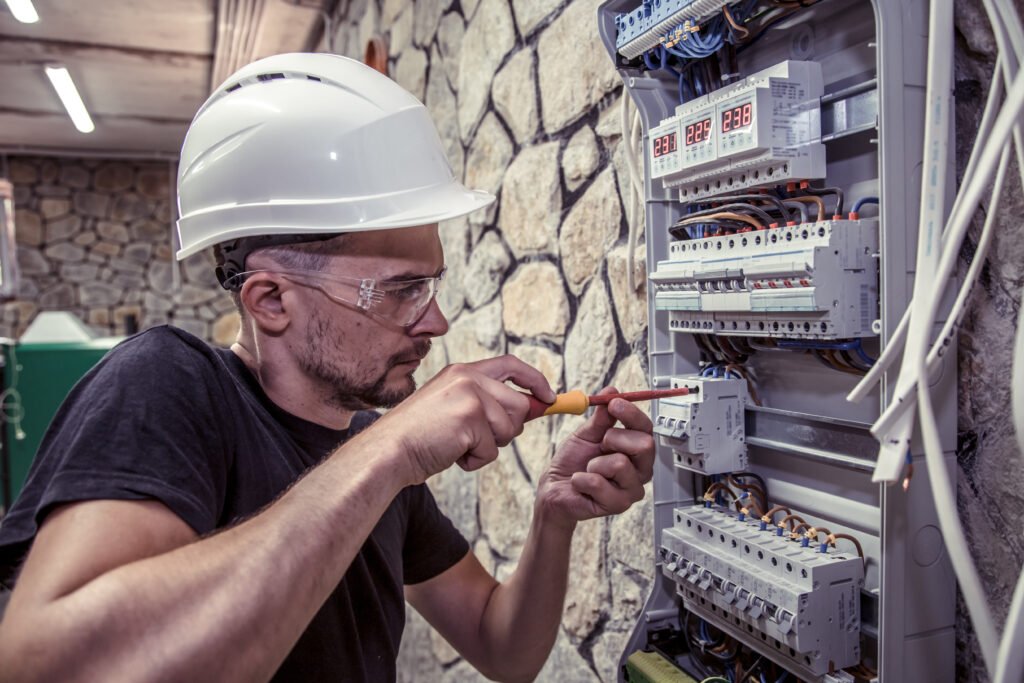
    A burning smell from a socket at 11 pm doesn’t wait for business hours, and neither should your response to it. Electrical emergencies in Dubai range from a tripped breaker that won’t reset to a scorched outlet that’s one spark away from a serious problem, and knowing what to do in the first five minutes matters more than knowing who to call.

    This guide walks through exactly that: what counts as an electrical emergency, the steps to take before help arrives, what an emergency electrician Dubai callout actually costs, and why the DEWA-approved part of that sentence isn’t a technicality you can skip.

    What Actually Counts as an Electrical Emergency

    Not every electrical issue needs a midnight callout. A single dead bulb can wait until morning. These can’t.

    Complete loss of power when neighbours still have it. If the building or street has electricity but your unit doesn’t, the fault sits inside your property, in the consumer unit, the main fuse, or the supply cable, and it needs diagnosis before it gets worse.

    A breaker that trips immediately on reset. This usually means a short circuit or earth fault somewhere on that circuit. Resetting it repeatedly doesn’t fix anything. It causes the breaker to overheat, and overheating breakers are a fire risk, not an inconvenience.

    Burning smell or visible scorch marks. Around a socket, switch, or panel, this is never a wait-and-see situation. Scorching means heat has already built up past a safe threshold.

    Water near live electrics. Flooding near sockets or appliances combined with electricity is one of the few situations where the instruction changes: switch off at the main board only if you can do it without touching water, then call immediately.

    Sparking outlets or visible exposed wiring. Both indicate insulation failure or a loose connection carrying current somewhere it shouldn’t.

    If you’re dealing with any of these, the next few minutes matter more than the next few hours.

    What to Do Before the Electrician Arrives

    If there’s immediate danger, smoke, flames, or a situation that feels genuinely unsafe, leave the property first and call Dubai Civil Defence on 997. Everything below assumes the situation is serious but contained.

    Switch off the main consumer unit (the DB board) if you suspect a dangerous fault and can reach it safely. This isolates the property from the supply and stops an active fault from getting worse while you wait.

    Don’t touch exposed wiring, scorched sockets, or any fitting involved in the fault. Skin contact with a live or recently-live component is the most common way a minor electrical fault turns into an injury.

    If water is involved, only touch the main board if you can do so without stepping in or touching water yourself. Electricity and water together change the calculation entirely, and the safer move is almost always to wait outside the affected area and call for help rather than improvise a fix.

    Unplug appliances that might be contributing to the fault, but only if it’s safe to reach them without crossing wet flooring or touching anything scorched.

    Once the property is as safe as you can make it, call. A DEWA-approved emergency electrician should reach most areas of Dubai within 30 to 60 minutes, faster in central zones like Downtown, Dubai Marina, and Business Bay.

    DEWA Outage vs. Property Fault: How to Tell the Difference

    Emergency Electrician Dubai

    This is the question that decides whether you need an electrician at all, and it’s worth two minutes before you make the call. Step outside or check with a neighbour. If their power is also out, the issue is almost certainly a DEWA-side outage affecting the wider area, and DEWA resolves those directly rather than through a private electrician. If neighbouring properties have power and yours doesn’t, the fault lives inside your unit, in the consumer unit, the main fuse, or the cable feeding your property, and that’s exactly the kind of fault an emergency electrician diagnoses and fixes. Checking this first can save you the cost of a callout for a problem that isn’t yours to fix.

    What an Emergency Electrician in Dubai Actually Costs

    Hiring an emergency electrician in Dubai comes with pricing that varies by provider, time of day, and the nature of the fault, but the ranges across the market are consistent enough to budget around.

    ServiceTypical Cost (AED)
    Emergency attendance and fault diagnosis250–400
    Standard hourly rate (daytime, non-emergency)100–250
    Emergency/after-hours hourly rate250–400
    After-hours surcharge (added to callout)100–200
    Circuit breaker replacement150–350 per breaker
    Socket or switch replacement100–250 per point
    Distribution board (DB) inspection300–600
    New circuit installation400–1,200 per circuit, depending on routing
    Short circuit diagnosis and repair250+ including diagnosis

    A few patterns hold across nearly every provider in this market. Morning and daytime callouts run cheaper than midnight ones, sometimes by AED 150–200. Apartments are generally less expensive to service than villas because wiring runs are shorter and access is simpler. And complex jobs, like rewiring a section of a villa or replacing a full DB board, push well past these baseline figures once labour hours and materials stack up.

    Why an Emergency Electrician in Dubai Needs DEWA Approval

    This is the part most emergency electrician Dubai content treats as a footnote, and it shouldn’t be.

    Electrical work carried out by a contractor without DEWA approval is illegal in Dubai, and the liability for that doesn’t stop at the electrician. Property owners can face fines too, even if they didn’t know the contractor was unapproved. DEWA maintains a public register of approved contractors specifically so homeowners can verify this before work starts, not after something goes wrong.

    The insurance angle is the part that catches people off guard. If an electrical fire or incident follows work performed by an unapproved electrician, home insurance providers can void coverage on the basis that the work was unauthorised. That means a homeowner who saved a few hundred dirhams on an unlicensed callout could end up paying for fire damage entirely out of pocket, on top of whatever the original fault cost to fix properly.

    And the numbers behind this matter more than they might seem to in the moment. Dubai Civil Defence attributes roughly a quarter of household fires to electrical causes, most of them preventable through proper inspection and licensed work. That’s not a marketing statistic. It’s a reason the DEWA approval requirement exists in the first place, and it’s the difference between an electrician who follows BS 7671 wiring standards with UAE amendments and one who doesn’t.

    Before any work begins, especially anything involving the main distribution board, new circuits, or changes to existing wiring, ask for the contractor’s DEWA approval or registration number. A legitimate provider will hand it over without hesitation. Anyone who hesitates or quotes a price that seems too good given the market ranges above is a reason to look elsewhere.

    Common Causes Behind Dubai’s Electrical Emergencies

    A few patterns show up again and again across emergency calls in this city, and most trace back to conditions specific to Dubai rather than generic wiring age.

    Overloaded circuits during summer are the single biggest driver. AC units running near-constantly from May through September push household circuits closer to their limit, and a circuit that handled the load fine in winter can trip repeatedly once cooling demand peaks.

    Heat and humidity accelerate wear on insulation and connections faster than they would in a milder climate, which means a fault that might take a decade to develop elsewhere can show up in half that time here.

    Construction dust is a less obvious factor, but fine particulate works into sockets, panels, and connection points across Dubai’s ongoing construction zones, gradually compromising components that would otherwise last much longer.

    Ageing consumer units in older buildings, particularly those without RCDs (residual current devices) that automatically cut power during a fault, leave a property more exposed when something does go wrong. Newer developments increasingly install these as standard, but plenty of older apartments and villas still run on boards that predate the requirement.

    How Electricians Diagnose the Fault

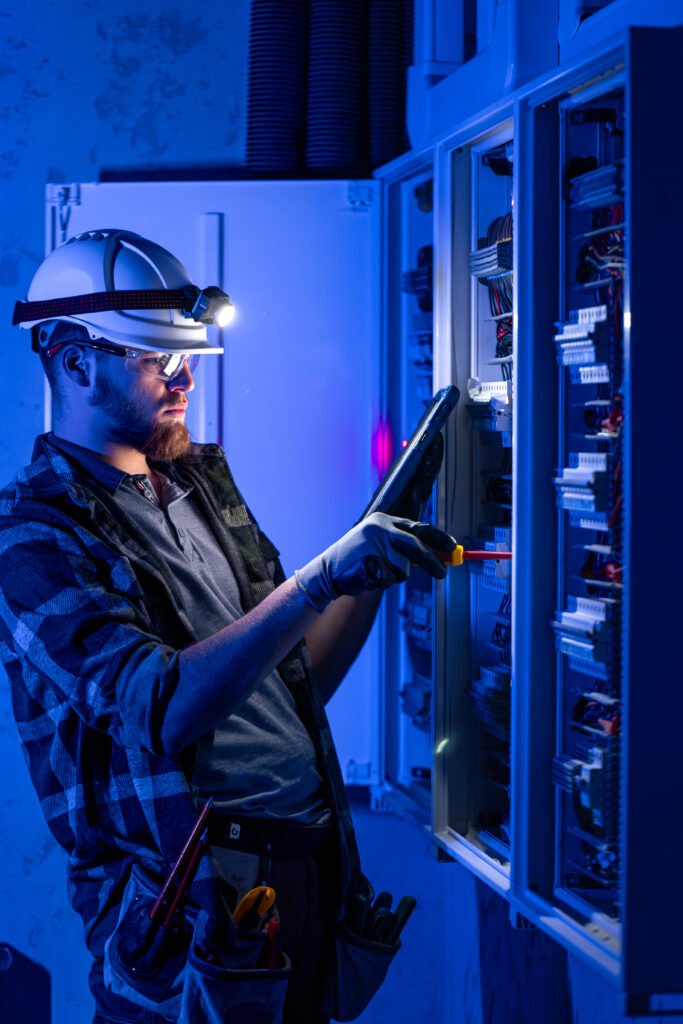
    Once an emergency electrician arrives, the diagnostic process is more methodical than it might look from the outside. For a breaker that won’t reset, the technician traces the affected circuit using insulation resistance testing and thermal imaging, which locates the fault without tearing into walls on a guess. For scorch marks or burning smells, the priority shifts to isolating the affected component first, then determining whether the damage is contained to a single fitting or has spread along the circuit. For complete property-side outages, the check moves from the main fuse to the consumer unit to the supply cable in sequence, ruling out each stage before moving to the next.

    This sequence matters because it’s the difference between a 30-minute fix and an afternoon of unnecessary wall damage. A good electrician explains what they’re checking and why before they start opening panels or cutting into anything.

    Preventing the Next Emergency

    Most electrical emergencies don’t appear out of nowhere. They build for weeks or months before the moment that forces a midnight call.

    An annual inspection, ideally scheduled before summer when AC load peaks, catches loose connections and early overheating before they become a tripped breaker or worse. Load balancing across circuits, so heavy appliances like AC units, washing machines, and water heaters aren’t all sharing the same circuit, reduces the chance of an overload trip becoming a recurring problem. And any flickering lights, warm sockets, or breakers that trip occasionally but reset fine are worth a non-emergency inspection rather than waiting for them to escalate, since a scheduled daytime visit costs less than an emergency one and catches the problem before it becomes one.

    Frequently Asked Questions

    How fast can an emergency electrician reach me in Dubai?

    Most DEWA-approved providers quote 30 to 60 minutes for central areas like Downtown, Dubai Marina, and Business Bay, with response times running slightly longer for outlying areas depending on traffic and time of day.

    How do I know if it’s a DEWA outage or a problem with my property?

    Check whether neighbouring units or buildings have power. If they do and you don’t, the fault is on your property’s side, in the consumer unit, main fuse, or supply cable, and it needs an electrician. If everyone nearby has lost power too, it’s a DEWA-side outage that DEWA resolves directly.

    Is it actually illegal to use an electrician who isn’t DEWA-approved?

    Yes. Electrical work in Dubai must be carried out by DEWA-approved contractors. Using an unapproved electrician can result in fines for the property owner, and any resulting incident may void home insurance coverage on the grounds that the work was unauthorised.

    What should I do if my breaker keeps tripping the moment I reset it?

    Stop resetting it. A breaker that trips immediately on reset almost always indicates a short circuit or earth fault on that circuit, and repeated resetting causes overheating, which increases fire risk rather than resolving anything. Switch off the affected breaker and call for an emergency diagnosis.

    Are emergency electrician callouts more expensive than scheduled visits?

    Yes, typically AED 250-400 for emergency attendance versus AED 100-250 per hour for standard daytime work, plus an after-hours surcharge of AED 100-200 in many cases. The premium reflects the immediate response and after-hours availability, not a different quality of work.

    When in Doubt, Don’t Wait

    Electrical faults rarely get better on their own, and the gap between “this seems minor” and “this is now a fire risk” can close faster than it should. A breaker that won’t stay reset, a scorch mark you’re hoping is nothing, and a socket that’s warmer than it should be: each of these is worth a call before it becomes the emergency that forces one.

    quickresponse’s DEWA-approved electricians handle fault diagnosis, breaker and panel repairs, and emergency callouts across Dubai, day or night. If something feels wrong with your home’s electrics, get it checked before it becomes the call you make at 2 am.

  • Plumbing Problems Caused by Dubai’s Hard Water (And How to Fix Them)

    Dubai hard water plumbing problems - plumber fixing pipes

    If you’ve replaced the same tap washer twice this year, or your water heater started making a popping sound out of nowhere, you’re dealing with Dubai hard water plumbing problems. It’s not bad luck and it’s not a faulty fixture. It’s mineral-rich water working through your pipes one deposit at a time, and it’s been doing that since the day your building was connected to the mains.

    Dubai’s water comes from desalination plants along the coast. Seawater goes in, salt comes out, and what’s left gets remineralized before it’s sent into the supply network, because completely mineral-free water is corrosive to pipes. That remineralization step is exactly where the hardness comes from. So the very process that makes Dubai’s water safe to drink is the same process that leaves calcium and magnesium behind to build up inside your plumbing.

    This guide breaks down what hard water actually does to a home’s plumbing system in Dubai’s specific climate and infrastructure, what it costs to ignore, and which fixes are worth the investment versus which ones just buy you a few extra months.

    What Makes Dubai’s Water “Hard” in the First Place

    Here’s where most articles on this topic get vague, and it’s worth being precise about it. DEWA’s water leaves its desalination plants with calcium carbonate hardness generally falling in the 100-200 mg/L range, classified as moderately hard. Total dissolved solids at the treatment point typically sit between 150 and 350 ppm.

    But ask five different sources what Dubai tap water actually measures and you’ll get five different answers, some citing figures as low as 70 mg/L. That’s not an error. It’s the difference between water at the treatment plant and water that has already spent time in a rooftop storage tank, a pressure pump, and however many meters of pipe before it reaches your kitchen. Building-level factors change the number. Tank cleaning frequency, pipe material, and even how long water sits before use all shift the reading.

    This matters practically because if you test your own water with a home TDS meter, expect a number, and get something different, the gap usually means one thing: your building’s tank or pipework is adding to (or occasionally reducing) what DEWA delivers. It doesn’t mean either reading is wrong. It means the journey from plant to tap is part of the equation, and in Dubai’s high-rise-heavy housing stock, that journey is longer and more variable than in most cities.

    How Hard Water Actually Damages Your Plumbing

    Dubai Hard Water Plumbing Problems: Limescale Buildup Inside Pipes

    When hard water heats up or simply sits for long periods, calcium and magnesium drop out of solution and harden into limescale. This isn’t cosmetic. The deposits narrow the internal diameter of your pipes the same way plaque narrows an artery. Water has to push harder to move through, your pump or booster system works overtime, and the pipe walls take on more pressure than they were built for.

    Older galvanized piping in Dubai villas takes this harder than copper or PPR does. Rougher internal surfaces give limescale more to grip onto. Apartment dwellers aren’t exempt either. Shared risers in towers across Dubai Marina, JLT, and Business Bay accumulate scale at every joint and bend, and by the time it’s noticeable on a top floor, the buildup further down the line is usually worse.

    Dubai Hard Water Plumbing Problems: Faucet, Showerhead, and Valve Failure

    Every fixture with a small opening is a target. Aerators clog first because they’re designed to mix air into the stream through tiny holes, and tiny holes are exactly what mineral deposits block fastest. Showerheads follow the same pattern, which is why a shower that sprayed evenly six months ago now sends water out in three uneven jets.

    Valves are the quieter casualty. Mineral deposits cause valve seats to stick or fail to seal fully, and a valve that doesn’t seal completely is a slow leak waiting to become an expensive one. Worn washers and O-rings degrade faster under hard water than they would under softer conditions because the constant mineral exposure accelerates the breakdown of rubber seals.

    Dubai Hard Water Plumbing Problems: Water Heater Sediment and Early Failure

    This is where hard water does the most expensive damage. Sediment from dissolved minerals settles at the bottom of a water heater tank and just sits there, insulating the bottom from the heating element above it. The heater has to run longer to reach the same temperature, your DEWA bill climbs, and the unit ages faster than it should.

    The warning signs are specific and worth knowing: popping or rumbling noises from the tank (that’s water boiling underneath a layer of sediment), inconsistent hot water temperature, and a noticeably longer wait for hot water to reach the tap. In Dubai’s summer months, when the unit is already managing incoming water that’s pre-warmed by ambient heat, sediment buildup pushes an aging heater toward failure faster than it would in a milder climate. A unit older than eight years showing any of these symptoms is usually past the point where repair makes financial sense.

    Dubai Hard Water Plumbing Problems: Toilet Mechanism and Flapper Wear

    Mineral buildup on a toilet’s flapper and fill valve is one of the most common, least diagnosed Dubai hard water plumbing problems. A warped or scaled flapper won’t seal flush against the drain, which means water trickles continuously from tank to bowl. Most homeowners don’t notice until the DEWA bill jumps, since a running toilet wastes water silently and constantly.

    Appliance Strain: Washing Machines and Dishwashers

    These Dubai hard water plumbing problems extend to appliances too. Hard water makes soap and detergent work less effectively. Appliances compensate by using more water and more product just to get the same result. Mineral deposits build inside washing machine drums and dishwasher spray arms over time, cutting efficiency further, and the appliances wear out sooner than their rated lifespan would suggest.

    Why Dubai’s Specific Conditions Make Dubai Hard Water Plumbing Problems Worse

    Hard water alone is a problem anywhere. Dubai hard water plumbing problems are compounded by the local environment in ways generic plumbing advice doesn’t account for.

    Summer heat pushes ambient temperatures past 45°C, and pipes expand under that heat, then contract overnight as temperatures drop. That expansion-contraction cycle repeats daily for months, and joints already weakened by mineral deposits fail faster under the added mechanical stress. This is a major reason burst pipes spike during seasonal transitions, October-November and March-April, when temperature swings are sharpest.

    Sandstorms add a second layer most homeowners never connect to plumbing at all. Fine particulate from sandstorms works into external drainage and ventilation systems, and combined with mineral scale already narrowing pipe diameter, the two issues compound each other. A pipe that’s 20% narrower from limescale handles sand-laden runoff far worse than a clean one.

    Coastal salt-air exposure is a third factor specific to waterfront and Marina-adjacent properties. Salt-laden air accelerates corrosion on exposed metal fittings, pump housings, and exterior pipe connections, working alongside internal mineral buildup rather than against it. A fitting under attack from both directions – internal scale and external corrosion – fails well before its expected service life.

    The Real Cost of Ignoring Dubai Hard Water Plumbing Problems

    Most homeowners treat hard water plumbing problems one symptom at a time. Fix the dripping tap, then the slow drain, then the water heater six months later, never connecting the dots that one root cause is driving all three. Here’s roughly what that pattern costs versus addressing the source.

    IssueReactive Repair Cost (AED)Root-Cause Cost (AED)
    Dripping faucet (washer/valve replacement)150-400 per visit, recurringIncluded in softener protection
    Showerhead/aerator replacement50-200 per fixture, recurringIncluded in softener protection
    Water heater sediment flush200-500 per service, annualIncluded in softener protection
    Water heater early replacement (8-10 yrs vs 12-15 yrs lifespan)1,500-4,000 per unitExtends lifespan significantly
    Whole-house water softener (installed)n/a6,000-15,000 one-time
    RO + softener combination systemn/a6,000-15,000 one-time
    Annual softener maintenancen/a800-2,000 per year

    Pricing above is sourced from current UAE water treatment providers (ServiceMarket, Saniwater, AquaPro, Nasnet) and general Dubai plumbing service rates as of 2026. Always confirm current rates directly with quickresponse before quoting.

    The pattern is consistent across every cost comparison: homeowners who fix symptoms as they appear spend more over a five-year window than homeowners who install a softener once. The break-even point typically lands between 18 and 30 months, depending on how hard the water is at a given property and how many fixtures are in active use.

    Fixes That Actually Work

    Whole-House Water Softener

    For homeowners dealing with Dubai hard water plumbing problems, this is the only fix that addresses the cause rather than the symptom. A softener uses ion exchange to swap calcium and magnesium for sodium or potassium before water enters your home’s plumbing, which means every pipe, fixture, and appliance downstream benefits, not just the one you happened to repair. Installed cost for a quality system in Dubai generally runs AED 6,000 to AED 15,000 depending on property size and system capacity, with annual maintenance in the AED 800-2,000 range.

    For villa owners in managed communities, there’s a step competitors don’t mention: developments under Emaar, Nakheel, or Trakhees jurisdiction often require an NOC (No Objection Certificate) before plumbing modifications, including softener installation, particularly where it involves tapping into the main supply line. Skipping this step can mean a failed snag inspection or a dispute at handover for newer properties. It’s a five-minute submission in most cases, but it’s a step that gets missed.

    Point-of-Use Filtration (RO Systems)

    When addressing Dubai hard water plumbing problems, reverse osmosis systems target drinking water quality rather than whole-house protection. They reduce TDS at the tap but don’t stop scale from forming in pipes elsewhere in the property. RO is the right call for households prioritizing drinking water taste and purity, typically AED 2,500-6,000 installed, but it’s not a substitute for a softener if the goal is protecting plumbing infrastructure.

    Many Dubai villas run both: a main-line softener for the whole property plus an under-sink RO unit for drinking water, landing in the AED 6,000-15,000 combined range.

    Regular Descaling and Sediment Flushing

    For households not ready to invest in a softener to tackle Dubai hard water plumbing problems, scheduled maintenance slows the damage without stopping it. Annual water heater flushing clears sediment before it hardens into a thick layer. Quarterly aerator and showerhead descaling (a simple vinegar soak handles most light buildup) keeps flow rates from dropping further. This buys time. It doesn’t solve the underlying problem, and pipe-interior scale will keep accumulating regardless.

    Professional Leak Detection

    Hidden leaks inside walls are among the more serious Dubai hard water plumbing problems, especially in older high-rise buildings where joints have been weakened by years of mineral exposure. Thermal imaging and acoustic detection locate the source without tearing into walls speculatively, which matters in a market where unnecessary drywall damage adds real cost to a repair that should have been straightforward.

    Signs Your Home Has a Hard Water Plumbing Problem

    Understanding Dubai hard water plumbing problems early is critical. A few markers tend to show up before the bigger failures do: white or chalky residue around taps and showerheads, soap that won’t lather properly, glassware coming out of the dishwasher with a cloudy film, a water heater that’s noticeably louder than it used to be, and clothes from the wash feeling stiffer than they should. Any one of these on its own is minor. Two or three together usually means scale buildup has progressed past the point where a quick fix solves it.

    Frequently Asked Questions

    Is Dubai’s tap water safe to drink despite being hard?

    Yes. While Dubai hard water plumbing problems are real, hardness is a mineral content issue, not a safety issue. DEWA’s water meets WHO drinking water standards at the point it leaves treatment plants. Hard water causes plumbing and appliance wear over time, but it isn’t a health risk on its own.

    How do I know if my home needs a water softener or just an RO filter?

    If the concern is pipes, fixtures, and appliances wearing out faster than expected, a softener addresses that directly. If the concern is drinking water taste or purity, RO is the better fit. Many villa owners install both because they solve different problems.

    How often should I flush my water heater in Dubai?

    Annually, at minimum. Properties with notably hard water or heavier daily usage benefit from a flush every six months, particularly units that are already five years or older.

    Do I need permission to install a water softener in my villa?

    If your property falls under a managed community like Emaar, Nakheel, or a Trakhees-regulated area, check whether an NOC is required before any plumbing modification, including softener installation. This is easy to overlook and can cause delays if it’s not handled upfront.

    Can hard water actually damage pipes badly enough to cause a burst?

    Indirectly, yes. Limescale buildup weakens joints and narrows pipe diameter, which increases internal pressure. Combined with Dubai’s seasonal temperature swings, that added stress is a real contributing factor in burst pipe incidents during transitional months.

    Don’t Wait for the Expensive Failure — Address Dubai Hard Water Plumbing Problems Now

    Dubai hard water plumbing problems rarely announce themselves with one dramatic event. They show up as a slightly slower drain, a tap that needs a little more force to shut off, a water heater that takes a few extra minutes to deliver hot water. Each one looks small in isolation. Together, they’re the early signs of a system working harder than it should, and the cost of waiting always outpaces the cost of fixing the cause.

    quickresponse’s licensed plumbers handle everything from softener installation to water heater servicing and hidden leak detection across Dubai. Book an assessment and find out exactly what your home’s water is doing to your plumbing – before it turns into a repair you can’t put off.

  • Best Deep Cleaning Services in Dubai: How to Choose a Reliable Company

    Deep Cleaning Services in Dubai

    Searching for the best deep cleaning services in Dubai? It has to offer usually starts with a Google search and ends with twelve browser tabs, a dozen near-identical websites, and no real way to tell which company will actually show up, do a good job, and not damage anything in the process. Not an accident. Dubai’s deep cleaning market is crowded with companies that look professional online and operate with zero vetting offline, sending whoever’s available that day to a home they’ve never seen.

    This guide skips the generic “look for good reviews” advice. It gets into what actually separates a reliable cleaning company in Dubai from a risky one: licensing you can verify in five minutes, how to read deep cleaning Dubai reviews without getting fooled by them, what a fair price actually looks like, and the questions that expose unvetted cleaners in Dubai before they’re inside your home.

    What “Best” Actually Means for Deep Cleaning Services in Dubai

    Every cleaning company in Dubai claims to be the best, trusted, or top-rated. None of that means anything on its own. A reliable cleaning company that Dubai residents can genuinely trust shares four traits that have nothing to do with how polished their website looks.

    They hold a valid DET trade license for cleaning activities, not just a generic commercial license that technically covers “services.” Their cleaning staff are company-employed and background-checked, not freelancers picked up through a WhatsApp group the day before your booking. They carry liability insurance that covers accidental damage to your property, which matters enormously once someone is moving your furniture and appliances to clean behind them. And they give you an itemised scope before they arrive, not a vague “we’ll deep clean everything” promise that turns into upsells once the team is standing in your kitchen.

    Quick Response builds against exactly this standard. Worth holding any company you’re considering to the same bar.

    How to Verify a Cleaning Company’s License in Dubai

    This part takes five minutes, and most homeowners skip it entirely. Every legitimate cleaning company operating in the Dubai mainland holds a trade license from the Dubai Department of Economy and Tourism, commonly called DET (formerly DED). You can verify any company’s license status for free through the official DET portal by entering their trade name or license number. A real company hands over this number without hesitation. If a company hesitates, deflects, or can’t produce a license number when asked directly, that’s the single clearest red flag in this entire guide.

    Beyond the basic trade license, a few specialised deep cleaning tasks require additional Dubai Municipality approval. Water tank cleaning, pest control bundled into a deep clean package, and grease trap servicing for kitchen-heavy jobs. If your deep clean includes any of these, ask whether the company holds the relevant municipality registration on top of their DET license.

    Free zone companies (DMCC, JAFZA, and similar) won’t show up on the DET portal. They need to check through their own free zone authority instead, so don’t assume a company is unlicensed just because the mainland portal doesn’t return a result.

    How to Read Deep Cleaning Dubai Reviews Without Getting Fooled

    Star ratings alone tell you almost nothing in a market this saturated with review manipulation. A 4.8-star rating built on 40 reviews posted in the same week is a different signal than a 4.6-star rating built on 400 reviews spread across three years. Volume and spread matter more than the headline number.

    Read for specifics, not adjectives. A review that says “amazing service, highly recommend” tells you nothing. One that names a specific cleaner, describes what was actually cleaned, or mentions a problem that got resolved tells you the reviewer genuinely used the service. Pay particular attention to how a company responds to negative reviews. A company that engages constructively with a one-star complaint, acknowledges the issue, and explains what they did about it is more trustworthy than one with a suspiciously spotless five-star record and zero public complaints. That pattern often points to review gating or selective deletion rather than flawless service.

    Cross-check reviews across platforms too. A company that looks stellar on its own website but has a noticeably different pattern on Google Reviews is worth a second look. Genuine reviews tend to be reasonably consistent across platforms, since they’re describing the same underlying service quality.

    What Vetted Cleaners in Dubai Actually Means

    “Vetted cleaners Dubai” gets used as a marketing phrase by companies that don’t actually vet anyone. A real vetting process for cleaners includes identity verification against valid Emirates ID and visa documentation, a background check appropriate to UAE regulations, reference checks from prior employment where applicable, and a probationary or supervised period before a new cleaner works unsupervised in a client’s home.

    Ask directly: Are your cleaners company-employed or subcontracted through a labour supply agency? Matters more than most people realise. Company-employed staff carry the company’s training standards, insurance coverage, and accountability. Subcontracted staff can mean you’re getting whoever the agency has available, with the company you booked through having limited visibility into who’s actually walking into your home. Neither model is automatically wrong, but you deserve a straight answer about which one you’re getting.

    Real Deep Cleaning Prices in Dubai (So You Can Spot a Bad Deal)

    (Note: These figures are sourced from broader UAE market research, not Quick Response’s own rate card.) Confirm current pricing directly with our team before booking.)

    Pricing in Dubai’s deep cleaning market varies more than it should for comparable work, which makes a baseline genuinely useful. A studio or one-bedroom apartment deep clean typically runs AED 250 to 400. A two-bedroom apartment in areas like Downtown, Business Bay, or JLT generally lands between AED 600 and 900 for a full deep clean with two cleaners over four to six hours. Three-bedroom units run roughly AED 800 to 1,200.

    Villas cost more across the board, reflecting larger floor areas and more bathrooms. A three-bedroom villa deep clean typically starts around AED 900 to 1,500. Larger five-bedroom and signature villas can run AED 1,800 to 4,500, depending on finishes, outdoor areas, and condition. Add-ons like sofa shampooing, carpet steam cleaning, and oven degreasing are usually priced separately and can add AED 150 to 500, depending on the scope.

    Here’s the part that actually protects you. If a quote for a two-bedroom apartment comes in dramatically below AED 500, or a four-bedroom villa quote lands near AED 300, question it before you get excited about the savings. Genuine deep cleaning is labour-intensive work involving moving furniture, descaling bathrooms, degreasing kitchens, and detailing areas that a regular clean skips entirely. A price that low usually means one of three things. It’s actually a standard maintenance clean rebranded as a deep clean; the company is cutting corners on staff time and won’t finish the job properly, or there’s a long list of upsells coming once the team is already in your home.

    Property TypeTypical Deep Clean Price Range (AED)
    Studio/1-bedroom apartment250 – 400
    2-bedroom apartment600 – 900
    3-bedroom apartment800 – 1,200
    3-bedroom villa900 – 1,500
    5-bedroom/signature villa1,800 – 4,500

    What Should Actually Be Included in a Deep Clean

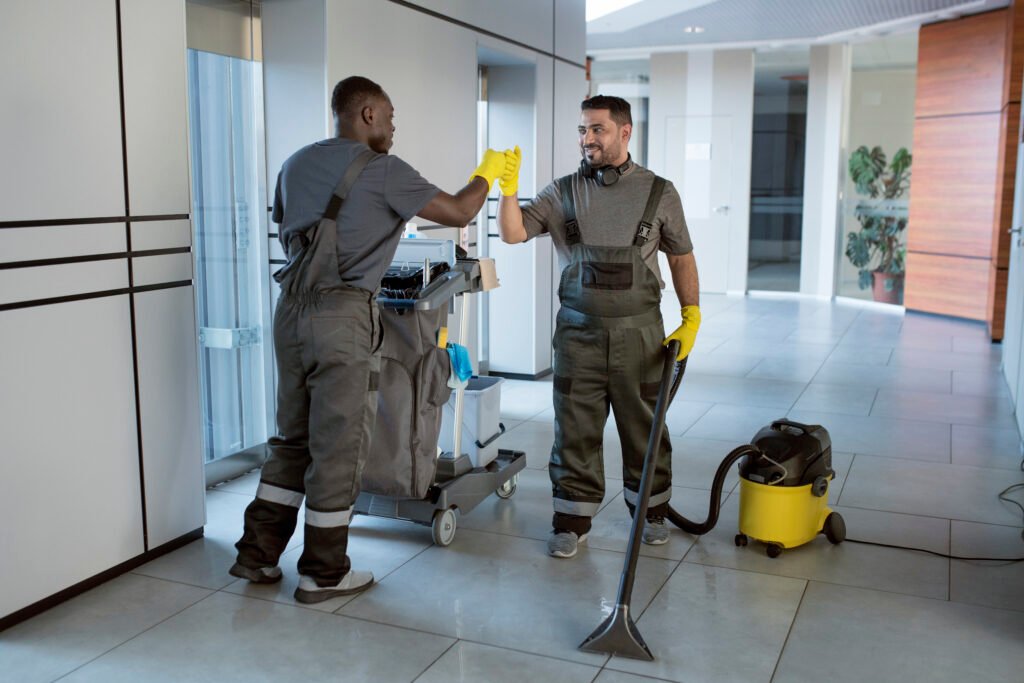
    A genuine deep clean covers ground that a weekly or biweekly maid visit never touches. In the kitchen, that means degreasing range hoods and extraction systems, cleaning inside the oven and fridge, and scrubbing behind appliances that haven’t moved in months. In bathrooms, it means descaling taps and showerheads, scrubbing grout lines, and addressing the limescale buildup that’s nearly universal in Dubai’s hard water. Across the rest of the home, a real deep clean includes detailing skirting boards, cleaning inside cupboards and wardrobes, dusting ceiling fans and light fixtures, and wiping down walls and doors, not just floors.

    If a quote doesn’t mention moving furniture, cleaning inside cabinets, or addressing grout and limescale specifically, ask what’s actually included before booking. Vague scope language is how companies justify underdelivering without technically lying about what they offered.

    Questions to Ask Before You Book

    A short call before booking surfaces almost everything you need to know. Ask for the DET trade license number and confirm you can verify it. Ask whether cleaners are company-employed and background-checked and how long they typically work before a new hire is sent unsupervised. Ask what’s specifically included in the deep clean scope, with kitchen and bathroom details spelt out rather than left vague. Ask about liability coverage for accidental damage and what happens if something gets broken during the visit. And ask how the company handles a complaint if you’re not satisfied with the result. The answer here tells you more about reliability than any star rating will.

    A company with nothing to hide answers all five of these without hesitation or vague deflection. One that gets evasive on any of them is telling you something important before they’ve even shown up.

    Why This Matters More in Dubai Specifically

    Dubai’s climate and dust load make deep cleaning a genuinely different job than it would be in a less demanding environment. Sand infiltrates window tracks, AC vents, and balcony surfaces faster than in most cities. Hard water leaves mineral buildup that requires the right descaling approach rather than a generic all-purpose spray. A company without real local experience tends to under-scope these specific problems, leaving you with a home that looks clean on the surface but still carries the grime that drove you to book a deep clean in the first place.

    This is also why genuinely local, Dubai Municipality-compliant companies tend to outperform generic listings on aggregator platforms. They’ve seen the specific buildup patterns this climate produces and scope accordingly, rather than running the same checklist they’d use anywhere else.

    The Bottom Line

    The best deep cleaning services Dubai homeowners can actually trust aren’t the ones with the flashiest websites or the steepest discount codes. A genuinely reliable cleaning company in Dubai hands over a verifiable DET license without hesitation, employs background-checked staff they can vouch for, prices transparently against the ranges in this guide, and scopes the job specifically rather than vaguely. Run any company you’re considering through the questions above before you hand over your keys.

    Ready to book a deep clean that’s actually thorough, transparently priced, and handled by vetted staff? Quick Response provides licensed, insured deep cleaning across Dubai apartments and villas, with clear scope and pricing before anyone steps through your door. Get a quote today.

    What makes a company one of the best deep cleaning services Dubai has to offer?

    A valid DET trade license, background-checked and company-employed staff, transparent itemised pricing, and liability insurance covering accidental damage. These four traits matter far more than star count or website polish.

    How do I know if a deep cleaning company in Dubai is licensed?

    Ask for their DET trade license number and verify it for free through the official Dubai Department of Economy and Tourism portal. A legitimate company will provide this without hesitation.

    What’s a fair price for deep cleaning in Dubai?

    Expect roughly AED 250 to 400 for a studio or one-bedroom apartment, AED 600 to 1,200 for two to three-bedroom apartments, and AED 900 to 4,500 for villas, depending on size. Quotes far below these ranges usually signal a rebranded standard clean or hidden upsells.

    Are deep cleaning Dubai reviews reliable?

    They’re useful when read carefully. Look for reviews with specific details rather than generic praise, check the volume and time spread of ratings, and see how the company responds to negative feedback rather than just counting stars.

    What does “vetted cleaners” actually mean?

    It should mean identity verification, background checks, and a supervised training period before a cleaner works unsupervised in a client’s home. Ask directly whether staff are company-employed or subcontracted, since this affects accountability.

    Should I be in the home during a deep clean?

    It’s not required, but many people choose to be present for the first booking with a new company to confirm scope and quality before deciding whether to use them again.

    What’s the difference between deep cleaning and regular cleaning?

    Regular cleaning maintains surface-level tidiness: floors, counters, and visible dusting. Deep cleaning addresses accumulated grime in areas regular cleaning skips, like inside cabinets, behind appliances, grout lines, and limescale buildup, and typically takes several hours longer per visit.

  • How Often Should You Have Your AC Service in Dubai? (Honest Guide)

    Ac Service in Dubai

    Your AC Service in Dubai! How often should you have it?

    Here’s the direct answer: Most homes need servicing every 3 to 4 months, not the generic “twice a year” plastered across half the websites in this city. Dubai’s dust load and nine-month cooling season don’t match a maintenance calendar built for milder climates. The “every 6 months” line gets repeated so often that it’s become the wrong kind of common knowledge.

    The real answer depends on three things. What kind of AC system do you have? How many hours a day does it run, and where in Dubai do you live? A split unit in a quiet JBR apartment with light use behaves nothing like a villa AC in JVC running 14 hours a day next to a construction site. This guide breaks down the frequency you actually need, what a proper service includes, what it costs in AED, and the Dubai-specific factors that wreck AC units faster here than almost anywhere else.

    The Short Answer: AC Service Frequency by System Type

    Quick Response gets this question constantly, and the honest answer changes depending on what’s sitting on your wall or roof.

    Split AC units (the most common residential setup):

    Every 3 to 4 months for filter and coil cleaning, with a full electrical and performance check at least twice a year. Running the unit more than 8 hours a day during summer, which most Dubai homes do, pushes you toward the 3-month end of that range.

    Central or ducted AC (common in villas):

    Quarterly coil and filter service, plus an annual duct inspection. Central systems carry a heavier dust load across more surface area, so neglect shows up faster as uneven cooling from room to room.

    District cooling fan coil units, common in Marina, JLT, and Downtown high-rises:

    Every 3 to 6 months for the FCU itself, even though the chiller plant is maintained by building management. This is the one residents get wrong most often. Just because the building “handles the AC” doesn’t mean your individual FCU is covered. Two separate maintenance responsibilities, one chiller plant and one in-apartment FCU, and a poorly serviced FCU leave you with weak cooling even when the building’s central system is working perfectly.

    System TypeFilter/Coil CleanFull ServiceDuct Inspection
    Split AC, light useEvery 4 monthsTwice yearlyN/A
    Split AC, heavy use (8+ hrs/day)Every 3 monthsQuarterlyN/A
    Villa central/ducted ACQuarterlyTwice yearlyAnnually
    District cooling FCUEvery 3-6 monthsTwice yearlyPer building schedule
    Commercial/retailMonthly to bi-monthlyQuarterlyPer Dubai Municipality requirements

    Why Dubai Breaks the “Standard” AC Maintenance Schedule

    Most AC maintenance advice online comes from climates that don’t push a unit the way Dubai does. Three local factors change the math entirely.

    Sand and Dust Are a Different Category of Problem

    Dubai’s air carries fine desert dust year-round. The periodic shamal windstorms bring concentrated sand loading that clogs filters and condenser fins far faster than ordinary urban dust does. A filter that would last 8 weeks in a European city gets saturated in roughly half that time during a Dubai summer. Not a minor seasonal inconvenience. It’s the single biggest reason the “every 6 months” rule fails here. Outdoor unit near a construction site, an unpaved lot, or a ground-floor exposure with heavy foot traffic? You’re looking at the 3-month end of every frequency range in this guide.

    Nine Months of Near-Continuous Operation

    In most of the world, AC is seasonal. In Dubai, it’s closer to a year-round utility, with peak load running from April through October and lighter but still real demand the rest of the year. A system that runs 10+ hours a day for nine months accumulates more wear in a single Dubai year than a comparable unit in a four-season climate accumulates in two or three. Components don’t get a real off-season to coast through. That’s why technicians here see compressor and capacitor failures at unit ages that would be unremarkable elsewhere.

    Humidity Spikes Drive Drain and Mould Issues

    Coastal humidity in Dubai climbs to 90% or higher on many days between July and September. That moisture load doesn’t just make the air feel heavier. It dramatically increases the condensate volume your AC’s drainage system has to handle. Clogged drain lines, water leakage around indoor units, and the musty smell that signals mould growth all trace back to this humidity spike. A drain line that never gets flushed during a service visit is one of the most common reasons “the AC was just serviced” and still leaks two months later.

    What a Proper AC Service Actually Includes

    Here’s where a lot of Dubai residents get shortchanged. A filter rinse is not a service, even though plenty of companies sell it as one. A genuine service covers six things.

    Filter cleaning or replacement comes first, the cheapest fix with the biggest immediate impact on airflow. Chemical coil cleaning on both the evaporator and condenser side follows, removing the dust, biological residue, and mineral scale that a simple water rinse won’t touch. This step alone can restore 10 to 20 percent of lost cooling efficiency on a neglected unit. Then a drain line flush, clearing the condensate path and testing the float switch, which matters enormously given Dubai’s humidity.

    An electrical check comes next: tightening terminals, measuring running amps, checking capacitor condition, and catching the small failures before they become a dead compressor. A performance test measures the temperature differential between supply and return air, with 10 to 14 degrees Celsius as the target on a healthy split system.

    For outdoor units specifically, technicians should clear debris, straighten bent fins, and check refrigerant line insulation. Deteriorated foam insulation on those lines is a quiet contributor to higher DEWA bills.

    If your last “service” took less than 30 minutes per unit, you almost certainly got a clean, not a service.

    Cost of AC Service in Dubai?

    Pricing varies by system and provider, but here’s roughly where the market sits as of 2026.

    (Note: These figures come from broader UAE market research, not Quick Response’s own rate card. Confirm current pricing directly with our team before booking.)

    A basic one-time split AC service typically runs AED 150 to 350 per unit. Full chemical coil cleaning and service for the same unit costs closer to AED 300 to 500. Central FCU servicing usually costs AED 450 to 900, reflecting the larger surface area and more involved access.

    Annual Maintenance Contracts for a typical apartment with 2 to 4 split units generally range from AED 600 to 2,000, depending on visit frequency and coverage. Villa AMCs with multiple units and central systems often run AED 1,500 to 4,000 or more per year.

    Worth doing the math before choosing between pay-per-visit and an AMC. Four quarterly visits at AED 200 to 350 each add up to roughly AED 800 to 1,400 a year for a single unit. If an AMC covering the same unit count costs about the same or less and throws in priority emergency response plus a repair discount, it’s the better deal almost every time.

    The AMC advantage gets stronger the more units you have, and the older your system is, since older units fail more often, and an existing contract usually means no callout fee on those repair visits.

    Signs Your AC Needs Service Now, Regardless of Schedule

    Frequency tables are a guideline, not a guarantee. Some signs mean you shouldn’t wait for the next scheduled visit.

    Rising electricity bills with no change in usage pattern usually point to declining efficiency from dirty coils or low refrigerant. Water leaking around an indoor unit suggests a clogged drain line or, in more advanced cases, a frozen evaporator coil. Ice forming on refrigerant lines signals an airflow restriction or refrigerant issue that needs attention before it damages the compressor.

    A musty or sour smell from the vents is a strong indicator of mould or mildew inside the system, both a comfort issue and, left long enough, a health one. And if the AC simply isn’t dropping the room to your set temperature despite running constantly, that’s a capacity or refrigerant problem that no filter clean will solve.

    Catching any of these early is dramatically cheaper than waiting. A reactive emergency repair in Dubai routinely costs three to five times more than a routine service visit would have, partly because emergency callouts carry a premium and partly because the underlying problem has had time to damage other components.

    A Note on Refrigerant and Older Systems

    AC more than 8 to 10 years old? There’s a regulatory angle worth knowing about. Older systems in the UAE often still run on R-22 refrigerant, which is being phased out under the Montreal Protocol, with the UAE working toward a 2030 deadline for full transition. R-22 is becoming harder and more expensive to source for top-ups. A refrigerant leak on an older unit can turn a routine repair into a genuinely costly one. If your technician mentions R-22 during a service and your system needs frequent top-ups, that’s a signal to start budgeting for replacement rather than continuing to patch the same leak.

    So, How Often Should You Really Service Your AC in Dubai?

    Strip away the generic advice, and the answer is this: every 3 to 4 months for most Dubai homes, especially anything running heavily through summer, with a full service at a minimum twice a year. Light-use secondary units in spare rooms can stretch toward the 6-month mark. But anything carrying a real daily load in this climate needs a tighter cadence. Treat the frequency table earlier in this guide as your starting point, then adjust upward in frequency if you’re near a construction site, in a high-dust area, or running an older system already showing signs of strain.

    Skipping service isn’t really saving money. It’s just moving the cost from a predictable AED 200 to 400 visit now to an unpredictable AED 1,000+ emergency repair later, usually in August, usually at the worst possible time.

    Ready to get your AC on a schedule that actually matches Dubai’s climate instead of a generic recommendation written for somewhere else? Quick Response handles split, central, and FCU servicing across Dubai, with AMC options built around how your specific system is actually used. Book a service or ask about our maintenance contracts today.

    How often should I service my AC in Dubai?

    Most Dubai homes need a filter and coil service every 3 to 4 months, with a complete service including electrical checks and performance testing at least twice a year. Heavy daily use, dusty locations, or older units push you toward the more frequent end of that range.

    Is twice a year enough for AC servicing in Dubai?

    Twice a year is the minimum, not the ideal, for most occupied homes. It works reasonably well for light-use secondary units, but it isn’t frequent enough for a primary AC running 8+ hours a day through a Dubai summer.

    How many times should I clean my AC filter in Dubai?

    Every 2 to 4 weeks during peak summer months, separate from the full professional service. Dubai’s dust load clogs filters faster than most manufacturer guidelines, which are usually written for less dusty climates.

    Does my district cooling FCU need separate maintenance from the building’s chiller?

    Yes. Building management maintains the central chiller plant, but your individual fan coil unit is typically your responsibility. Many residents skip FCU servicing because they assume the building covers everything, then wonder why their unit cools poorly despite a well-functioning central system.

    Is an AMC worth it compared to paying per visit?

    For most homes with 2 or more AC units, an AMC usually costs about the same or less than paying per visit across the year, while adding priority emergency response and discounted repairs. The math favours an AMC even more strongly for villas and older systems.

    What happens if I don’t service my AC regularly in Dubai?

    Efficiency drops, electricity bills climb, and the risk of a major breakdown during peak summer heat rises sharply. Neglected units also tend to fail years earlier than well-maintained ones, turning a maintenance cost you could have budgeted for into an unplanned replacement expense.

  • AC Repair vs Replacement in Dubai: How to Decide in 2026

    AC Repair vs Replacement in Dubai How to Decide in 2026

    AC Repair vs Replacement in Dubai: Decide Wisely. Your AC just died for the third time this year. The technician is standing in your living room asking if you want it fixed again or replaced. You have about thirty seconds to make a call that affects your summer comfort and your bank account. This guide gives you a framework for that decision, built around how Dubai’s climate, DEWA tariffs, and a looming regulatory deadline change the AC repair vs replacement Dubai equation in ways generic advice doesn’t cover.

    Most online guides hand you an age cutoff and call it done. That advice skips three things specific to Dubai. Sandstorm particulate clogs coils faster here than in almost any other climate. The cooling season runs 9 to 10 months, so your compressor barely gets a break. And there’s a 2030 deadline on R-22 refrigerant availability that can turn what looks like a routine repair into money down the drain. Here’s how to actually decide.

    How Long Do AC Units Last in Dubai?

    A split AC unit in Dubai typically lasts 10 to 15 years. That’s shorter than the 15 to 20 years you’d get in a milder climate, and the gap comes down to one thing: usage. A unit in London might run 3 to 4 months a year. A Dubai split unit runs close to 9 to 10, with the compressor cycling almost nonstop from May through September.

    Three environmental factors shrink that lifespan further.

    Sandstorm particulate gets into outdoor condenser coils and indoor filters at a rate most manufacturers never accounted for. Skip chemical coil cleaning for a year and you can lose 10 to 20 percent of cooling efficiency, based on service data from local providers. That loss forces the compressor to work harder, which wears down parts that weren’t built to compensate for it.

    If you live near the coast, salt air is doing its own quiet damage. Dubai Marina, JBR, Palm Jumeirah. Salt-laden air corrodes condenser fins and electrical contacts faster than units further inland experience. Most repair-vs-replace guides written for other markets never mention this, but ask any technician who covers the Marina how often fan motors and coils come up for replacement there compared to inland villas.

    Then there’s the water. Dubai’s hard water leaves mineral deposits in drain lines, and over years, in coil components exposed to condensate. Combine that with humidity-driven mould in a poorly maintained unit and you get failure points that simply don’t show up in drier climates.

    So if your unit is past the 10-year mark, sits near the coast, or hasn’t had consistent professional maintenance, treat the lower end of that lifespan range as your realistic ceiling. Not the upper end.

    AC Repair vs Replacement in Dubai Decision Framework

    Three numbers matter more than anything else here: the age of your unit, the cost of the repair, and the cost of a comparable new unit.

    The 50 Percent Rule

    If a repair quote exceeds 50 percent of the cost of a new, comparable unit, replacement is almost always the better financial call. A 1.5-ton inverter split installed new in Dubai runs roughly AED 2,400 to 3,800 (third-party pricing, verify against current quickresponse rates before quoting customers). Say your repair estimate comes back at AED 1,800 on a unit that would cost AED 3,200 to replace. That’s 56 percent. Replace it.

    Age Brackets That Actually Matter

    Under 5 years old, repair almost always makes sense. The exception is external damage or a manufacturing defect still under warranty. At this age, a compressor or coil failure is rare, not a sign the unit is wearing out.

    Between 5 and 10 years, repair if the cost sits below 40 to 50 percent of replacement cost and the unit has a clean maintenance history. A clogged drain line or a failed capacitor on a 6-year-old unit is a quick fix. A second compressor failure on that same unit within this window tells a different story.

    Over 10 years old is where most Dubai homeowners get the call wrong. A major repair at this age, a compressor, both coils, a control board, often buys you one or two more years before the next failure shows up. At that point you’re financing a unit that’s already depreciated past usefulness. Run the math on a new, efficient unit instead.

    The Three-Repair Rule

    Three separate repairs within twelve months, even if each one was cheap on its own, means it’s time to replace. The pattern itself is the signal. A unit failing repeatedly isn’t unlucky. It’s telling you the remaining components are reaching end of life together, and you’ll be back here in a few months regardless of which part gets fixed this time.

    What a Repair Actually Costs in Dubai (2026 AED Ranges)

    These figures come from third-party Dubai service data. Verify against quickresponse’s live pricing before publishing or quoting customers.

    Repair TypeEstimated AED Range
    Diagnostic visit (no fix)150 – 250
    Gas top-up (R-22 or R-410A)250 – 450
    Leak detection, repair and regas600 – 1,200
    Capacitor or contactor replacement150 – 600 (plus labour)
    Fan motor replacement350 – 900
    Compressor replacement1,500 – 4,000
    Indoor or outdoor coil replacement800 – 2,500
    Drain line clearing200 – 500

    A top-up or capacitor swap is cheap and usually the right call on a younger unit. Compressor and coil replacement sit close enough to the cost of a full new unit that you need to run the 50 percent rule before agreeing to either.

    What a New AC Unit Costs in Dubai (2026 AED Ranges)

    System TypeEstimated AED Range
    1.5-ton split, supply and install2,400 – 3,800
    2-ton split, supply and install3,200 – 4,800
    Central AC FCU swap3,500 and up
    Full villa ducted system15,000 – 40,000+

    Premium brands like Daikin and Mitsubishi sit at the higher end of each range. Budget and mid-tier brands such as Midea, TCL, and Super General sit lower. Every figure here needs verification against quickresponse’s current supplier rates before it goes live anywhere customer-facing.

    The DEWA Bill Factor Most People Miss

    An old, fixed-speed AC unit can burn 30 to 50 percent more electricity than a modern inverter unit cooling the same space. In a Dubai villa running several split units through the summer, that gap shows up directly on the DEWA bill. Often, AED 200 to 500 more per month per unit during peak season.

    Run this math before you decide anything. If a new inverter unit saves AED 300 a month for five summer months, that’s AED 1,500 a year in electricity alone. Stretch that over 3 to 4 years, and the savings offset a real chunk of the unit’s purchase price. This is exactly why a repair that looks cheaper on paper sometimes isn’t. Factor in what an inefficient old unit costs you every single month it keeps running, and the math shifts.

    The R-22 Refrigerant Deadline Nobody Mentions

    If your AC went in before roughly 2012, there’s a good chance it runs on R-22 refrigerant, also known as Freon. Under the Montreal Protocol, the UAE falls under the Article 5 classification for developing countries, which sets a complete phase-out of R-22 production and import by 2030.

    What does that mean for the unit sitting on your balcony right now? R-22 is already harder to source and pricier than it was five years ago, and that trend only speeds up as the deadline gets closer. So if your AC needs a gas top-up because of a slow leak, you’re not just paying for the gas. You’re paying a rising price for a refrigerant with a hard expiration date on its availability. Repeated R-22 top-ups on an aging unit are one of the clearest signals that repair is a short-term patch, not a fix.

    This factor is specific to UAE compliance timelines, and most repair-vs-replace content written for other markets never accounts for it. If a technician quotes an R-22 recharge on a unit already past 8 to 10 years old, ask directly whether replacement with an R-410A or newer unit makes more sense over the next two to three years.

    Signs You Should Repair Your AC, Not Replace

    Repair is the right call when most of this lines up at once. The unit is under 8 years old. It has a documented maintenance history. The fault is one component, a capacitor, a fan motor, a thermostat, a contained refrigerant leak. And the repair quote lands under 40 percent of a new unit’s cost. A well-maintained unit in this bracket has years of useful life left, and a targeted fix is the financially sound move.

    Signs You Should Replace Your AC, Not Repair

    Replace when the unit is past 10 years old and showing a major component failure. When you’ve had three or more repair callouts in a year. When the unit runs on R-22 and keeps needing top-ups. When your DEWA bills have climbed without any change in how you use the AC. Or when the room just doesn’t cool properly anymore, even right after a service visit. Any one of these on its own is worth a second look. Two or more together is a clear signal.

    Is it cheaper to repair or replace an AC in Dubai?

    It depends on the repair cost relative to a new unit. As a rule, if the quote is under 40 to 50 percent of a comparable new unit’s price and your AC is under 10 years old, repair usually wins short-term. Past that threshold, or past the 10-year mark, replacement tends to come out ahead once you factor in energy savings and the risk of repeat failures.

    How do I know if my AC compressor is dying?

    Watch for the unit running constantly without ever reaching the set temperature, grinding or clicking noises from the outdoor unit, the compressor never cycling off, and a jump in your DEWA bill with no change in how you’re using the AC. A technician can confirm it with a gauge reading on suction pressure during a diagnostic visit.

    What is the average lifespan of an AC unit in Dubai?

    Most split AC units in Dubai last 10 to 15 years with regular maintenance. That’s shorter than the 15 to 20 year range typical in cooler climates. Units near the coast, or ones that skip chemical coil cleaning, tend to land toward the lower end because of sand, dust, and salt air.

    Should I worry about R-22 refrigerant in my old AC?

    Is it cheaper to repair or replace an AC in Dubai?
    It depends on the repair cost relative to a new unit. As a rule, if the quote is under 40 to 50 percent of a comparable new unit’s price and your AC is under 10 years old, repair usually wins short-term. Past that threshold, or past the 10-year mark, replacement tends to come out ahead once you factor in energy savings and the risk of repeat failures.
    How do I know if my AC compressor is dying?
    Watch for the unit running constantly without ever reaching the set temperature, grinding or clicking noises from the outdoor unit, the compressor never cycling off, and a jump in your DEWA bill with no change in how you’re using the AC. A technician can confirm it with a gauge reading on suction pressure during a diagnostic visit.
    What is the average lifespan of an AC unit in Dubai?
    Most split AC units in Dubai last 10 to 15 years with regular maintenance. That’s shorter than the 15 to 20 year range typical in cooler climates. Units near the coast, or ones that skip chemical coil cleaning, tend to land toward the lower end because of sand, dust, and salt air.

    Does a new AC unit really lower my electricity bill?

    Yes, often by a lot. A modern inverter unit can use 30 to 50 percent less electricity than an older fixed-speed unit cooling the same space. That translates to roughly AED 200 to 500 in monthly savings per unit during Dubai’s peak summer months, depending on usage and unit size.

    Get an Honest Assessment Before You Decide

    A blog post can’t see the actual condition of your compressor, how your specific unit has been maintained, or what a real diagnostic reading shows. The right call between repair and replacement depends on those details. Book an AC inspection with quickresponse and get a straight answer on whether your unit is worth fixing or whether it’s time to upgrade, with transparent AED pricing either way.

  • AC Cleaning and Repair Services in Dubai Marina

    AC Cleaning and Repair Services in Dubai Marina

    AC cleaning and repair services in Dubai Marina come with a layer of complexity that generic providers regularly underestimate. The AC systems in Marina Towers are in use 10 to 11 months of the year. The salt-laden sea air off the Gulf, fine sand carried in from the desert during shamal occurrences, and the near-constant humidity between May and October generate fouling conditions that are tougher on cooling equipment than virtually anywhere else in the UAE. Faster filter block. Coils accumulate dust as well as salt. If systems don’t receive a break, condensate drain pipes are more likely to clog.

    quickresponse provides certified AC cleaning and repair services in Dubai Marina through a trained & insured team of AC technicians, immediately deployed to Dubai Marina & JBR buildings with same day availability & up front pricing before any work is started.

    Top AC Cleaning and Repair Services in Dubai Marina

    Split AC Unit Cleaning

    Most Dubai Marina apartments are equipped with split AC systems, which include one or more indoor, wall-mounted units linked to an outside condenser situated on the balcony or the building’s facade. A full wash-down of your split AC includes washing the indoor filter, cleaning the evaporator coil, flushing the drain tray, wiping the fan blades and checking the performance of the refrigerant pressure and airflow output. What it doesn’t cover (if your technician skips it): The drain line. The single most prevalent source of water leaking within Marina apartments is blocked condensate lines and when found during a service call (rather than after the ceiling panel has warped) the cure is easy.

    Fan Coil Unit (FCU) Servicing District Cooling Buildings

    AC cleaning and repair services in Dubai Marina include specialist FCU servicing for towers on Emicool and other district cooling networks. The fan coil units, not the conventional split system, are used in marina towers connected to Emicool or other district cooling providers. FCUs have different fault signatures and unique cleaning requirements notably the coil fins, the drain pan, and the filter media than split systems. Low airflow from an FCU is usually often a blocked filter or filthy coil, not a refrigerant issue. Our specialists recognise the difference and won’t charge you for a refrigerant top-up on district cooling systems that don’t utilise refrigerant on site.

    AC Duct Cleaning

    For buildings with centralised systems, AC cleaning and repair services in Dubai Marina include full duct inspections and mechanical cleaning. Older Marina buildings with centralised ducted systems accumulate years of dust, dander, and in coastal buildings, fine salt particulate in their ductwork. Duct cleaning for a 1–2-bedroom Marina apartment typically runs between AED 500 and AED 900. Larger 3-bedroom units with more complex duct runs fall in the AED 800 to AED 1,500 range, based on current Dubai market benchmarks for 2025–2026. This includes diffuser removal and cleaning and return air grille inspection. Disinfection is quoted separately where mould is present.

    AC Repair Fault Diagnosis and Component Replacement

    Warm air from a unit that was cooling fine last week. A compressor that cycles on and off every few minutes. A unit that runs but produces almost no airflow. These faults have specific causes and most can be diagnosed on the first visit. Common repair costs in Dubai for reference: thermostat replacement runs AED 200 to AED 600 depending on AC model, fan motor replacement falls between AED 300 and AED 700, and routine servicing per unit runs AED 200 to AED 400. Refrigerant recharge pricing depends on gas type (R32 vs R410A) and how much the system has lost.

    Emergency AC Repair Dubai Marina

    When urgent faults strike, AC cleaning and repair services in Dubai Marina from quickresponse include same-day emergency dispatch. An emergency is a unit that stops cooling at 11pm in July, not a reservation for next week. quickresponse offers emergency AC callouts in Dubai Marina and JBR with rapid dispatch for same day failures. Emergency & after-hours fees are more expensive than regular scheduled visits this is common across the Dubai market and applies here as well. Book via the app and see live slots.

    Pre-Summer AC Servicing

    The best months to maintain your AC units in Dubai Marina are April and May, before the summer load kicks in. Spring-cleaned systems are better equipped to endure the June-September heat, use less power when running at full throttle, and are much less likely to require an emergency repair call when you need it least. Marina and JBR buildings can take advantage of quickresponse pre-summer AC cleaning and repair services in Dubai Marina packages with priority scheduling.

    Scheduling regular AC cleaning and repair services in Dubai Marina is the most effective way to stay ahead of the unique environmental challenges this waterfront community presents. Residents and property managers who book AC cleaning and repair services in Dubai Marina at least twice a year report fewer emergency callouts and consistently lower utility bills compared to units that go unserviced.

    Dubai Marina AC Challenges What Makes This Location Different

    Salt air from the Gulf. The Marina sits metres from open water. Salt particulate is abrasive to coil fins and accelerates corrosion on condenser units left on external façades or rooftop plant rooms. Annual coil inspection is not optional here; it is what keeps a ten-year-old unit running like a five-year-old one.

    Near-year-round operation. In most cities, AC systems get a seasonal break that allows self-drying and dust settling. Marina units run from March through at least November, sometimes year-round in north-facing units that get little direct sun. Continuous operation compresses the maintenance window and means problems compound faster when a service is delayed.

    High-rise access and condensate routing. Drain lines in multi-storey towers route through shared building infrastructure. A blocked condensate drain in a Marina tower does not just create a puddle it backs up into the unit’s drain tray and eventually into the ceiling void, damaging multiple floors before anyone notices. Drain clearing is part of every quickresponse AC service call for Marina properties.

    Sandstorm aftercare. After a shamal pushes fine desert dust through the Marina, filters that were serviceable the day before can be visibly clogged. Post-sandstorm filter cleaning is a practical maintenance step that most Dubai Marina residents do not factor into their regular schedule, and then wonder why cooling performance dropped suddenly.

    Buildings and Areas We Cover in Dubai Marina

    The best months to maintain your AC units in Dubai Marina are April and May, before the summer load kicks in. Spring-cleaned systems are better equipped to endure the June-September heat, use less power when running at full throttle, and are much less likely to require an emergency repair call when you need it least. Marina and JBR buildings can take advantage of quickresponse pre-summer servicing packages with priority scheduling.

    When choosing AC cleaning and repair services in Dubai Marina, it is important to ensure that technicians comply with the standards set by Dubai Electricity and Water Authority (DEWA). Properly maintained AC units in Dubai Marina not only operate more efficiently but also meet the energy performance guidelines outlined for residential and commercial properties in the emirate. Regular AC cleaning and repair services in Dubai Marina help extend equipment lifespan, reduce electricity consumption, and prevent costly emergency breakdowns during the peak summer months.

    Why Book AC Services in Dubai Marina Through quickresponse

    No surprise charges when the technician arrives. The price quoted through the app is the price you pay for the booked service parts and additional work are quoted separately and require your approval before proceeding. Book AC cleaning and repair services in Dubai Marina with named, insured technicians and upfront pricing.

    For building managers or property investors managing multiple Marina units, quickresponse supports multi-unit bookings and can coordinate access across floors in the same visit.

    AC Service Process in Dubai Marina

    Booking AC cleaning and repair services in Dubai Marina through quickresponse takes less than three minutes via the app. Select your building, choose your service type, pick a time slot, and confirm. A named technician is assigned to your booking at the point of confirmation.

    On arrival, the technician will inspect the unit before starting work. For split AC systems, this includes checking the indoor and outdoor units, verifying refrigerant levels, and testing the drain line. Any additional faults found during inspection are reported and quoted separately before work begins.

    Filter cleaning is completed first. Dirty filters are the most common cause of reduced cooling performance in Marina apartments. Filters are removed, washed, dried, and re-fitted. In cases where filters are damaged beyond cleaning, replacement is offered at a fixed quoted price.

    Coil cleaning follows filter servicing. The evaporator coil inside the indoor unit and the condenser coil outside both accumulate dust, salt deposits, and organic material in the Marina environment. A foaming coil cleaner is applied, left to work, then rinsed or wiped clean depending on unit access.

    The condensate drain line is cleared using a wet/dry vacuum attachment. This step prevents the water overflow faults that are common in Marina apartments during July and August when units run at maximum load for extended periods. A drain check is included in every standard service.

    On completion, the technician runs the system to confirm cooling performance, checks the airflow direction and speed settings, and records the job with before and after photos in the quickresponse platform. You receive a digital service record for your files or landlord submission.

    Scheduled maintenance for AC cleaning and repair services in Dubai Marina can be set up as a recurring booking through the quickresponse app. Choose a biannual schedule aligned to Dubai’s climate — once in April and once in September — and your slots are reserved automatically with no need to rebook each time.

    Choosing Reliable AC Cleaning and Repair Services in Dubai Marina

    Not all AC service providers operating in Dubai Marina are licensed by the relevant Dubai authorities. When booking AC cleaning and repair services in Dubai Marina, verify that the company is registered and that its technicians hold valid trade licences for refrigerant handling and electrical work on HVAC equipment.

    Insurance coverage matters in high-rise buildings. A technician working on a unit in a Marina tower should carry public liability insurance. If a fault is caused during service and the provider is uninsured, the cost of repair falls on the building owner or tenant. quickresponse technicians are insured for every job.

    Fixed pricing before work starts protects against invoice surprises. Some AC service companies in Dubai quote low prices to win bookings, then add charges on-site once the unit is already open. With quickresponse, the price for standard AC cleaning and repair services in Dubai Marina is confirmed at booking, not at invoice stage.

    Response time matters most during June to September. A provider that can dispatch a technician within the same day — or within hours for emergencies — is the practical choice for Marina residents and property managers. Check estimated arrival times in the quickresponse app before confirming your booking slot.

    Transparency about parts and refrigerant is another marker of a reliable provider. Refrigerant top-ups should be itemised with the type and quantity used. If a technician adds refrigerant without diagnosing the source of the leak, the problem will recur. quickresponse technicians document all parts used and flag underlying faults that require a follow-up repair.

    How often should I service my AC in a Dubai Marina apartment?

    Professional AC cleaning and repair services in Dubai Marina should be booked at least twice a year as a minimum in Dubai’s climate — once before summer (April–May) and once mid-season or at the end of summer (September–October). Marina’s salt air and near-year-round operation push that recommendation toward three times a year for older units or buildings facing the sea directly.

    What is the cost of AC cleaning in Dubai Marina?

    The price of AC cleaning and repair services in Dubai Marina varies: split AC unit cleaning typically costs AED 150 to AED 300 per unit depending on the provider and service depth. Full duct cleaning for a 1–2 bedroom apartment ranges from AED 500 to AED 900. Deep chemical coil cleaning runs AED 200 to AED 350 per unit. quickresponse provides exact pricing before confirmation. All figures should be verified against current quickresponse rates before this page goes live.

    My AC is cooling but there’s water dripping inside what is that?

    Almost always a blocked condensate drain line. The drain tray fills up when the line is blocked and eventually overflows into the room. When arranging AC cleaning and repair services in Dubai Marina, always include a drain line check. It is an easy fix when caught early and a significant repair when the overflow has been running into a ceiling void or wall cavity.

    Is my building on district cooling (Emicool), or do I have a standalone AC?

    Most newer Marina high-rises are on district cooling via Emicool. If you do not have an outdoor condenser unit on your balcony or near your apartment and your utility bill includes a separate Emicool charge, you have fan coil units, not a traditional split system. The cleaning process and fault diagnosis are different, but AC cleaning and repair services in Dubai Marina cover both system types — quickresponse technicians are trained on Emicool fan coil units as well as conventional split systems.

    Can you fix AC problems in a rented Marina apartment?

    Yes. AC cleaning and repair services in Dubai Marina are available for owners and tenants alike. For repairs that are the landlord’s responsibility under UAE tenancy law, such as structural faults, unit replacement, and major component failure, you will need written landlord approval before proceeding with paid repairs. For cleaning and standard maintenance, tenants in Dubai typically cover routine servicing costs. quickresponse can provide a written job report for landlord submission if needed.

    How quickly can I get an AC technician in Dubai Marina?

    For AC cleaning and repair services in Dubai Marina, same-day slots are available for most Marina and JBR buildings when booked before early afternoon. Emergency callouts have priority dispatch. Check the quickresponse app for live availability in your specific building.

    Does QuickResponse handle AC duct disinfection in Marina apartments?

    Yes. As part of full AC cleaning and repair services in Dubai Marina, duct disinfection is offered as an add-on to duct cleaning where mould or bacterial contamination is present which is more common in Marina apartments than inland properties due to sustained humidity. The disinfection process uses an antimicrobial treatment applied after mechanical cleaning. It is quoted separately from standard duct cleaning.

    Whether you are a homeowner, tenant, or property manager, professional AC cleaning and repair services in Dubai Marina from quickresponse deliver transparent pricing, certified technicians, and same-day availability. All AC cleaning and repair services in Dubai Marina are covered by a service guarantee, so you can book with confidence knowing the job will be done right the first time.

    Book AC Cleaning or Repair in Dubai Marina

    Book AC cleaning and repair services in Dubai Marina today. Same-day slots. Named technicians. Insured work. Upfront pricing.

    [Book Now on quickresponse]


    📖 Read our complete guide: AC Services in Dubai: The Complete Guide (2026) — everything Dubai residents need to know about AC services in Dubai.