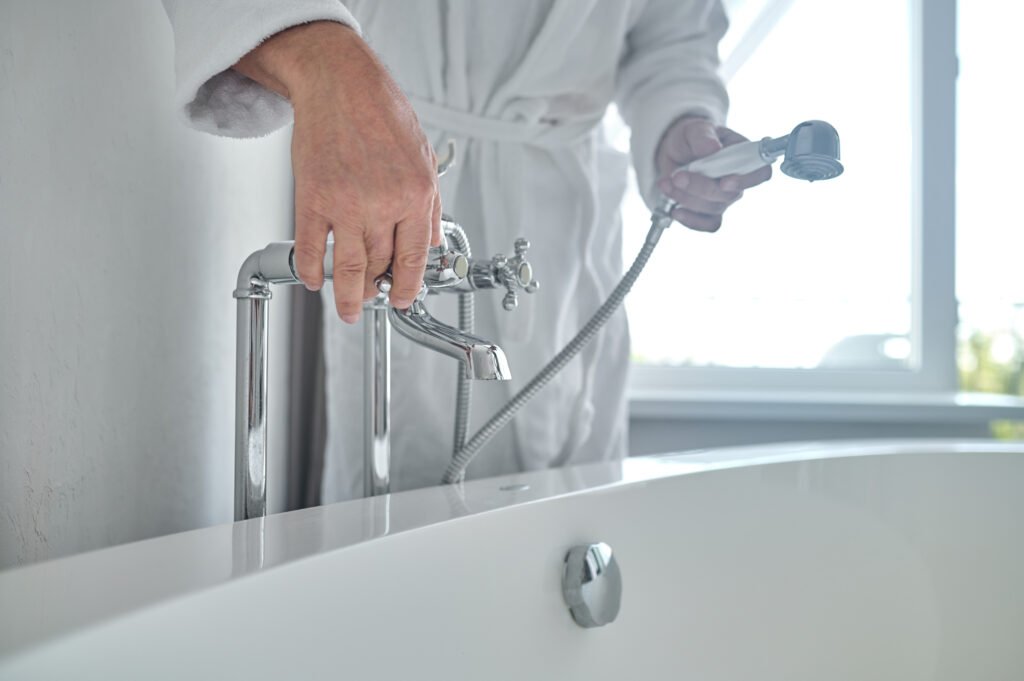
Want to upgrade your bathroom fixtures in a Dubai apartment?
If you want to upgrade your bathroom fixtures in a Dubai apartment, the fixture you pick matters less than most people think. What matters more is whether it survives the water coming out of your tap. Dubai’s water supply runs hard, the pressure in high-rise towers swings depending on your floor, and a fixture that works beautifully in a villa in Jumeirah can fail within a year in a 40th-floor unit in Downtown.
This guide walks through what actually changes when you’re upgrading fixtures inside an apartment building rather than a standalone home, what building management will and won’t let you touch, and what the honest cost looks like once you strip away the marketing.
Most renovation content written for the UAE market talks about bathrooms in general terms: pick a style, choose a finish, call a contractor. None of that tells you why your new mixer tap seized up after eight months, or why your building’s facilities team rejected your plumber’s access request. That’s the gap this piece fills.
Why Apartment Bathrooms in Dubai Fail Fixtures Faster Than Villas
Dubai’s water is hard. Calcium and magnesium levels are high enough that mineral deposits build up inside cartridges, aerators, and shower valves well before the fixture’s rated lifespan runs out. In a villa, water usually comes straight from a ground-level tank with fairly stable pressure. In an apartment tower, water travels up through a shared riser system, often boosted by a pump, and pressure at your unit depends on your floor and the building’s plumbing design.
That difference matters for fixture selection. A basic mixer with a plastic cartridge might handle villa conditions fine. Put the same mixer on a booster pump system on the 25th floor of a Downtown tower, and the pressure spikes wear down the cartridge seats far faster. Ceramic disc cartridges hold up better here, and they’re worth the extra cost on any fixture upgrade in a high-rise unit.
Coastal towers add a second layer. Buildings in Dubai Marina and JBR sit close enough to the sea that salt-laden air works its way into bathroom exhaust systems and window gaps. Chrome finishes with a thin plating layer pit and discolour faster in these buildings than the same fixture installed inland. If your apartment faces the water, ask for a finish rated for coastal exposure. It costs a little more upfront and saves you a replacement in two years.
What You Can and Can’t Change Without Building Approval
This is where apartment upgrades diverge sharply from villa renovations, and it’s the part most guides skip entirely.
Swapping a showerhead, replacing a mixer tap, or fitting a new shattaf generally doesn’t touch shared infrastructure, so most Dubai buildings won’t ask for paperwork. But the moment work involves moving a drain line, altering a riser connection, or drilling into a structural wall, you’re in different territory. Many towers in Downtown, Business Bay, and the Marina use post-tension concrete slabs, where steel cables run through the floor under tension. Drilling into the wrong spot doesn’t just crack tile; it can compromise the slab. A licensed technician checks for post-tension cable zones before drilling anything beyond a standard fixture bracket.
Buildings managed under Emaar, Nakheel, or Trakhees typically require a No Objection Certificate for any plumbing work that touches shared risers or waste stacks, even inside your own unit. Skipping this step doesn’t just risk a fine. It can leave you liable if a downstairs unit floods because a connection wasn’t sealed to code. Before you upgrade fixtures that go beyond a straight swap, check with your building’s facilities office and confirm whether an NOC applies to your specific job.
Freight elevator booking is the other practical snag. Most towers restrict fixture deliveries and waste removal to service elevators during set hours, and some require advance booking through building management. A plumber can turn up on time and still lose half a day waiting on lift access if this isn’t arranged beforehand.
Upgrade Your Bathroom Fixtures in a Dubai Apartment
Fixtures Worth Upgrading First
Not every fixture needs replacing at once. Based on what actually fails first in Dubai apartments, prioritise in this order.
Mixer taps and shower valves. These take the most direct hit from mineral buildup and pressure variation. A seized cartridge or a mixer that only delivers scalding or freezing water, with nothing in between, is one of the most common service calls in apartment buildings across the city.
Shattaf units. Hand-held bidet sprayers see constant daily use, and the hose and trigger mechanism wear out well before the rest of the bathroom shows its age. This is a low-cost, high-frequency upgrade.
Showerheads and aerators. Mineral scale clogs the small nozzles in showerheads and tap aerators within a year or two with hard water. A flow restriction that feels like a plumbing problem is often just scale buildup in a fixture that needs replacing rather than repairing.
Drain fittings and traps. Slow drains in apartment bathrooms are frequently a fitting problem, not a blockage. Corroded or poorly sealed fittings let debris collect faster than they should.
Toilet flush mechanisms. Older flush valves waste water and often start running continuously as seals degrade. Dual-flush replacements pay for themselves in utility savings within a couple of years, particularly under DEWA’s tiered water pricing.
Choosing Finishes and Materials That Actually Hold Up
Fixture shopping to upgrade your bathroom fixtures in a Dubai apartment tends to focus on style first and material second. Flip that order, and your upgrade lasts longer.
Chrome is the default finish on most fixtures sold locally, and cheap chrome is thin electroplating over a plastic or zinc alloy base. It looks fine in the showroom and starts flaking within a year under hard water and, in coastal buildings, salt air. Thicker chrome plating over brass costs more but resists pitting far longer. If a fixture feels unusually light for its size, that’s often a sign of a thin plating job over a lower-grade base metal.
Matte black and brushed nickel finishes have become popular in newer Dubai apartment renovations, and they hide water spotting better than polished chrome between cleanings. That’s a genuine practical advantage in hard water conditions, not just an aesthetic trend. The tradeoff is that lower-quality matte finishes can wear unevenly at contact points, like the lever of a mixer tap, showing brighter patches where fingers grip it daily.
Brass fixtures with a solid body, rather than a brass-plated base, cost more upfront but resist both mineral scale and corrosion the longest. For a coastal tower in Dubai Marina or JBR, or for any fixture that sees heavy daily use like a kitchen mixer or shower valve, solid brass is worth the premium.
Ceramic disc cartridges deserve a separate mention because they solve a problem specific to apartment plumbing. Standard rubber-washer taps degrade under the pressure spikes that come from booster-pump riser systems. Ceramic disc mechanisms handle those spikes without the drip and stiffness that rubber-washer taps develop within a year or two on the same system.
Villa Fixtures vs. Apartment Fixtures: Why the Same Product Behaves Differently
Buy the identical mixer tap for a villa in Arabian Ranches and an apartment in Business Bay, and you’ll likely see different failure timelines within eighteen months. The fixture isn’t the variable. The plumbing system feeding it is.
Villas typically draw from a private tank at or near ground level, so pressure stays fairly constant and predictable. Apartment towers push water up through shared risers using booster pumps, and pressure fluctuates by floor, by time of day, and by how many units are drawing water at once. A fixture rated for standard residential pressure can sit right at the edge of its tolerance on a high floor during peak morning hours, when everyone in the building is showering at once.
This is also why the same repair call in a villa and an apartment can carry very different price tags. A villa leak is usually isolated to that property. An apartment leak, especially anything touching a shared riser or waste stack, can involve building management, insurance for the unit below, and sometimes strata approval before work even starts. Factor that distinction into your budget and your timeline, not just your fixture choice.
DIY vs. Calling a Professional
Some of this you can do yourself. Replacing a showerhead or swapping an aerator takes a wrench and ten minutes. Anything involving the water supply line, drain connections, or fixture mounting into tiled walls is a different matter.
Dubai apartments use a mix of copper and PEX piping depending on the building’s age, and connecting the wrong fitting type to existing pipework causes leaks that don’t show up immediately; they show up as water damage in the ceiling of the unit below. Given how NOC and liability rules work in shared buildings, a leak traced back to unlicensed DIY plumbing work becomes a dispute with your building management, not just a repair job.
For mixer installation, shattaf replacement, and anything touching a drain line, book a licensed plumber. It costs more than doing it yourself over a weekend, but it protects you from the liability that comes with shared-building plumbing.
What Fixture Upgrades Actually Cost in Dubai
Pricing varies by scope, but here’s what a straightforward apartment fixture upgrade runs through quickresponse, based on our current rate card.
| Service | Price (AED) |
|---|---|
| Hourly plumber | 99 |
| Bathroom fixture install/repair | 119 |
| Shattaf replacement (up to 2) | 49 |
| Drain-related services | 109 |
| Leakage repair | 119 |
| Plumber, 4-hour call-out | 349 |
| Plumber, 8-hour call-out | 639 |
These figures cover labour for standard fixture work. If your building requires an NOC, add the time your facilities office needs to process it, usually a few working days, into your project timeline before booking a technician.
For a full bathroom refit involving new tiling, waterproofing, or structural changes, pricing depends on the scope of the job and needs a site visit for an accurate quote.
A Realistic Upgrade Sequence for Apartment Owners
Start with a walkthrough. Check every tap, the shower valve, the shattaf, and the toilet flush for the specific failure signs above. Slow flow, temperature swings, running water, or visible scale. That tells you which fixtures need replacing now and which can wait.
Next, confirm what your building requires. A quick call to facilities settles whether your planned work needs an NOC or just a delivery booking through the service elevator. Skipping this step is the single most common reason apartment fixture upgrades in Dubai run over schedule.
Then book the work in order of urgency: anything actively leaking first, followed by fixtures showing scale or pressure problems, then cosmetic swaps. Bundling multiple small jobs into one visit, a mixer tap plus a shattaf plus an aerator, for example, is usually cheaper than booking separate call-outs.
Finally, ask your technician about the water hardness at your specific address. Some buildings run in-line filtration at the riser level; others don’t. That single fact changes how often your new fixtures will need descaling.
Keeping New Fixtures Working Longer
An upgrade only pays off if it lasts. Wipe down chrome and brass finishes after use rather than letting water spots dry and harden into mineral film. A weekly vinegar soak on showerheads and tap aerators, five to ten minutes, clears early-stage scale before it seizes a cartridge. It’s a small habit, but it’s the difference between a fixture that lasts three years and one that lasts six.
If your building doesn’t run filtration at the riser level, a point-of-use inline filter fitted at the shower or tap supply line is a low-cost way to slow scale buildup without waiting on building-wide infrastructure changes. Ask your plumber whether this makes sense for your unit before you commit to premium fixtures that hard water will wear down regardless of price point.
Do I need building approval to replace a bathroom mixer tap in my Dubai apartment?
No, in most buildings a straight mixer tap swap doesn’t require an NOC since it doesn’t touch shared risers or structural elements. Confirm with your specific building’s facilities office, since rules vary between Emaar, Nakheel, and independently managed towers.
Why do bathroom fixtures wear out faster in Dubai apartments than in villas?
Hard water mineral buildup combines with pressure variation from booster-pump riser systems in high-rise towers, wearing down cartridges and aerators faster than the same fixtures experience in ground-level villa plumbing.
Can I install a new shower valve myself in a rented Dubai apartment?
It’s technically possible, but any work on the water supply line risks leaks that can affect the unit below you. Most tenancy agreements also require landlord consent for plumbing changes, so check your contract before starting.
How much does it cost to upgrade bathroom fixtures in a Dubai apartment?
Individual fixture jobs, such as a shattaf replacement or a bathroom fixture repair, typically run between AED 49 and AED 119 in labour. Full call-out blocks for multiple jobs range from AED 349 for four hours to AED 639 for a full day.
Do coastal apartments in Dubai Marina need different bathroom fixtures than inland units?
Yes. Salt-laden air in coastal towers accelerates corrosion on standard chrome finishes. Fixtures rated for coastal or marine exposure hold their finish and function longer in Marina and JBR buildings.
How long do bathroom fixtures typically last in a Dubai apartment?
A standard mixer tap or shower valve on hard water without filtration often shows scale-related performance issues within two to three years, compared with five or more years for the same fixture on a filtered or softened supply. Ceramic disc cartridges and solid brass bodies extend that window noticeably.
What’s the difference between repairing and replacing a bathroom fixture?
Repair makes sense when the fixture body is sound, and the issue is a worn washer, seal, or blocked aerator. Replacement is the better call once a cartridge has seized from scale buildup or the fixture body itself shows corrosion, since repeated repairs on a failing fixture usually cost more over a year than one upgrade.
Get Your Bathroom Fixtures Upgraded the Right Way
Upgrading bathroom fixtures in a Dubai apartment isn’t just a shopping decision. It’s a question of what your building’s water pressure and mineral content will do to whatever you install, and whether the job needs sign-off before a plumber even walks in. Get both of those right, and your new fixtures last years longer than fixtures picked on style alone.
quickresponse’s licensed plumbing technicians handle fixture assessments, NOC-compliant installations, and same-week bookings across Dubai apartment buildings. Book a fixture upgrade visit today and get pricing confirmed before any work starts.
Leave a Reply