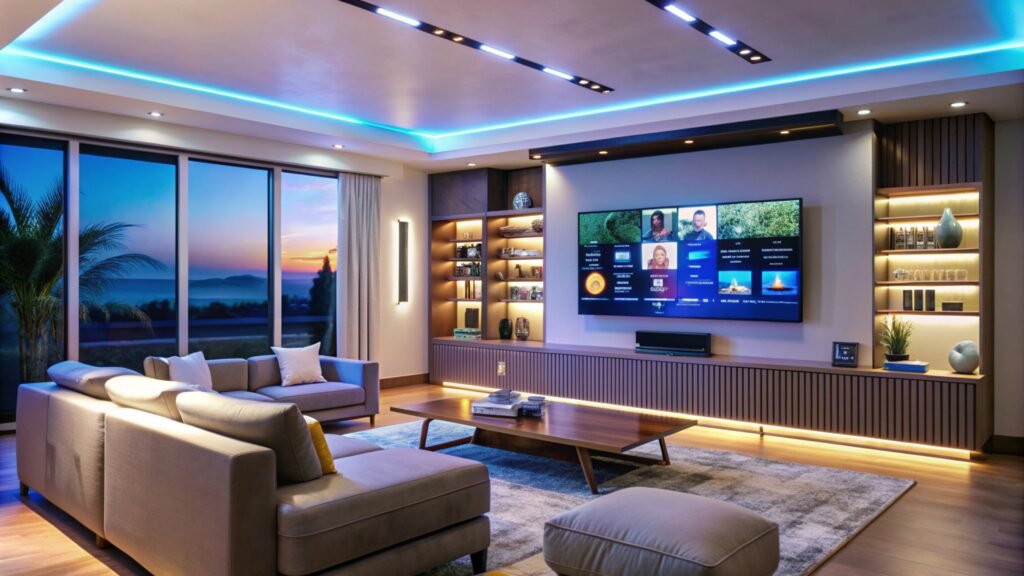
TV Mounting & Installation in Dubai
You’ve got a new TV in the box and a blank wall waiting for it. Before you book anyone, the question that actually matters isn’t how much TV mounting costs in Dubai. It’s what kind of wall is behind your TV, because that single detail decides whether the job takes twenty minutes or turns into something more involved.
Most TV mounting quotes online swing from AED 79 to AED 760 for what looks like the same service. That range isn’t random, and it isn’t padding either. The cost depends on the wall type, TV size, bracket choice, and whether cables are hidden inside the wall or run along the surface. Here’s what actually drives the number and what a straightforward TV mounting installation in Dubai should include.
What Determines TV Mounting Cost in Dubai
Four factors influence the price of nearly every job.
Wall type. Solid concrete takes longer to drill and needs different anchors than drywall or gypsum board. A gypsum partition wall often needs internal reinforcement before it can hold a mount safely, since the board alone won’t support the weight over time.
TV size and weight. A 32-inch bedroom TV and a 75-inch home theatre screen aren’t the same job. Larger, heavier TVs need a mount rated for that weight and often a second technician on site for a safe lift.
Bracket type. Fixed mounts sit flat against the wall and cost the least to install. Tilting brackets add a small premium for the adjustment mechanism. Full-motion mounts, the kind that swing the screen out and rotate it, take the longest to set and cost the most.
Cable concealment. Running cables through the wall instead of leaving them visible on the surface adds real time to the job, and on concrete walls, it adds complexity most quoted “starting from” prices don’t include.
Why the Wall Matters More Than Most Quotes Admit
Here’s what most TV mounting listings skip entirely, and it’s the one thing that actually protects you.
A lot of newer Dubai towers use post-tension slab construction, where steel cables run through the concrete under real tension to hold the structure together. Drilling into the wrong spot in a post-tension wall isn’t just a bad hole. It can hit one of those cables, and that’s a structural problem, not a cosmetic one.
This is exactly why a proper wall assessment isn’t a formality. A technician who knows what they’re looking at will check the wall type, locate studs or reinforcement where needed, and know which walls need extra care before a single hole gets drilled. If a company quotes you a price over WhatsApp from a photo alone, that’s a guess, not an assessment. The actual cost and the actual safety of the install get decided on site.
Bracket Types: Which One Actually Fits Your Room
Fixed mounts hold the TV flush against the wall with no movement. These work well in bedrooms or any spot where you’re always viewing the screen from the same angle straight on.
Tilting mounts let you angle the screen down slightly, which matters if the TV sits above eye level, a common setup in living rooms with a fireplace or console beneath it.
Full-motion mounts extend, swivel, and tilt, giving you the flexibility to adjust the screen from multiple seating positions. These make sense in open-plan living areas or anywhere the TV needs to work from more than one angle in the room.
None of these choices should come down to guesswork. A technician walking the room with you before drilling anything is the difference between a mount that works for your space and one you’re stuck readjusting for years.
Beyond the TV: Setting Up the Full Entertainment System
Mounting the screen is usually the easy part. Where a lot of setups fall short is everything around it: the soundbar, the streaming box, the gaming console, and the tangle of cables that connect them all.
Soundbar mounting. A soundbar sitting loose on a console table works, but mounting it directly under the TV keeps the whole setup clean and stops it from getting knocked around. This is a quick add-on to a standard TV mounting job, usually done during the same visit rather than a separate appointment.
Streaming devices and consoles. Once the TV is up, connecting a streaming stick, Apple TV, or gaming console is a five-minute job for a technician who’s already on site, but it’s easy to overlook if you don’t mention it when booking. Ask for component setup as part of the appointment rather than figuring out HDMI ports and remote pairing yourself afterward.
Home theatre and multi-speaker setups. Villas and larger apartments with dedicated media rooms often want more than a single soundbar, sometimes a full surround setup with speakers mounted at multiple points around the room. This falls outside a standard flat-rate TV mount and moves into hourly or call-out pricing, since it involves running cable to several points rather than one.
Multi-room and villa installations. A villa with TVs in the living room, a media room, and a couple of bedrooms doesn’t need four separate bookings. A half-day or full-day call-out covers multiple TVs in one visit, which works out cheaper per installation than booking each room separately and usually gets the whole home done in a single afternoon.
Common Mistakes That Turn a Simple Job Into a Costly One
A few patterns come up again and again with TV mounting jobs in Dubai, and most of them are avoidable with a bit of planning before the technician arrives.
Buying a bracket that doesn’t match the TV’s VESA mounting pattern is the most common one. TVs use standardised hole patterns on the back panel, and a bracket rated for the wrong pattern either won’t fit or won’t distribute the weight properly. Check your TV’s VESA spec before buying a bracket, not after the technician is already at your door.
Guessing at wall type from a WhatsApp photo is the second. A quote based on a picture alone is an estimate, not a confirmed price, and it can shift once a technician actually tests the wall. Booking a proper on-site assessment, even for a seemingly simple mount, avoids a surprise adjustment on the day.
Skipping the power outlet check is the third. A TV mounted at the ideal height with no nearby outlet means a cable run across the wall or a visible extension cord, neither of which looks good. Flag your outlet locations when booking so the technician can plan cable routing before drilling, not after.
QuickResponse TV Mounting & Installation in Dubai
QuickResponse offers TV mounting and entertainment system installation in Dubai at a flat rate, rather than a price range that varies based on the person providing the quote.
| Service | Price |
|---|---|
| TV / entertainment system installation | AED 109 |
| Hourly handyman rate | AED 99 |
| Drilling & hanging (up to 15 holes) | AED 99 |
| Curtains & blinds installation | AED 99 |
| Half-day handyman call-out (4 hrs) | AED 349 |
| Full-day handyman call-out (8 hrs) | AED 639 |
The flat AED 109 rate covers standard wall mounting for most residential TV sizes on straightforward walls. Larger installations, full-motion brackets on concrete, or jobs that combine mounting with a soundbar setup and full cable concealment fall under the hourly rate or a half-day call-out, since the scope goes beyond a single fixed task. A technician can confirm which applies once they’ve seen the wall and the TV.
What’s Usually Included, and What Isn’t
A standard TV mounting installation in Dubai typically includes the wall assessment, drilling, secure bracket fitting, levelling, and a basic connection check once the TV is up. What it usually doesn’t include, unless you ask upfront, is the bracket itself. Most companies expect you to supply the wall mount, since bracket quality and weight rating vary so much by TV model that a generic one included in the price often isn’t the right fit anyway.
Cable concealment inside the wall is typically a separate add-on, not a given. If you want cables hidden rather than run along a cable channel on the surface, mention it when booking so it’s priced and scheduled correctly, particularly on concrete walls where in-wall routing takes more time.
DIY vs Professional TV Mounting: What You’re Actually Risking
Mounting a TV yourself on a stud wall with a basic fixed bracket is manageable for some people. Where DIY gets risky is exactly where the money is: a heavy TV on an unknown wall type, a full-motion mount that needs precise weight distribution, or any wall where you’re not sure what’s running behind the surface.
A TV that comes loose from an improperly anchored bracket isn’t just an inconvenience. It’s a genuine safety risk, especially in homes with children, and a repair bill for a cracked screen usually costs more than the installation would have. Professional installation also typically comes with a workmanship warranty, so if a bracket loosens over time, it gets fixed rather than becoming your problem to solve twice.
There’s also the resale and rental angle worth considering. Botched drilling on a rental property, whether it’s an oversized hole, a cracked tile behind the TV, or a mount that damaged the wall finish, is exactly the kind of thing that shows up on a move-out inspection later. A clean, professional install now avoids that argument entirely when your lease ends.
Choosing the Right Booking for the Size of the Job
Not every TV mounting job needs the same type of booking, and picking the wrong one either wastes money or leaves work unfinished.
A single TV on a straightforward wall fits the flat AED 109 rate. One technician, one bracket, done within the hour – no need to book anything larger.
Multiple TVs, a full entertainment system with a soundbar and component setup, or any concrete wall job with cable concealment fits better under the hourly rate or a half-day call-out. This gives the technician room to work through the full scope without rushing, and it’s usually the better value once a job crosses into two or more hours of work anyway.
A full villa setup, several rooms, mixed wall types, or a dedicated home theatre installation is where the full-day call-out earns its price. Booking a full day upfront means the same technician handles every room in one visit instead of piecing the work together across multiple bookings and multiple call-out fees.
Media Furniture and Entertainment Unit Assembly
A mounted TV often comes with a media console or entertainment unit underneath it, and flat-pack furniture assembly is a common add-on to the same appointment. Rather than booking a separate furniture installation slot, most technicians can assemble the unit, position it under the mounted TV, and route cables down into it during the same visit.
This matters more than it sounds like it should. A console assembled after the TV is already up, with cable holes cut to line up with where the ports actually sit, looks far cleaner than working the other way around. If you’re setting up a full media wall, mention the furniture piece when booking so the technician can plan the sequence rather than mounting the TV first and improvising the furniture placement afterwards.
What to Expect During Your Appointment
The technician starts with a quick wall assessment, checking the surface type and confirming the mounting height with you before anything gets drilled. Power outlets and any existing sockets get checked to make sure the setup keeps cables within reach without an ugly stretch across the wall.
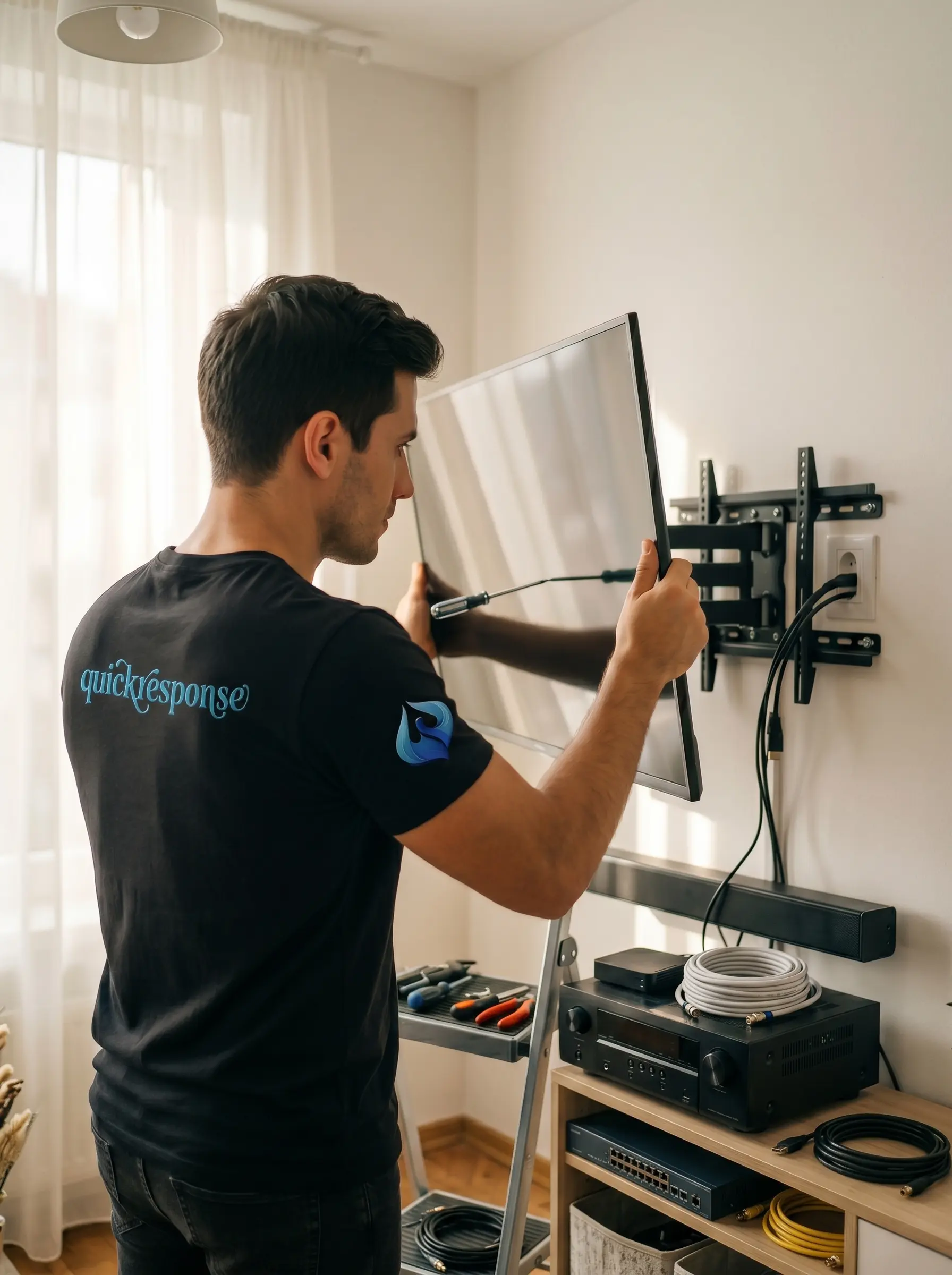
Once the wall and height are confirmed, drilling and bracket fitting happen next, using anchors matched to that specific wall type. The TV goes up, gets levelled, and the technician checks the viewing angle with you before calling the job done. If you’ve booked component setup, this is also when a streaming device, soundbar, or gaming console gets connected and tested.
A standard mount on a straightforward wall usually wraps up within an hour. Full-motion brackets, concrete walls, or jobs with cable concealment take longer, generally one to two hours depending on the wall.
How much does TV mounting cost in Dubai?
Standard TV installation on a straightforward wall starts at AED 109 with QuickResponse. Larger TVs, full-motion brackets on concrete walls, or jobs that include cable concealment and component setup are priced by the hour or as a half-day call-out, since the scope goes beyond a single flat-rate task.
Do I need to supply my own TV wall bracket?
Yes, in most cases. Bracket weight ratings and mounting patterns vary by TV model, so supplying your own bracket ensures it actually matches your screen rather than relying on a generic one that may not fit.
Can any wall support a mounted TV?
Not without the right preparation. Solid concrete and brick walls generally support a mount directly. Gypsum or drywall partitions usually need internal reinforcement first since the board alone isn’t rated to hold a TV’s weight long term.
Is it safe to drill into walls in Dubai apartments and towers?
Standard drywall and most concrete walls are safe to drill with the right anchors and technique. Some newer towers use post-tension slab construction, where cables run through the concrete under tension, so a proper wall assessment before drilling matters more than it does in older buildings.
How long does a TV mounting installation take?
A standard fixed-mount installation on a straightforward wall usually takes under an hour. Full-motion brackets, concrete drilling, or cable concealment inside the wall typically take one to two hours.
Does TV mounting include hiding the cables?
Not by default. Basic installation covers mounting and a visible cable run or surface channel. In-wall cable concealment is usually a separate add-on, since it takes more time and, on concrete walls, more work than a standard mount.
What’s the difference between fixed, tilting, and full-motion mounts?
Fixed mounts hold the TV flat against the wall with no movement, best for a single straight-on viewing angle. Tilting mounts angle the screen down, which is useful when the TV sits above eye level. Full-motion mounts extend and swivel, letting you adjust the angle from multiple seating positions in the room.
Leave a Reply