Blog

  • How Often Should You Deep Clean Your AC in Dubai?

    How Often Should You Deep Clean Your AC in Dubai

    How Often Should You Deep Clean Your AC in Dubai?

    Most people bring their AC habits from wherever they lived before Dubai. Once a year, maybe twice if the unit sounds off. That schedule was never built for this climate, and it shows up fast in higher DEWA bills, weaker cooling, and dust that resettles within a day of cleaning.

    So how often should you deep clean your AC in Dubai? For most split AC units running through a Dubai summer, a professional deep clean every three to four months is the realistic baseline. During peak usage from May through September, that interval should tighten rather than stretch. Three professional cleanings a year is a reasonable minimum for most apartments and villas here, not the one-and-done service plan that works in milder climates.

    The rest of this guide breaks down why that number is what it is, how your specific situation might shift it, and what signs mean you should not wait for the next scheduled date.

    Why Dubai’s Climate Changes the Whole Equation

    In most cities, air conditioning is seasonal. In Dubai, it runs almost continuously for eight to ten months of the year, pulling in hot, dust-heavy outdoor air and cycling it through filters, coils, and ductwork nonstop. That is the first reason the “once a year” rule falls apart here. The system simply does not get a rest period to slow contamination buildup the way it would somewhere with real winters.

    The second factor is dust itself, and Dubai’s dust is not ordinary dust. Sandstorm particles are fine, silica-based, and small enough to pass through gaps most people assume are sealed. A single significant sandstorm can load a filter with the same amount of debris as several weeks of normal operation. If you have watched the sky turn orange during a Shamal, your AC filter absorbed that hit whether you noticed or not.

    Then there is humidity. Dubai’s coastal moisture combined with a cooling system creates near-perfect conditions for mould and bacterial growth inside drain pans and ductwork if things sit too long between cleanings. That is a health consideration, not just a performance one.

    The Realistic AC Deep Cleaning Schedule for Dubai
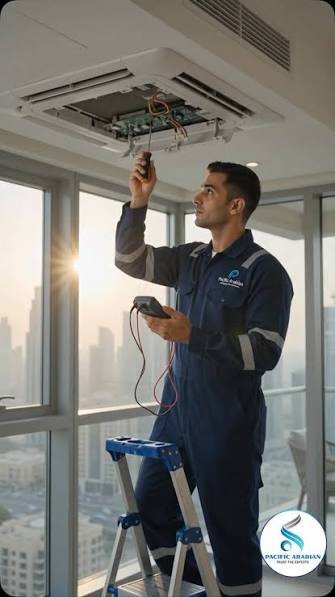
    How Often Should You Deep Clean Your AC in Dubai

    Here is what a working schedule looks like when it accounts for actual Dubai conditions rather than manufacturer defaults written for milder climates.

    • Filters: Clean every 2 to 4 weeks during peak summer months, every 4 to 6 weeks the rest of the year. This is the single highest-impact habit, and the one most people skip.
    • Coils and drains: Professional cleaning every 3 to 4 months. Clogged drains are one of the most common causes of AC leaks in Dubai apartments, especially in older buildings.
    • Full deep clean (filter, coil, drain pan, drain line, blower wheel): Every 3 to 4 months for residential split units during peak usage. Some households on lower floors near construction sites need this closer to every 2 months.
    • Ducts: At minimum every 6 to 12 months for ducted central systems, more often in villas or properties near active construction.

    If your unit only gets one deep clean a year, you are likely running it dirty for most of the summer, which shows up as weaker cooling, a higher DEWA bill, and a system working harder than it should to hit the same temperature.

    How Often Should You Deep Clean Your AC in Dubai and What Actually Changes Your Ideal Interval

    Not every home needs the exact same schedule. A few factors move the number up or down.

    Floor level and building location

    Ground-floor apartments and villas near construction sites or unpaved areas pick up more sand and dust than a unit on the 30th floor of a sealed tower. If you live near an active development site, in Al Quoz, Nad Al Sheba, or a similar desert-facing area, tighten your interval by about a month compared to the general baseline.

    That said, high-rise living is not automatically cleaner. Sealed towers keep outdoor dust out, but they also trap whatever is generated indoors- cooking odours, skin cells, and fabric fibres- inside a smaller air volume that recirculates through the same AC system.

    Household size and pets

    More people and pets in a home means more dust, dander, and airborne particles for the AC to filter. A household of four or more with pets should lean toward the 2 to 3 month end of the range rather than stretching to 4 months.

    Occupancy changes

    Any time a rental property changes tenants, treat it as a trigger for an immediate inspection regardless of when the last cleaning happened. The previous occupant’s habits, whether they ran the filter dirty for a year or kept it spotless, are unknown, and starting a new tenancy with a clean baseline avoids inheriting someone else’s neglect.

    Post-sandstorm and post-renovation

    Two specific events should override your regular calendar entirely. A significant sandstorm warrants a filter check within 48 hours, since running a clogged filter after a heavy dust event just pushes the newly deposited particles straight back into your rooms. Any internal renovation or construction work, even minor drilling or wall patching, introduces fine dust into the system that a scheduled cleaning three months out will not catch in time.

    District cooling vs. split AC

    Apartments on district cooling systems, common in Downtown Dubai, Business Bay, and several Marina towers, have different maintenance responsibilities than split AC units do. The chilled water infrastructure itself is typically managed by the district cooling provider, but the indoor fan coil unit and filters inside your apartment still need the same regular attention as a standalone split system. Do not assume district cooling means you are exempt from filter and coil maintenance. You are only exempt from the compressor and outdoor unit side of it.

    Signs Your AC Needs Cleaning Before Your Next Scheduled Date

    A calendar interval is a useful baseline, but your AC will usually tell you when it needs attention sooner. Watch for:

    • Weaker airflow or the room taking noticeably longer to cool than it used to
    • A DEWA bill that has crept up without a change in usage habits
    • A musty or stale smell when the unit first kicks on
    • Visible dust settling on surfaces faster than normal, even right after cleaning the room
    • Whistling, rattling, or grinding sounds from the vents or outdoor unit
    • Anyone in the household developing new or worsening allergy symptoms, coughing, or congestion that eases when they leave the apartment

    Any one of these on its own might be nothing. Two or more together, especially after a sandstorm or during peak summer, is a reasonable trigger to book a deep clean rather than wait out the calendar.

    What a Proper AC Deep Clean Actually Covers

    Not all AC cleaning services do the same job, and this is where a lot of Dubai residents get shortchanged. A basic service often covers only a filter rinse and a quick external wipe. An actual deep clean should address the following:

    • Filters, rinsed or replaced depending on condition and age
    • Evaporator coil, chemically cleaned of compacted dust and biological build-up
    • Drain pan and drain line are cleared of stagnant water and blockage risk
    • Blower wheel, which accumulates sludge that a filter alone never catches
    • A general check for refrigerant issues, unusual noise, or early signs of compressor strain

    If a quote sounds unusually cheap compared to others you have received, ask specifically which of these components are included. A AED 120 filter rinse and a proper multi-component deep clean are two different services priced very differently, and comparing them side by side without knowing the scope is not a fair comparison.

    What This Costs in Dubai

    Pricing depends on unit type and how many components need attention, but here is what a realistic deep clean looks like on the quickresponse rate card.

    • Hourly AC technician visit (diagnostic or general service): AED 79
    • Single-unit deep AC cleaning: AED 229
    • Full AC cleaning (all-component service, single unit): AED 349
    • Multi-unit deep cleaning for 2 units: AED 419
    • Multi-unit deep cleaning for 3 units: AED 597
    • Multi-unit deep cleaning for 4 units: AED 719
    • Multi-unit deep cleaning for 5 units: AED 824

    Villas or apartments with multiple split units typically save per unit when booking a multi-unit deep clean in one visit rather than scheduling each AC separately.

    Split AC vs. Central AC: Different Cleaning Needs

    Not every Dubai home runs the same type of system, and the cleaning schedule shifts depending on what you have.

    Split AC units, the wall-mounted or ceiling-mounted units common in most apartments and villas, are the easiest to maintain because each unit is self-contained. Filters slide out for a quick rinse, and a technician can access the coil and drain pan without opening up walls or ceilings. This is why the 3- to 4 month deep clean interval works cleanly for split systems.

    Ducted central AC, more common in villas and some larger apartments, pushes cooled air through a network of ducts running through the ceiling or floor. Dust and debris settle inside that ductwork over time in a way a filter alone cannot catch, since the ducts themselves become a reservoir for particulate buildup. Duct cleaning needs its own schedule, separate from filter and coil cleaning, typically every 6 to 12 months for residential ductwork, with villas near construction sites needing it closer to the 6-month mark.

    District cooling fan coil units, found in many towers across Downtown Dubai, Business Bay, and parts of Dubai Marina, sit somewhere in between. The chilled water supply itself is handled at the building level, but the fan coil unit inside your apartment, the part that actually blows cooled air into your rooms, collects dust and needs filter and coil attention on the same schedule as a standalone split unit.

    If you are not sure which system your apartment has, check whether there is an outdoor compressor unit specific to your apartment. If there is not, and cooling comes from a wall-mounted unit connected to building-wide infrastructure, you are most likely on district cooling.

    Is an Annual Maintenance Contract Worth It?

    For households that would rather not track a rotating cleaning calendar themselves, an annual maintenance contract (AMC) bundles scheduled visits into one upfront agreement, usually covering three to four visits across the year timed around peak season.

    The case for an AMC is straightforward: you get pre-summer and post-summer servicing locked in automatically, filter checks in between, and priority booking if something breaks down mid-summer when every AC company in Dubai is stretched thin with emergency calls. For a household that has previously let cleaning slide because scheduling felt like one more thing to remember, a contract removes that friction entirely.

    The case against it is just as straightforward: if you are diligent about booking cleanings yourself and your household is smaller with lower dust exposure, paying per visit as needed can work out similarly priced without locking into a fixed schedule that might not match your actual usage patterns in a given year.

    A reasonable middle ground for many Dubai households is booking the pre-summer deep clean as a standalone service every year without fail, since that single visit has the biggest impact on how the system performs for the following five months, and then deciding month to month whether additional cleanings are needed based on the signs covered earlier in this guide.

    Building a Simple Seasonal Routine

    The easiest way to stay on top of this without overthinking it is to tie your AC schedule to Dubai’s actual seasons rather than trying to count months from an arbitrary start date.

    Before summer, ideally in April, book a full deep clean so the system starts peak season with clean coils and clear drains. This is the single most impactful cleaning of the year, since it sets up efficiency for the four to five months the unit will run hardest.

    Mid-summer, around July, check filters more frequently and consider a second cleaning if the household has pets, young children, or anyone with respiratory sensitivity.

    After summer, around October or November, schedule a post-peak cleaning to clear out everything that built up during the heaviest usage months and reset the system before the cooler season, when usage drops and the AC gets something closer to a rest period.

    Any sandstorm or renovation event in between gets its own inspection, independent of where you are in that seasonal cycle.

    Write the dates down somewhere you will actually see them: a phone reminder, a shared calendar with whoever else lives in the apartment, or anything that turns “sometime this year” into an actual date on the calendar. The households that stick to a cleaning routine in Dubai are rarely the ones with the most expensive AC systems.

    They are the ones who treated the pre-summer and post-summer visits as non-negotiable, the same way they would not skip renewing their DEWA account or their apartment insurance. A system that gets consistent attention two or three times a year rarely surprises anyone with a mid-August breakdown, and that alone is worth more than the cost of the cleanings themselves.

    How often should you deep clean your AC in Dubai?

    Most Dubai households should deep clean their AC every 3 to 4 months, with a minimum of three professional cleanings per year. Homes near construction sites, ground floor units, or households with pets should lean toward the shorter end of that range

    Is once a year enough for AC cleaning in Dubai?

    No. Annual cleaning was never designed for Dubai’s near-continuous AC usage, sandstorm exposure, and high humidity. A system cleaned only once a year typically runs several months dirty during peak summer, which shows up as weaker cooling and higher electricity bills.

    How often should AC filters be cleaned in Dubai?

    AC filters should be cleaned every 2 to 4 weeks during peak summer months and every 4 to 6 weeks the rest of the year. Filters are the first defense against sandstorm dust and need far more frequent attention than manufacturer guidelines written for milder climates suggest.

    Does a sandstorm mean I need to clean my AC immediately?

    Yes. Check your filter within 48 hours of a significant sandstorm. Running a clogged filter after heavy dust exposure pushes the newly trapped particles back into your rooms rather than filtering them out.

    Do apartments on district cooling still need AC cleaning?

    Yes. District cooling systems, common in Downtown Dubai and Business Bay towers, still have an indoor fan coil unit and filter that need regular cleaning. Only the compressor and outdoor chilled water infrastructure fall outside your responsibility on a district cooling setup.

    What is included in a professional AC deep clean in Dubai?

    A proper deep clean covers the filter, evaporator coil, drain pan, drain line, and blower wheel, along with a general check for refrigerant or mechanical issues. A basic filter rinse alone is not the same service and should not be priced or marketed as a deep clean.

    How do I know my AC needs cleaning before the scheduled date?

    Watch for weaker airflow, a rising DEWA bill without a change in usage, musty smells, dust settling faster than usual, unusual noises from the vents, or new allergy symptoms in the household. Any of these on their own is worth a check. Two or more together is a clear signal to book sooner.
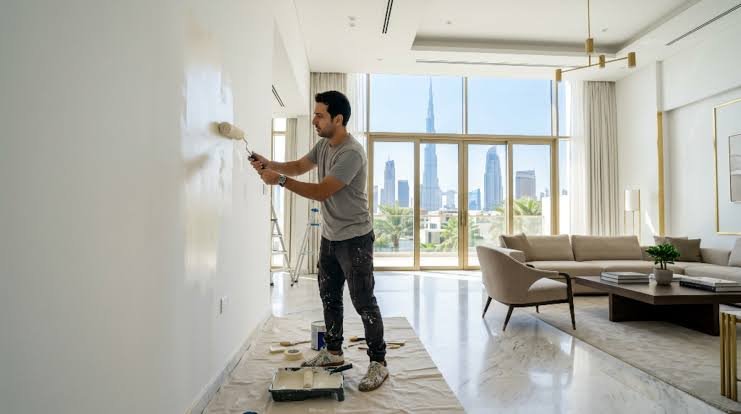

  • How Much Does Apartment Painting Cost in Dubai? A Complete Guide

    Apartment Painting Cost in Dubai

    Ask five painters in Dubai for a quote, and you will likely get five different numbers. That is not because anyone is trying to overcharge you. Apartment painting cost in Dubai depends on so many moving parts – unit size, wall condition, paint grade, and floor access that two identical-looking flats can end up with quotes AED 1,000 apart.

    If you are trying to budget before you call anyone, this guide walks through what apartment painting actually costs in Dubai right now, what changes the number, and how to avoid paying for things you do not need.

    Quick Answer: Apartment Painting Cost in Dubai

    For quick reference, here is what most Dubai residents pay for a full interior repaint, excluding furniture removal or major wall repairs.

    • Studio apartment: AED 700 to AED 1,300
    • 1-bedroom apartment: AED 900 to AED 1,800
    • 2-bedroom apartment: AED 1,500 to AED 3,000
    • 3-bedroom apartment: AED 2,500 to AED 4,500
    • Single room only: AED 400 to AED 900

    These ranges cover standard emulsion paint, two coats, walls and ceilings, in a unit that is not badly damaged. Add textured finishes, dark-to-light colour changes, or heavy wall repair, and the price climbs from there.

    QuickResponse prices apartment painting to match the current Dubai market rate since paint jobs vary too much unit to unit for a fixed rate card to make sense. Every job gets a free on-site inspection before a final number is confirmed, so what you see above is a starting point for budgeting, not a locked-in figure.

    What Actually Drives Apartment Painting Cost in Dubai

    1. Size of the apartment

    This is the obvious one. More wall area means more paint, more labour hours, and more time on site. A studio in JVC and a 3-bedroom in Jumeirah Islands are not the same job even if both are described as “apartment painting”.

    Painters in Dubai typically price by square metre of wall area for larger jobs, somewhere around AED 15 to AED 25 per square metre for standard emulsion. For smaller jobs like a single bedroom, most companies switch to flat per-room pricing instead since measuring every wall for a 12 square metre room adds admin cost without adding accuracy.

    2. Condition of the existing walls

    A freshly handed-over apartment with clean, crack-free walls costs less to paint than a 6-year-old rental with nail holes, water stains, and peeling patches near the AC vents. Every hole needs filling. Every crack needs skim coating before primer goes on. Skip this step and the new paint will show every flaw within weeks.

    If your walls have visible dampness, especially near bathrooms or the kitchen, mention it before booking. Painting over an active leak just hides the problem until it bleeds through again in a month.

    3. Paint quality and brand

    Basic economy emulsion runs cheaper per litre than premium washable or anti-fungal paint. In Dubai’s climate, that price difference matters more than it would in a temperate country. Standard paints in a humid, high-heat apartment can start fading or peeling within two to three years. Premium heat-resistant, anti-fungal paints hold their finish for five to seven years.

    Paying more upfront for better paint usually costs less over a five-year window, since you are not repainting as often.

    4. Colour change complexity

    Going from white to a lighter neutral is a straightforward two-coat job. Going from a dark accent wall to white, or covering a bold colour with another bold colour, often needs a third coat and sometimes a stain-blocking primer first. Each extra coat adds labour time, and labour time is most of what you are paying for.

    5. Furniture and floor protection

    Furnished apartments take longer to paint because the crew has to move furniture, mask floors, cover fixtures, and work around everything carefully. An empty unit can be painted in a single day in many cases. A fully furnished one usually needs two to three days for the same square footage.

    6. Building access and floor level

    High-rise apartments above the 20th floor sometimes carry a small logistics surcharge, since equipment and material transport takes longer with lift schedules and building access rules in towers managed by Emaar, Nakheel, or other master developers.

    Apartment Painting Cost by Room Type

    If you only need one or two rooms done rather than the full unit, here is what that typically looks like in Dubai right now.

    • Bedroom (standard size): AED 400 to AED 700
    • Living room: AED 500 to AED 900
    • Kitchen (excluding cabinets): AED 350 to AED 600
    • Bathroom: AED 300 to AED 500
    • Hallway or corridor: AED 250 to AED 450

    Single-room jobs almost always cost more per square metre than a full-apartment job, because the painter’s setup, travel, and minimum labour time do not scale down proportionally. If you are planning to repaint two or more rooms eventually, it is usually cheaper to book them together.

    Apartment vs. Villa Painting Cost in Dubai

    People often assume apartment and villa painting are priced the same per square metre. They are not quite. Villas typically add ceiling height variation, exterior walls, staircases, and sometimes multiple floors, all of which push the total higher even at a similar per-meter rate. A 2-bedroom apartment might run AED 1,500 to AED 3,000, while a comparable-sized villa easily reaches AED 3,500 to AED 6,000 once you factor in the extra surfaces a standalone home has that a flat does not.

    If you live in a villa and want a separate breakdown, that deserves its own guide, since ceiling height, garden walls, and exterior weatherproofing all change the math significantly.

    Hidden Costs That Inflate Apartment Painting Quotes

    A cheap quote is not always the cheapest outcome. Watch for these add-ons that some companies leave out of the initial number, then charge for once work starts.

    • Wall repair and filling. If your walls have cracks or holes, ask upfront whether basic filling is included or billed separately.
    • Primer on stained or dark walls. Painting white over a dark colour without stain-blocking primer often means the old colour bleeds through, forcing a repaint.
    • Furniture moving. Some quotes assume an empty apartment. If yours is furnished, confirm this is factored in.
    • Ceiling painting. Some quotes cover walls only. Ceilings, especially in kitchens and bathrooms where grease and moisture build up, often get quoted as an add-on.
    • Paint disposal and cleanup. A professional crew should leave your apartment free of paint splatter and packaging. Ask if this is included.

    The way to avoid surprise charges is simple: get an itemised quote, not a single lump number, and ask what is excluded before you sign off.

    How to Get an Accurate Quote

    Photos and phone descriptions only get you so far. The most reliable way to price apartment painting in Dubai is a short in-person visit where the painter can see wall condition, measure the actual space, and flag anything that needs repair before the paint goes on.

    QuickResponse offers a free inspection before confirming any painting quote, precisely because apartment painting costs in Dubai vary too much for a fixed number, to be honest. What looks like a simple two-coat job over the phone sometimes turns into a wall repair job once someone is standing in the room. Getting that assessment done before you commit to a date saves both sides from an awkward renegotiation halfway through the project.

    When you book an inspection, have these ready:

    • Rough measurements or the unit’s floor plan if you have one
    • Photos of any visible cracks, stains, or damage
    • A decision on whether you want a colour change or the same shade repainted
    • Whether the apartment will be furnished or empty during the work

    Paint Types and What They Cost You Long Term

    Not all paint sold in Dubai behaves the same once it hits a wall in this climate, and the cheapest can in the shop is not always the cheapest choice over five years.

    Standard economy emulsion is what most budget quotes are built around. It covers well enough for a fresh coat but tends to yellow near kitchens, show scuff marks in hallways, and lose its finish faster in rooms with direct sun exposure through floor-to-ceiling windows, a common feature in Dubai apartments. Expect to repaint every two to three years if you go this route.

    Washable emulsion costs more per litre but holds up to wiping, which matters in a home with kids, pets, or a kitchen wall that catches cooking splashes. It is a reasonable middle ground for most apartments.

    Anti-fungal and heat-reflective paint is worth the premium in bathrooms, kitchens, and any room facing west, where afternoon heat through the glass pushes wall temperatures higher than people expect. These paints resist the mould growth that Dubai’s humidity encourages and typically last five to seven years before needing a full repaint.

    Textured or speciality finishes, like Venetian plaster looks or metallic accents, sit outside standard per-square-metre pricing entirely. These are usually quoted as a separate line item because they need a different application technique and often a specialist rather than a general painting crew.

    If your budget is tight, a smart compromise is standard emulsion in bedrooms and hallways and washable or anti-fungal paint in the kitchen and bathrooms specifically, the rooms where moisture and daily wear do the most damage.

    DIY Painting vs. Hiring a Professional in Dubai

    Painting one small accent wall yourself is a manageable weekend project. Painting a full apartment is a different scale of task, and the maths often does not favour DIY the way people assume it will.

    A gallon of decent interior paint in Dubai runs roughly AED 18 to AED 50 depending on brand and finish, and a typical apartment needs several gallons once you account for two coats across every wall. Add rollers, brushes, painter’s tape, floor plastic, and a ladder or extension pole for ceiling work, and the material cost alone can approach half of what a professional crew would charge for labour and materials combined before factoring in your own time.

    There is also the finish quality gap. Professional painters cut clean lines around trim and switches without needing tape everywhere, apply even coats without visible roller marks, and know how to handle problem walls, like ones with old oil-based paint underneath, that need a specific primer or the new coat will not adhere properly.

    DIY makes sense for small, low-stakes jobs: a single accent wall, a closet, or a storage room nobody sees closely. For a full apartment, especially a rental where the landlord expects a professional standard at handover, hiring a crew is usually worth the cost difference once you weigh in your own time, the risk of mistakes on walls you cannot easily redo, and the equipment you would need to buy for a one-time job.

    Landlord and Handover Painting Rules in Dubai

    If you are painting to prepare a rental apartment for handover, a few Dubai-specific rules are worth knowing before you book anyone.

    Most tenancy contracts require the apartment to be returned in its original paint condition, usually meaning white or the building’s standard neutral shade, unless the landlord has agreed otherwise in writing. If you painted an accent wall a bold colour during your tenancy, budget for repainting it back before your final inspection, since landlords in Dubai commonly deduct repainting costs from the security deposit if the unit is not returned to standard.

    Some buildings and master developers, including several Emaar and Nakheel communities, have specific guidelines around exterior-facing changes or common-area adjacent surfaces, though standard interior wall painting inside your own unit rarely needs developer approval. If you are unsure, a quick check with your building management office before booking avoids any handover disputes later.

    Timing matters too. If you are painting right before a move-out inspection, book with enough buffer for the paint to fully cure, typically 24 to 48 hours per coat depending on humidity, so the walls are not still slightly tacky when the property manager walks through.

    Tips to Keep Apartment Painting Cost Down

    You do not have to choose between quality and budget every time. A few practical moves bring the total down without cutting corners that matter.

    Book during the cooler months, October through March, when demand softens slightly and painters have more scheduling flexibility. Painting during Dubai’s peak summer heat is still possible, but expect crews stretched thin with AC-related work taking priority citywide.

    Stick with lighter, neutral tones if you are open to it. Fewer coats are usually needed to cover a light colour change compared to a full switch from dark to light or vice versa.

    Bundle rooms. If you know you will eventually repaint the whole apartment, doing it in one visit instead of two separate bookings saves on the fixed setup and travel cost baked into every job.

    Ask about seasonal minor touch-ups instead of a full repaint if your walls are mostly fine and only one or two areas show wear. A touch-up service costs a fraction of a full repaint and can extend the life of your existing paint job by a year or more.

    How much does it cost to paint a 1-bedroom apartment in Dubai?

    A standard 1-bedroom apartment in Dubai typically costs between AED 900 and AED 1,800 to paint, depending on wall condition, paint quality, and whether the unit is furnished or empty during the work.

    Is painting cheaper in an empty apartment or a furnished one?

    Empty apartments are generally cheaper and faster to paint, since the crew does not need to move furniture, mask floors as extensively, or work around fixed items. Furnished units often add one to two days to the timeline and a modest premium to the quote.

    How long does it take to paint a Dubai apartment?

    A studio or 1-bedroom empty apartment can usually be painted in a single day. Larger 2 or 3-bedroom units, or any furnished apartment, typically take two to three days depending on wall repair needs and drying time between coats.

    Does apartment painting cost in Dubai include wall repairs?

    Not always. Basic crack filling is sometimes included in a standard quote, but larger repairs like patching holes, fixing damp patches, or replastering damaged sections are usually billed separately. Always confirm this before booking.

    What is the average cost per square meter for painting in Dubai?

    Most Dubai painters charge between AED 15 and AED 25 per square metre of wall area for standard interior emulsion paint, with premium finishes and heavy repair work pushing that figure higher.

    Should I paint before or after moving out of a rental apartment?

    If you are painting to restore a rental to its original condition before handover, doing it after you have moved your furniture out is faster and cheaper, since the crew has a clear, empty space to work in.

    Can I get a fixed price for apartment painting without a site visit?

    You can get a rough estimate over the phone or through photos, but an accurate, itemised quote requires a short in-person inspection. Wall condition is the single biggest variable in the final price, and that is difficult to assess remotely.

  • TV Mounting & Entertainment System Installation in Dubai: Cost & What to Expect

    TV Mounting & Installation in Dubai

    TV Mounting & Installation in Dubai

    You’ve got a new TV in the box and a blank wall waiting for it. Before you book anyone, the question that actually matters isn’t how much TV mounting costs in Dubai. It’s what kind of wall is behind your TV, because that single detail decides whether the job takes twenty minutes or turns into something more involved.

    Most TV mounting quotes online swing from AED 79 to AED 760 for what looks like the same service. That range isn’t random, and it isn’t padding either. The cost depends on the wall type, TV size, bracket choice, and whether cables are hidden inside the wall or run along the surface. Here’s what actually drives the number and what a straightforward TV mounting installation in Dubai should include.

    What Determines TV Mounting Cost in Dubai

    Four factors influence the price of nearly every job.

    Wall type. Solid concrete takes longer to drill and needs different anchors than drywall or gypsum board. A gypsum partition wall often needs internal reinforcement before it can hold a mount safely, since the board alone won’t support the weight over time.

    TV size and weight. A 32-inch bedroom TV and a 75-inch home theatre screen aren’t the same job. Larger, heavier TVs need a mount rated for that weight and often a second technician on site for a safe lift.

    Bracket type. Fixed mounts sit flat against the wall and cost the least to install. Tilting brackets add a small premium for the adjustment mechanism. Full-motion mounts, the kind that swing the screen out and rotate it, take the longest to set and cost the most.

    Cable concealment. Running cables through the wall instead of leaving them visible on the surface adds real time to the job, and on concrete walls, it adds complexity most quoted “starting from” prices don’t include.

    Why the Wall Matters More Than Most Quotes Admit

    Here’s what most TV mounting listings skip entirely, and it’s the one thing that actually protects you.

    A lot of newer Dubai towers use post-tension slab construction, where steel cables run through the concrete under real tension to hold the structure together. Drilling into the wrong spot in a post-tension wall isn’t just a bad hole. It can hit one of those cables, and that’s a structural problem, not a cosmetic one.

    This is exactly why a proper wall assessment isn’t a formality. A technician who knows what they’re looking at will check the wall type, locate studs or reinforcement where needed, and know which walls need extra care before a single hole gets drilled. If a company quotes you a price over WhatsApp from a photo alone, that’s a guess, not an assessment. The actual cost and the actual safety of the install get decided on site.

    Bracket Types: Which One Actually Fits Your Room

    Fixed mounts hold the TV flush against the wall with no movement. These work well in bedrooms or any spot where you’re always viewing the screen from the same angle straight on.

    Tilting mounts let you angle the screen down slightly, which matters if the TV sits above eye level, a common setup in living rooms with a fireplace or console beneath it.

    Full-motion mounts extend, swivel, and tilt, giving you the flexibility to adjust the screen from multiple seating positions. These make sense in open-plan living areas or anywhere the TV needs to work from more than one angle in the room.

    None of these choices should come down to guesswork. A technician walking the room with you before drilling anything is the difference between a mount that works for your space and one you’re stuck readjusting for years.

    Beyond the TV: Setting Up the Full Entertainment System

    Mounting the screen is usually the easy part. Where a lot of setups fall short is everything around it: the soundbar, the streaming box, the gaming console, and the tangle of cables that connect them all.

    Soundbar mounting. A soundbar sitting loose on a console table works, but mounting it directly under the TV keeps the whole setup clean and stops it from getting knocked around. This is a quick add-on to a standard TV mounting job, usually done during the same visit rather than a separate appointment.

    Streaming devices and consoles. Once the TV is up, connecting a streaming stick, Apple TV, or gaming console is a five-minute job for a technician who’s already on site, but it’s easy to overlook if you don’t mention it when booking. Ask for component setup as part of the appointment rather than figuring out HDMI ports and remote pairing yourself afterward.

    Home theatre and multi-speaker setups. Villas and larger apartments with dedicated media rooms often want more than a single soundbar, sometimes a full surround setup with speakers mounted at multiple points around the room. This falls outside a standard flat-rate TV mount and moves into hourly or call-out pricing, since it involves running cable to several points rather than one.

    Multi-room and villa installations. A villa with TVs in the living room, a media room, and a couple of bedrooms doesn’t need four separate bookings. A half-day or full-day call-out covers multiple TVs in one visit, which works out cheaper per installation than booking each room separately and usually gets the whole home done in a single afternoon.

    Common Mistakes That Turn a Simple Job Into a Costly One

    A few patterns come up again and again with TV mounting jobs in Dubai, and most of them are avoidable with a bit of planning before the technician arrives.

    Buying a bracket that doesn’t match the TV’s VESA mounting pattern is the most common one. TVs use standardised hole patterns on the back panel, and a bracket rated for the wrong pattern either won’t fit or won’t distribute the weight properly. Check your TV’s VESA spec before buying a bracket, not after the technician is already at your door.

    Guessing at wall type from a WhatsApp photo is the second. A quote based on a picture alone is an estimate, not a confirmed price, and it can shift once a technician actually tests the wall. Booking a proper on-site assessment, even for a seemingly simple mount, avoids a surprise adjustment on the day.

    Skipping the power outlet check is the third. A TV mounted at the ideal height with no nearby outlet means a cable run across the wall or a visible extension cord, neither of which looks good. Flag your outlet locations when booking so the technician can plan cable routing before drilling, not after.

    QuickResponse TV Mounting & Installation in Dubai

    QuickResponse offers TV mounting and entertainment system installation in Dubai at a flat rate, rather than a price range that varies based on the person providing the quote.

    ServicePrice
    TV / entertainment system installationAED 109
    Hourly handyman rateAED 99
    Drilling & hanging (up to 15 holes)AED 99
    Curtains & blinds installationAED 99
    Half-day handyman call-out (4 hrs)AED 349
    Full-day handyman call-out (8 hrs)AED 639

    The flat AED 109 rate covers standard wall mounting for most residential TV sizes on straightforward walls. Larger installations, full-motion brackets on concrete, or jobs that combine mounting with a soundbar setup and full cable concealment fall under the hourly rate or a half-day call-out, since the scope goes beyond a single fixed task. A technician can confirm which applies once they’ve seen the wall and the TV.

    What’s Usually Included, and What Isn’t

    A standard TV mounting installation in Dubai typically includes the wall assessment, drilling, secure bracket fitting, levelling, and a basic connection check once the TV is up. What it usually doesn’t include, unless you ask upfront, is the bracket itself. Most companies expect you to supply the wall mount, since bracket quality and weight rating vary so much by TV model that a generic one included in the price often isn’t the right fit anyway.

    Cable concealment inside the wall is typically a separate add-on, not a given. If you want cables hidden rather than run along a cable channel on the surface, mention it when booking so it’s priced and scheduled correctly, particularly on concrete walls where in-wall routing takes more time.

    DIY vs Professional TV Mounting: What You’re Actually Risking

    Mounting a TV yourself on a stud wall with a basic fixed bracket is manageable for some people. Where DIY gets risky is exactly where the money is: a heavy TV on an unknown wall type, a full-motion mount that needs precise weight distribution, or any wall where you’re not sure what’s running behind the surface.

    A TV that comes loose from an improperly anchored bracket isn’t just an inconvenience. It’s a genuine safety risk, especially in homes with children, and a repair bill for a cracked screen usually costs more than the installation would have. Professional installation also typically comes with a workmanship warranty, so if a bracket loosens over time, it gets fixed rather than becoming your problem to solve twice.

    There’s also the resale and rental angle worth considering. Botched drilling on a rental property, whether it’s an oversized hole, a cracked tile behind the TV, or a mount that damaged the wall finish, is exactly the kind of thing that shows up on a move-out inspection later. A clean, professional install now avoids that argument entirely when your lease ends.

    Choosing the Right Booking for the Size of the Job

    Not every TV mounting job needs the same type of booking, and picking the wrong one either wastes money or leaves work unfinished.

    A single TV on a straightforward wall fits the flat AED 109 rate. One technician, one bracket, done within the hour – no need to book anything larger.

    Multiple TVs, a full entertainment system with a soundbar and component setup, or any concrete wall job with cable concealment fits better under the hourly rate or a half-day call-out. This gives the technician room to work through the full scope without rushing, and it’s usually the better value once a job crosses into two or more hours of work anyway.

    A full villa setup, several rooms, mixed wall types, or a dedicated home theatre installation is where the full-day call-out earns its price. Booking a full day upfront means the same technician handles every room in one visit instead of piecing the work together across multiple bookings and multiple call-out fees.

    Media Furniture and Entertainment Unit Assembly

    A mounted TV often comes with a media console or entertainment unit underneath it, and flat-pack furniture assembly is a common add-on to the same appointment. Rather than booking a separate furniture installation slot, most technicians can assemble the unit, position it under the mounted TV, and route cables down into it during the same visit.

    This matters more than it sounds like it should. A console assembled after the TV is already up, with cable holes cut to line up with where the ports actually sit, looks far cleaner than working the other way around. If you’re setting up a full media wall, mention the furniture piece when booking so the technician can plan the sequence rather than mounting the TV first and improvising the furniture placement afterwards.

    What to Expect During Your Appointment

    The technician starts with a quick wall assessment, checking the surface type and confirming the mounting height with you before anything gets drilled. Power outlets and any existing sockets get checked to make sure the setup keeps cables within reach without an ugly stretch across the wall.

    Once the wall and height are confirmed, drilling and bracket fitting happen next, using anchors matched to that specific wall type. The TV goes up, gets levelled, and the technician checks the viewing angle with you before calling the job done. If you’ve booked component setup, this is also when a streaming device, soundbar, or gaming console gets connected and tested.

    A standard mount on a straightforward wall usually wraps up within an hour. Full-motion brackets, concrete walls, or jobs with cable concealment take longer, generally one to two hours depending on the wall.

    How much does TV mounting cost in Dubai?

    Standard TV installation on a straightforward wall starts at AED 109 with QuickResponse. Larger TVs, full-motion brackets on concrete walls, or jobs that include cable concealment and component setup are priced by the hour or as a half-day call-out, since the scope goes beyond a single flat-rate task.

    Do I need to supply my own TV wall bracket?

    Yes, in most cases. Bracket weight ratings and mounting patterns vary by TV model, so supplying your own bracket ensures it actually matches your screen rather than relying on a generic one that may not fit.

    Can any wall support a mounted TV?

    Not without the right preparation. Solid concrete and brick walls generally support a mount directly. Gypsum or drywall partitions usually need internal reinforcement first since the board alone isn’t rated to hold a TV’s weight long term.

    Is it safe to drill into walls in Dubai apartments and towers?

    Standard drywall and most concrete walls are safe to drill with the right anchors and technique. Some newer towers use post-tension slab construction, where cables run through the concrete under tension, so a proper wall assessment before drilling matters more than it does in older buildings.

    How long does a TV mounting installation take?

    A standard fixed-mount installation on a straightforward wall usually takes under an hour. Full-motion brackets, concrete drilling, or cable concealment inside the wall typically take one to two hours.

    Does TV mounting include hiding the cables?

    Not by default. Basic installation covers mounting and a visible cable run or surface channel. In-wall cable concealment is usually a separate add-on, since it takes more time and, on concrete walls, more work than a standard mount.

    What’s the difference between fixed, tilting, and full-motion mounts?

    Fixed mounts hold the TV flat against the wall with no movement, best for a single straight-on viewing angle. Tilting mounts angle the screen down, which is useful when the TV sits above eye level. Full-motion mounts extend and swivel, letting you adjust the angle from multiple seating positions in the room.

  • Move-Out Cleaning Checklist for Dubai Apartments: What Landlords Actually Expect

    Move-Out Cleaning Checklist for Dubai Apartments

    Move-Out Cleaning Checklist for Dubai Apartments

    Your lease is ending, the movers are booked, and somewhere in your head is a number: the deposit you paid on day one. Whether you get it back in full comes down to one thing most tenants underestimate. Not how clean the apartment looks to you. How clean it looks to the person doing the inspection.

    That gap is where deposits disappear. A move-out cleaning checklist Dubai landlords will actually sign off on isn’t the same as a normal Sunday tidy-up. Property managers here inspect for a specific standard, and they know exactly where tenants cut corners. This guide walks through what that standard looks like, room by room, and where the real money gets deducted.

    This mid-year stretch, when lease renewals and relocations peak across the city, is exactly when landlords tighten up their inspections. More handovers happening at once means less patience for a rushed job.

    Why Move-Out Cleaning Checklist for Dubai Apartments is Stricter Than You Think

    Dust is the enemy in this city. Between sandstorms, construction dust, and AC units running nearly year-round, grime builds up in places a normal cleaning routine never touches. Property managers in buildings across Marina, JBR, Downtown, and Business Bay know this, and their checklists reflect it.

    Your tenancy contract usually includes a clause requiring you to return the property in the condition you received it, minus normal wear and tear. That last phrase does a lot of work, and it’s also where most disputes start. Faded paint, light carpet wear from foot traffic, small scuffs from everyday use: none of that is your responsibility. Built-up grease inside an oven, a film of dust in the AC ducting, or grout that’s gone black in the shower corners is a different story. Inspectors are trained to separate the two, and so should you.

    The other detail tenants forget: some landlords won’t release the deposit until DEWA clearance comes through. If your building runs on district cooling through Empower or Tabreed, that’s a separate clearance step on top of the standard utility close-out. Start that process the same week you book your cleaning, not the day before you fly out.

    Corporate Property Managers vs Individual Landlords

    Not every inspection looks the same. Buildings managed by corporate property groups, common across Downtown, Marina, and Business Bay, tend to run stricter, more standardised checklists because they’re protecting a brand standard across hundreds of units. An individual landlord renting out a single apartment or villa is often more flexible but also more subjective. Without a documented move-in condition report, that subjectivity can work against you.

    Either way, the fix is the same. Ask for a copy of your move-in inspection report if one exists, and use it as your baseline. If none were completed, start documenting the condition now so your move-out photos have something to be compared against later.

    The Room-by-Room Move-Out Cleaning Checklist

    Kitchen: Where Most Deposits Take a Hit

    Grease is the single biggest culprit in kitchen deductions. It clings to range hoods, stovetop edges, and the inside of cabinet doors near the cooktop, and it’s invisible until an inspector runs a hand across it.

    Work through this list before your final walkthrough:

    • Degrease the stovetop, range hood, and extractor filter
    • Empty every cabinet and wipe both the inside and outside
    • Clean the oven interior, including the door glass and racks
    • Descale the sink and faucet, and check the grout between backsplash tiles
    • Defrost and wipe out the refrigerator, including door seals
    • Run the dishwasher on an empty cycle with a descaling tablet, then wipe the door seal

    If any appliance came built-in with the unit, its working condition at handover is your responsibility, not just its cleanliness. A refrigerator that no longer cools properly can turn into a deduction that costs far more than the cleaning itself.

    Bathrooms: The Grout and Hard Water Test

    Dubai’s hard water leaves mineral deposits fast, and inspectors know exactly what to look for. Chalky white buildup around taps and shower screens reads as neglect even if you clean weekly, because the mineral film reforms within days of the last scrub.

    • Descale showerheads, taps, and the base of glass shower screens
    • Scrub grout lines on floors and walls until the discolouration is gone, not just softened
    • Disinfect the toilet, including behind the seat hinges
    • Clean inside bathroom cabinets and the medicine cabinet, an area inspectors check specifically because tenants skip it
    • Wipe down exhaust fans and test that they still run

    Living Areas and Bedrooms

    • Wipe baseboards along every wall, including the corners where dust collects thickest
    • Clean inside built-in wardrobes, top shelf included
    • Dust ceiling fans and light fixtures
    • Wipe light switches and door frames, both of which show fingerprints more than most tenants expect
    • Fill nail holes and touch up scuffs where your lease requires it

    AC Units and Vents

    Poor AC performance at handover reads as neglect to most landlords, and it’s one of the fastest ways to lose part of a deposit. Clean or replace the filters, wipe down visible ductwork and vent covers, and check the outdoor unit if you have access to it. A technician-grade coil clean runs a fraction of what a landlord-arranged AC service call will cost you after the fact, and it’s worth booking before your inspection rather than after a deduction notice.

    Windows, Balconies, and Terraces

    Sand infiltration means Dubai windows and balcony glass need more frequent attention than the same fixtures would in most other cities. Clean both sides of every window where accessible, wipe down balcony railings and flooring, and clear any accumulated dust from outdoor furniture before it gets left behind.

    Final Walkthrough

    Before the actual inspection, do your own pass with the same checklist your landlord will use. Photograph every room, every appliance interior, and anything you’re leaving behind. Replace burnt-out bulbs. Check that every light switch, tap, and exhaust fan actually works. A short video walkthrough dated the same day as your handover is the strongest evidence you can hold onto if a dispute comes up later.

    Furnished vs Unfurnished: Why the Checklist Changes

    A furnished apartment adds an entire layer to the move-out cleaning checklist that unfurnished units skip. Mattresses need steam cleaning or a professional refresh if you’re leaving them behind. Sofas and upholstered furniture pick up dust and odour over a full lease term, and landlords will notice. Curtains, if provided furnished, often need a steam clean of their own since they trap more dust than almost any other surface in a Dubai home.

    Unfurnished units are more straightforward, but don’t mistake that for less scrutiny. With no furniture to distract from the walls and floors, an inspector’s attention goes straight to baseboards, grout, and cabinet interiors. Bare floors also show scuffs and stains that furniture would otherwise hide.

    When to Book: Timing Your Move-Out Cleaning

    Ten to fourteen days before handover is the window that works. That gives enough time to spot an issue, like a stubborn stain or an AC unit that needs more than a filter wipe, and get it fixed before the actual inspection rather than during it.

    Booking your final clean one to two days before the walkthrough, once packing is done and the unit is empty, gives the cleanest possible result for the inspection itself. Trying to compress the whole process into the last 48 hours is where most tenants run out of time and leave the areas inspectors check first, appliance interiors and AC vents, half-done.

    DIY vs Professional Move-Out Cleaning: The Real Math

    Basic vacuuming and surface wiping is fine to handle yourself. Where DIY tends to fall short is exactly in the areas inspectors scrutinise most: grease inside ovens, hard water buildup in grout, and dust packed into AC ducting. Missing any of these can cost more in deposit deductions than a professional clean would have cost upfront.

    Here’s what that trade-off looks like in practice. A landlord-arranged deep clean after a failed inspection is billed at whatever rate the property manager chooses, often well above market. Booking your own professional move-out cleaning ahead of the walkthrough gives you a fixed, known cost and a much stronger position if any dispute over “normal wear and tear” comes up later.

    Documentation: Your Backup If a Dispute Comes Up

    A clean apartment protects most of your deposit. Documentation protects the rest. Photograph every room from multiple angles, open every cabinet and appliance door for the shot, and date-stamp the files. If your phone doesn’t do this automatically, a quick video walkthrough narrating the date as you go works just as well.

    Keep your move-in inspection report if you have one, and place move-out photos side by side with it. Deductions can only apply to damage or dirt beyond normal wear and tear, so a clear before-and-after record is the fastest way to settle a disagreement without it dragging on past your move date. Email the photos to your landlord or property manager the same day as your walkthrough, not a week later, so there’s a timestamped record on both sides.

    quickresponse Move-Out Cleaning Pricing

    QuickResponse prices are fixed and shown upfront, based on property size and furnishing status. These are the current rates for Dubai apartments and villas.

    Property TypeStudio1BR2BR3BR4BR
    Unfurnished Apartment Deep CleanAED 249AED 349AED 499AED 699AED 849
    Furnished Apartment Deep CleanAED 299AED 399AED 549AED 749AED 999
    Property Type1BR2BR3BR4BR5BR6BR
    Unfurnished Villa Deep CleanAED 599AED 849AED 999AED 1,499AED 1,699AED 1,999
    Furnished Villa Deep CleanAED 799AED 999AED 1,049AED 1,599AED 1,799AED 2,199

    Add-on services for move-out day:

    ServicePrice
    1x split/basic AC cleaningAED 79
    Deep AC cleaningAED 229
    Full AC cleaningAED 349
    2-balcony deep cleanAED 199
    Terrace clean-up (up to 250 sqft)AED 299
    Window cleaning, external only (2BR)AED 249
    Window cleaning, external + internal (2BR)AED 549

    Minor wall touch-ups or scuff repairs beyond a basic wipe-down fall under painting, for which QuickResponse quotes after a quick inspection rather than as a fixed price, since the scope varies by wall condition.

    The Most Common Deposit Deduction Traps

    A few patterns come up again and again in Dubai move-out disputes, and most are avoidable with a bit of planning.

    Tenants assume normal wear and tear covers more than it does. Faded paint from sunlight and light carpet wear from years of foot traffic are not chargeable. Sticky tape residue, accumulated grime, and neglected maintenance usually are.

    Landlords sometimes charge retail replacement costs for what should be a minor repair. A dirty AC unit that just needs servicing can turn into a full replacement charge if you don’t document its condition and have it serviced before the inspection. The same goes for appliances: a fridge that stopped cooling because the seal wasn’t cleaned can get billed as a full replacement rather than a repair.

    Waiting until the last two days to clean is the single biggest planning mistake. Dubai’s dust load, AC servicing needs, and the sheer number of surfaces that need attention mean a rushed job almost always misses something an inspector will catch. Start ten to fourteen days out, not one.

    Villas: What the Standard Apartment Checklist Misses

    Move-Out Cleaning Checklist for Dubai

    A move-out cleaning checklist Dubai villa tenants need covers more ground than an apartment list. Gardens, parking spaces, and storage units all fall under the same handover standard, and landlords inspect them just as closely as the interior.

    Clear garden beds of debris and cut back overgrowth if maintaining the garden was part of your lease. Sweep and pressure-wash parking areas if oil stains or heavy dust have built up. Storage rooms get overlooked constantly, but an inspector checking a villa handover will open every door on the property, storage included.

    Some newer Dubai villas and towers use post-tension slab construction, which is worth knowing before removing any wall-mounted fixture ahead of handover.

    Leave structural drilling and anchor removal to a professional rather than pulling fixtures out yourself. Damage to the slab itself is a far more expensive problem than a few unpatched holes, and it’s not something a standard cleaning checklist can fix after the fact.

    What do Dubai landlords actually check during a move-out inspection?

    Most inspections follow a standard pattern: appliance interiors, under-sink plumbing for water damage, AC filters and vents, grout and hard water buildup in bathrooms, and dust in baseboards and light fixtures. They’re checking for anything beyond normal wear and tear, not just surface cleanliness.

    Is normal wear and tear chargeable to the tenant?

    No. Faded paint, minor wall scuffs from daily use, and light carpet wear from regular foot traffic are considered normal wear and tear under most Dubai tenancy contracts, not tenant damage. Excessive dirt, grease buildup, or unreported maintenance issues are treated differently.

    How long before move-out should I start cleaning?

    Start ten to fourteen days before your handover date. Dubai’s dust accumulation, AC servicing needs, and appliance deep cleaning take longer than most tenants expect, and rushing the last two days is where the most deductions happen.

    Do I need to clean inside kitchen appliances before moving out?

    Yes. Ovens, refrigerators, dishwashers, and washing machines are checked inside and out during most Dubai move-out inspections. This is one of the areas tenants most often skip and one inspectors check first.

    Does a dirty AC unit affect my security deposit?

    It can. Landlords often read poor AC performance is neglected rather than normal use, since AC filters need regular cleaning in Dubai’s dust and heat. A filter clean or coil service before your inspection is far cheaper than a landlord-arranged repair charged against your deposit.

    What happens if my landlord disputes my move-out cleaning?

    Dated photos and video from your own pre-inspection walkthrough are the strongest evidence in a dispute. Compare the property’s condition against any move-in inspection report if you have one, since deductions can only apply to damage or dirt beyond normal wear and tear.

    Is professional move-out cleaning worth it compared to doing it myself?

    For surface cleaning, DIY is usually fine. Professional cleaning tends to pay for itself in the areas tenants most often miss: oven interiors, hard water buildup in grout, and AC ducting, all of which factor directly into deposit decisions.

  • Washing Machine Repair in Dubai: Common Problems & Costs (2026 Guide)

    Washing Machine Repair in Dubai

    Your washing machine stops mid-cycle, or it starts making a noise you have never heard before, and the first thing you want is a straight answer. Not a sales pitch. Just: what’s wrong and what will it cost to fix?

    Washing machine repair in Dubai comes with a few wrinkles that generic repair guides never mention, because they are not written for this city. Dubai runs its washers on 220-240V at 50Hz, which is not universal. Water here is hard, loaded with dissolved minerals that most of the world’s washing machines were never calibrated for. And a large share of the machines running in Dubai homes were bought somewhere else, by someone else, before the property changed hands.

    This guide covers what actually breaks, why it breaks here specifically, and what quick response charges are to fix it. No inflated call-out fees, no vague “it depends” pricing. Just the numbers.

    Why Washing Machine Repair in Dubai is Different

    Two things separate a Dubai breakdown from one in London or Toronto: the water and the electricity.

    Hard water is quietly wrecking your machine

    Dubai’s tap water, largely produced through desalination and then blended, still carries a moderate-to-high mineral load depending on the emirate’s supply network and building storage tank condition. Limescale builds up inside the heating element, the drum bearings, and the water inlet valve. A washer that’s three years old in Dubai can show the same scale buildup you’d expect from a ten-year-old machine in a soft-water region.

    The heating element is usually the first casualty. Scale coats it like a layer of plaster, and the element has to work harder to reach the same water temperature. Eventually it cracks or burns out entirely. If your machine takes twice as long to run a cycle or your energy bill has crept up without an obvious reason, that’s often limescale, not age.

    Voltage mismatch on imported machines

    Here’s the one nobody talks about. Plenty of Dubai households inherit appliances from a previous tenant, buy secondhand from expat move-out sales, or bring a washer over from a home country with a different electrical standard. A machine built for 100-127V (common in North America, parts of Japan) running on Dubai’s 220-240V supply will not just underperform. It can blow the control board, fry the motor windings, or, in the worst cases, become a fire risk.

    Before booking a repair on a machine you didn’t buy locally, check the rating plate inside the door or on the back panel. If it doesn’t list 220-240V compatibility (sometimes shown as a dual range), that’s not a repair job. That’s a replacement conversation and worth flagging honestly rather than pouring good money into a machine that was never meant to run here.

    Frequency matters too

    Less commonly discussed: some markets run appliances on 60Hz, while the UAE grid runs at 50Hz. Motors designed around 60Hz timing can run slightly slow, generate extra heat, or wear their bearings faster on a 50Hz supply. It’s a smaller factor than the voltage issue, but it adds up, especially on older analog-timer machines rather than newer inverter models that adapt automatically.

    DEWA supply and voltage stability

    Dubai Electricity and Water Authority delivers a stable grid overall, but voltage sag during peak summer load (when every AC unit in the building is running flat out) is a real, documented phenomenon. Washing machines with electronic control boards are more sensitive to this than older mechanical-timer units. If your machine’s display resets mid-cycle or the control panel occasionally freezes, a voltage stabiliser plug can solve it for less than a repair would cost.

    Common Washing Machine Problems in Dubai and What Causes Them

    The machine won’t drain

    This is the single most frequent callout. Causes range from a blocked drain filter (the cheapest fix) to a failed drain pump or a kinked, sagging drain hose. Lint, hair, coins, and, in Dubai specifically, fine sand and dust that get tracked in on clothing and shoes all collect in the same filter housing over time.

    Fix it yourself first: locate the small access panel at the bottom front of the machine, place a shallow tray underneath, and unscrew the filter cap slowly. If that clears the blockage, you’ve saved yourself a callout. If water still won’t drain, the pump itself may have failed, and that needs a technician.

    Excessive vibration or a machine that “walks”

    If your washing machine moves across the floor during the spin cycle, the problem is almost always one of three things: unbalanced load, uneven floor, or worn-out shock absorbers/suspension springs. In villas with tiled utility rooms that were never perfectly levelled during construction, this is more common than people expect. A technician can adjust the levelling feet in minutes, but if the suspension components are worn, they need replacing.

    The drum won’t spin, or clothes come out soaking wet

    Usually a broken or slipped drive belt, a failed motor, or a door lock mechanism that isn’t engaging properly (many machines refuse to spin if the door sensor thinks the door is open). Belt replacement is a quick, low-cost fix. Motor failure is the expensive end of this problem.

    Water leaking from the machine

    Door seal gaskets degrade with age and with exposure to certain detergent residues. In Dubai’s climate, rubber components can also dry out and crack faster than in cooler, more humid regions when machines are installed in enclosed, poorly ventilated utility cupboards that trap heat. Check the door seal for tears first. Hose connections at the back are the second most common leak point and are often just a matter of tightening or replacing a worn washer.

    Persistent bad smell from the drum

    This is a mould and bacteria issue, not a mechanical fault, and it’s extremely common in front-loading machines run mostly on cool, quick cycles (which many Dubai households do to save on both time and electricity). Running an empty hot cycle with a cleaning tablet once a month and leaving the door ajar between washes prevents most of it. If the smell persists after cleaning, the rubber door gasket may be trapping standing water and needs a deeper clean or replacement.

    The machine won’t turn on at all

    Check the power supply and socket first; a tripped circuit breaker is common, especially in older villas where a single circuit serves multiple laundry-room appliances. If the socket tests fine, the issue is likely the control board, a wiring fault, or, in imported machines, exactly the voltage mismatch problem covered above.

    Front-Load vs. Top-Load: Does It Change the Dubai Repair Picture?

    Most new-build apartments across Dubai come fitted with front-load machines, since space is tighter and stacking with a dryer is common in smaller utility nooks. Villas, especially older ones in areas like Jumeirah or Al Barsha, are more likely to have a top-load machine inherited from a previous layout or installed for ease of use with domestic help.

    Front-load machines are more exposed to the mould and gasket problems described above, because the door seal sits directly in the path of standing water. They are also more sensitive to unlevel floors since the drum spins on a horizontal axis, and any tilt throws the whole mechanism off balance during high-speed spins. Top-load machines skip the gasket problem almost entirely but tend to use more water per cycle, and in older agitator-style units, the drive mechanism at the base wears out in a way that’s rarely worth repairing once it starts.

    Neither style is more or less prone to the two Dubai-specific issues covered above, hard water scaling and voltage mismatch. Those two problems don’t care what door the machine has. What matters more is how the machine was sourced. A top-load machine bought new from a Dubai retailer, whatever the brand, will be rated correctly for the local grid. A front-load machine shipped over in a container from an expat’s previous posting is the one worth checking twice.

    What Happens During a Repair Visit

    A quick-response technician arrives with a standard diagnostic kit and starts the same way every time, regardless of the reported symptom. First, the power supply and voltage at the socket. Then the drain filter and hoses. Then a short test cycle if the machine powers on at all. This first pass catches the majority of common faults, filter blockages, loose hoses, and tripped circuits within the first fifteen minutes.

    If the issue turns out to be electrical or tied to the control board, the technician explains what’s failed and what part replacement involves before proceeding. That’s the point where cost can shift from the flat AED 119 rate to a rate-plus-parts quote. You’re told the number before anything is opened up further, not after. For machines showing the telltale signs of a voltage mismatch, arcing marks near the power inlet, a scorched smell, or a visibly discoloured control board, the technician flags it directly rather than attempting a repair that won’t hold.

    Most standard repairs, drainage, belts, door seals, and levelling get finished in a single visit lasting anywhere from 45 minutes to two hours. Parts that need sourcing, an uncommon control board for an older imported model, for instance, may require a short return visit once the part arrives. That gets communicated at the point of diagnosis, not as a surprise later.

    Washing Machine Repair Costs in Dubai (2026 Pricing)

    Pricing across Dubai’s repair market varies widely, and third-party estimates for washing machine repair in the city typically range from around AED 100 for a simple filter clean-up to AED 700 or more for motor or control board replacement, with several providers quoting AED 200-800 as a general band depending on parts and labour. That range is useful context, but it isn’t what you’ll pay with quickresponse.

    quickresponse runs on a flat, published rate card rather than a variable quote that depends on who answers the phone that day.

    ServicePrice (AED)
    Washing machine repair & maintenance (diagnosis + standard repair)119
    Hourly handyman/electrician/plumber rate (for related electrical or plumbing work)99
    4-hour half-day call-out (if extended work is needed)349
    8-hour full-day call-out (major installation or multi-appliance jobs)639

    The AED 119 rate covers the standard washing machine repair and maintenance visit, including diagnosis and the fix for the majority of common faults: drainage issues, belt problems, door seal inspection, and control board diagnostics. If your machine needs a specific part that has to be sourced (a replacement motor or a hard-to-find control board for an older imported model), that part cost is separate and quoted upfront before any work begins. There are no surprise callout fees layered on top once a technician is already in your home.

    Repair or Replace? A Straight Answer

    The general rule used across the appliance repair industry, and one that holds up in Dubai too, is this: if the repair cost is likely to exceed 40-50% of the price of a comparable new machine, replacement usually makes more financial sense, particularly if the machine is already past the 8-10 year mark.

    Where this gets Dubai-specific: if your washing machine has a voltage or frequency mismatch with the local 220-240V/50Hz supply, no amount of repair spending is a permanent fix. You’re not solving the underlying issue; you’re managing symptoms until the next component fails. In that scenario, replacement with a locally compliant machine is the honest recommendation, even if the current fault looks minor and cheap to patch.

    Preventing Repeat Breakdowns in Dubai’s Climate

    A few habits genuinely extend a washing machine’s working life here, more than generic maintenance advice suggests, because they respond to local conditions specifically.

    Run a hot maintenance cycle with a descaling tablet monthly. This matters more in Dubai than in soft-water regions because of the mineral load discussed earlier. Leave the door and detergent drawer open between washes so trapped moisture can evaporate instead of breeding mould in the door seal. If your machine is installed in an enclosed cupboard or utility closet with no ventilation, that heat buildup shortens the life of rubber seals and electronic components alike; a small vent or gap in the door helps considerably. And if you’ve bought or inherited a secondhand machine, check the voltage rating plate before you plug it in for the first time, not after something burns out.

    How much does washing machine repair cost in Dubai?

    With a quick response, standard washing machine repair and maintenance is a flat AED 119, covering diagnosis and the fix for most common issues. Third-party market rates across Dubai range more broadly, roughly AED 100 to AED 800+, depending on the provider and the specific fault.

    Why do washing machines break down faster in Dubai than in other countries?

    Two main reasons: hard water causes limescale buildup inside heating elements and valves faster than in soft-water regions, and machines imported from countries with different voltage or frequency standards (particularly 100-127V markets) are running outside their designed electrical range on Dubai’s 220-240V, 50Hz supply.

    Can I use a washing machine bought in the US or Japan in my Dubai apartment?

    Only if it’s rated for 220-240V, which most standard US and Japan-market machines are not, since those markets typically run 100-127V. Running an incompatible machine on Dubai’s supply risks the motor and control board and is not a safe long-term setup, regardless of what a step-down converter claims to solve.

    Why does my washing machine smell bad even after cleaning it?

    Standing water trapped in the door seal gasket is the usual cause, especially in machines run mostly on cool, short cycles. A monthly hot cycle with a descaler, plus leaving the door open between washes, resolves most cases. If the smell persists, the gasket itself may need replacing.

    Is it worth repairing an old washing machine in Dubai?

    If the repair cost stays under roughly 40-50% of a new machine’s price and the fault isn’t tied to a voltage mismatch, yes. Once you’re looking at motor or control board replacement on a machine past 8-10 years old, replacement is usually the more sensible route.

    Does QuickResponse repair all washing machine brands in Dubai?

    Yes, quickresponse technicians handle all major brands, including Samsung, LG, Bosch, Siemens, and Whirlpool, along with less common imported models, with the same flat AED 119 diagnosis-and-repair rate.

    How quickly can I book a washing machine repair in Dubai through QuickResponse?

    Bookings are handled through the QuickResponse platform with same-day slots available in most Dubai areas, subject to technician availability at the time of booking.

    Does hard water damage matter more in a villa or an apartment?

    Villas with their own rooftop water tanks often see more mineral buildup than apartments on a direct building supply, since water sits longer in storage tanks that trap sediment and heat. If your villa’s tank hasn’t been cleaned in over a year, that’s frequently a bigger factor in a struggling washing machine than the machine’s age. Ask your technician to check the tank supply pressure and condition alongside the appliance itself, since the two issues often show up together.

  • Oven Repair in Dubai: Gas vs Electric Troubleshooting Guide

    Oven Repair in Dubai

    Oven repair in Dubai needs expertise. Your oven isn’t heating, or it’s heating unevenly, or the door won’t seal properly anymore, and you’re not sure whether that’s a five-minute fix or something that needs a technician today. The honest answer depends heavily on one factor most generic repair guides skip past: whether your oven runs on gas or electricity, because oven repair in Dubai splits into genuinely different troubleshooting paths depending on which one you have.

    This guide walks through both paths separately, covers the safety line you should never cross on a gas appliance, and gives you real AED pricing rather than a vague “contact us for a quote.”

    Gas or Electric: Why It Changes Everything

    Oven Repair in Dubai

    In Dubai, both oven types are common; gas ranges remain popular in villas and older apartment buildings, while newer developments and premium apartment fit-outs increasingly favour built-in electric or induction setups. The fault categories, the safety considerations, and even who’s legally allowed to touch what differ substantially between the two.

    Electric ovens fail through electrical and mechanical wear: heating elements burn out, thermostats drift out of calibration, and control boards fail under voltage stress. None of that involves combustible gas, so the safety margin for troubleshooting yourself is wider, though still limited.

    Gas ovens introduce an entirely different risk category. A faulty igniter, a blocked burner, or a failing gas safety valve isn’t just an inconvenience; it’s a potential gas leak or fire hazard. This is also where Dubai’s regulatory environment matters directly: gas appliance installation and repair work involving the gas supply line falls under Dubai Civil Defence and DEWA compliance requirements, and unlicensed tampering with a gas connection isn’t just risky; it can violate building and safety codes that apply specifically to gas installations in residential properties. Any repair involving the gas line itself needs a technician certified for that work, not a general handyman.

    Electric Oven Troubleshooting

    Oven won’t heat at all

    Start with the basics: check that the circuit breaker for the kitchen hasn’t tripped, and confirm the oven’s control panel powers on. If the display lights up but the interior stays cold, the heating element (bake element at the bottom, broil element at the top) has likely burned through. This is usually visible as a break, blister, or dark scorch mark on the coil itself if you can safely see it with the oven off and cooled.

    Oven heats unevenly, or food burns on one side

    This often points to a failing element on one side of a dual-element setup, or a fan (in fan-assisted/convection ovens) that’s no longer circulating air properly. Dust and grease buildup on the fan blade, more common in Dubai kitchens where oil-based Middle Eastern and South Asian cooking generates more airborne grease than average, can throw the fan off balance or reduce its airflow over time.

    Digital display glitches, resets, or shows an error code

    Electronic control boards are the part most sensitive to Dubai’s occasional voltage fluctuations, particularly the sag that can occur during peak summer demand when every household’s cooling load spikes simultaneously. If your oven’s display resets mid-bake or throws an intermittent error that clears on its own, a voltage stabilizer plug is often a cheaper, more effective first step than replacing the control board outright.

    Oven door won’t seal properly

    A worn or torn door gasket lets heat escape, which means the oven runs longer to reach the set temperature and cooks unevenly as a result. This is a low-cost fix and one of the easiest for a technician to resolve in a single visit.

    Self-clean function causes a fault afterward

    High-heat self-cleaning cycles put unusual stress on components not designed for sustained extreme temperatures, and it’s a documented cause of subsequent element or control board failure across oven brands generally, not something unique to Dubai, but worth flagging since self-clean cycles run especially hot and using them sparingly (a few times a year at most) reduces this risk meaningfully.

    Gas Oven Troubleshooting

    Oven won’t light, or the igniter clicks but nothing happens

    The igniter is the most common gas oven fault. It glows to reach ignition temperature and then should open the gas valve automatically. A weak igniter glows but never gets hot enough to trigger that valve, so you hear clicking with no flame. This needs a certified technician, not a DIY fix, since it involves the gas supply directly.

    Burner flame is weak, yellow, or uneven instead of a strong blue

    This usually indicates blocked burner ports, often from food residue or grease buildup that’s common in Dubai kitchens given cooking styles that use higher heat and more oil. A weak or discolored flame can also indicate incomplete combustion, which is a safety concern in itself since it can produce excess carbon monoxide in an enclosed kitchen. Don’t attempt to clean burner ports yourself with anything beyond gentle brushing; deeper blockages need a technician.

    You smell gas near the oven, on or off

    Stop everything. Turn off the gas supply valve if you can safely access it, ventilate the area by opening windows and doors, do not operate any electrical switches nearby (including light switches), leave the property if the smell is strong, and call a certified gas technician immediately. This is not a troubleshoot-it-yourself situation under any circumstance.

    Oven heats inconsistently despite a steady flame

    This can point to a failing thermostat that’s misreading internal temperature, or in some cases a gas pressure irregularity from the building’s supply line rather than the appliance itself. If multiple gas appliances in the same property show inconsistent performance simultaneously, the issue may sit upstream of the oven, worth mentioning to your technician so they check the supply line pressure, not just the appliance.

    DEWA and Civil Defence compliance for gas appliance work

    Any repair work that involves disconnecting, reconnecting, or modifying a gas line connection in a Dubai residential property should be carried out by a technician operating under the appropriate Dubai Civil Defence and DEWA gas safety framework.

    This matters for two reasons beyond the obvious safety one: insurance claims related to gas incidents can be affected if the repair history shows unlicensed work, and landlords or building management in many developments require documented, compliant gas work for their own liability records. Ask your technician to confirm they’re equipped for licensed gas appliance work before booking, particularly for anything beyond a straightforward igniter or thermostat swap.

    Built-In vs Freestanding: Oven Repair in Dubai

    Beyond gas versus electric, how the oven is installed changes both the fault pattern and the repair process. Built-in ovens, standard in most new-build Dubai apartments and increasingly common in villa renovations, are recessed into cabinetry with limited airflow around the unit. That tighter enclosure traps heat from the oven’s own operation, which can shorten the working life of nearby components like control boards and wiring insulation, especially in a kitchen that already runs warm from Dubai’s ambient heat before the oven is even switched on.

    Freestanding ranges, more common in older villas and some rental apartments furnished by a landlord rather than fitted during construction, get more airflow around the unit but are also more exposed to grease and dust settling on the back panel where the control wiring sits. A freestanding gas range in an older villa kitchen without strong extraction ventilation accumulates burner-port residue faster than a well-ventilated built-in unit, which is part of why villa kitchens tend to report burner-related faults more often than apartment kitchens do.

    For built-in ovens specifically, a repair sometimes requires partially removing the unit from its cabinetry housing to access the back panel or wiring, which adds time to a visit that would otherwise be quick on a freestanding model. It’s worth mentioning to your technician upfront whether your oven is built-in, since it affects how much clearance and access they’ll need on arrival, particularly in a compact apartment kitchen where cabinetry fit can be tight.

    When the Fault Isn’t the Oven at All

    Occasionally what looks like an oven fault is actually a symptom of something happening elsewhere in the kitchen’s electrical or gas supply, and it’s worth ruling this out before assuming the appliance itself needs replacing.

    If an electric oven’s control board keeps failing despite repeated replacement, and other appliances on the same circuit also show intermittent electronic glitches, the more likely culprit is the circuit itself, either an undersized breaker for the combined kitchen load, or, in older villas, wiring that predates a kitchen renovation and was never upgraded to handle a modern oven’s power draw alongside a dishwasher, microwave, and refrigerator on the same line. A technician who only looks at the oven in isolation can end up replacing the same part repeatedly without ever solving the underlying cause.

    Similarly, for gas ovens, if flame quality is poor or inconsistent across multiple gas appliances in the same property, not just the oven, the issue may sit with the building’s gas supply line pressure rather than any single appliance. This is more common in older buildings or in villas where the gas installation hasn’t been inspected in several years. Mentioning this pattern to your technician, rather than just describing the oven’s symptom in isolation, helps them diagnose the actual source faster instead of treating the appliance as the sole point of failure.

    Oven Repair Costs in Dubai (2026 Pricing)

    Third-party market estimates for oven repair globally typically split gas and electric into different cost bands, with gas repairs running somewhat higher due to the additional safety handling required; roughly a similar pattern holds in Dubai’s market, where reported ranges commonly span from AED 100 for simple element or thermostat fixes up to AED 400-600 for more involved control board or gas valve work.

    quickresponse simplifies this into one flat rate covering diagnosis and standard repair for both oven types.

    ServicePrice (AED)
    Oven repair & maintenance (diagnosis + standard repair, gas or electric)119
    Hourly technician rate (extended electrical or gas-line-adjacent work)99
    4-hour half-day call-out (major component or multi-appliance jobs)349
    8-hour full-day call-out (extensive kitchen appliance work)639

    The AED 119 rate covers diagnosis and the standard repair for common faults on both gas and electric ovens: element and thermostat issues, door seal replacement, igniter diagnostics, and control board checks. Where a specific part needs sourcing or the issue requires certified gas-line work beyond the appliance itself, that scope and cost is confirmed with you before any work proceeds.

    Repair or Replace: Oven Lifespan in Dubai

    Ovens generally have one of the longer lifespans among kitchen appliances, often running well past a decade with reasonable care. That said, Dubai’s conditions shorten this somewhat for electric models exposed to repeated voltage stress and for gas models in kitchens without adequate ventilation, where grease and heat combine to accelerate wear on burner components.

    As a general rule, if repair costs stay under roughly 50% of a comparable new oven’s price and the appliance is under 10-12 years old, repair remains the sensible choice. Control board failures on older electric ovens, or repeated igniter failures on an ageing gas oven, are the two most common tipping points where replacement starts to make more financial sense than continuing to repair.

    Preventing Oven Faults in Dubai Kitchens

    For electric ovens, keep the fan and vents free of grease buildup with a gentle wipe-down every few weeks rather than waiting for a deep clean to become necessary, and limit self-clean cycles to a handful of uses per year given the stress those high-heat cycles put on internal components. A voltage stabiliser is worth considering for households that have noticed recurring digital display issues across multiple appliances, since that points to a supply-side fluctuation rather than one faulty unit.

    For gas ovens, clean burner ports regularly with gentle brushing to prevent the food-residue blockages that are especially common with Middle Eastern and South Asian cooking styles that use higher direct heat. Schedule an annual inspection with a certified technician even if nothing seems wrong, since gas safety valves and igniters degrade gradually and rarely give clear warning before failing outright. And if you ever smell gas, however faint, treat it as an emergency rather than something to monitor over the next few days.

    One habit that catches problems early on with either oven type: note down what you were cooking and at what temperature when something seemed off- uneven browning, a longer preheat than usual, or an odd smell. That detail helps a technician narrow down whether the fault is thermostat calibration, element wear, or something environmental like a ventilation issue, rather than starting the diagnosis from scratch on arrival.

    Is it more expensive to repair a gas oven or an electric oven in Dubai?

    Generally gas oven repairs cost somewhat more due to the additional safety handling and certification required for any work touching the gas supply. With QuickResponse, both gas and electric ovens are covered under the same flat AED 119 diagnosis-and-repair rate, with additional parts or certified gas-line work quoted separately if needed.

    Why does my electric oven’s display keep resetting in Dubai?

    This is commonly linked to voltage fluctuation on the electrical grid, particularly during periods of peak summer demand when cooling loads across the city spike. A voltage stabilizer often resolves this more reliably than replacing the control board outright.

    What should I do if I smell gas near my oven?

    Stop immediately. Turn off the gas supply valve if safely accessible, ventilate the area, avoid operating any electrical switches nearby, and call a certified gas technician right away. Do not attempt to diagnose or fix this yourself.

    Do I need special certification for gas oven repair work in Dubai?

    Yes. Any work involving the gas supply connection should be handled by a technician operating under Dubai Civil Defence and DEWA gas safety compliance requirements, not a general appliance handyman. This matters for both safety and, in many cases, insurance and building management compliance.

    How often should I service my oven in Dubai to avoid breakdowns?

    An annual inspection is a reasonable baseline for both gas and electric ovens, with more frequent attention to burner port cleaning on gas models and fan/vent cleaning on electric convection models given local cooking habits and dust exposure.

    Is it worth repairing an older oven, or should I replace it?

    If repair costs stay under roughly 50% of a new oven’s price and the unit is under 10-12 years old, repair usually makes sense. Repeated igniter failures on aging gas ovens or control board failures on older electric ovens are common signals that replacement offers better long-term value.

    Can I use an oven I brought from another country in my Dubai kitchen?

    For electric ovens, check the voltage rating plate; units built for markets outside the 220-240V standard risk accelerated component failure on Dubai’s supply. For gas ovens, the gas connection type and pressure standard also need to match UAE specifications, so this is worth confirming with a certified technician before installation, not after.

  • Waterproofing Your Dubai Villa: Costs, Warning Signs & What the Process Involves

    Waterproofing Your Dubai Villa

    Dubai doesn’t get much rain, and that’s exactly the problem. When rain does arrive, usually between November and February, it tends to come fast and heavy rather than as the slow, steady drizzle that most buildings elsewhere are engineered around. A villa that’s gone years without a drop of serious rainfall can have waterproofing failures that nobody noticed, because nothing ever tested them, until the one storm that does.

    Waterproofing your Dubai villa isn’t the kind of maintenance that shows its value immediately. It’s the kind that saves you a five-figure repair bill the one week a year it actually rains hard. This guide covers the warning signs worth acting on now, what the waterproofing process actually involves, and realistic cost expectations, before the next rain season arrives, not after.

    Why Dubai Villas Are More Vulnerable Than People Assume

    The general assumption is that a dry desert climate means waterproofing matters less than in a wetter country. In practice, the opposite is closer to true, for reasons specific to how Dubai’s climate and construction methods interact.

    Post-tension slab drilling and structural risk

    Many Dubai villas, particularly those built from the mid-2000s onward, use post-tension concrete slab construction, where steel cables are threaded through the concrete and tensioned to provide structural strength using less material than traditional reinforcement. This method is efficient and widely used, but it carries a specific risk that generic waterproofing guides never mention: drilling into a post-tension slab without knowing where the tensioned cables run can sever a cable under load, which is both a serious structural safety issue and, separately, a common cause of water ingress if the drilling breaches the slab’s protective membrane.

    Any waterproofing work involving roof slabs, balcony drilling for drainage outlets, or fixture installation on a post-tension floor needs a contractor who checks for cable location (often via scanning) before any drilling begins. This is not a detail most Dubai waterproofing companies advertise, but it should be a standard question you ask before signing a contract for any roof or terrace work.

    Coastal salt-air corrosion of waterproofing membranes

    Villas within a few kilometers of Dubai’s coastline, Jumeirah, Palm Jumeirah, parts of Dubai Marina’s residential stretches, face accelerated degradation of waterproofing materials from airborne salt. Salt particles settle on exposed membranes and metal flashing, and over time this speeds up the breakdown of the protective coating faster than the same material would degrade further inland. A waterproofing job that might last 8-10 years inland can show the first signs of failure in 5-6 years on a coastal property, which matters when you’re budgeting for how often this work needs revisiting.

    Sandstorm particulate infiltration

    Fine airborne dust and sand, a near-constant presence in Dubai even outside a full sandstorm event, settles into any hairline crack in a roof or wall surface. Once inside a crack, it holds moisture from humidity or rain longer than the surrounding surface would, which keeps that specific spot damp and accelerates the crack’s expansion through repeated cycles of daytime heat expansion and nighttime contraction. This is part of why hairline cracks that seem cosmetic in dry conditions become active leak points once genuine rain arrives.

    Villa vs apartment: why villas carry more exposure

    Apartments share structural elements with an entire building and typically have professional facilities management monitoring roof and common-area waterproofing on a schedule. A villa’s roof, terrace, and boundary walls are the homeowner’s sole responsibility, and there’s no shared building management flagging early warning signs on your behalf. This is the core reason villa waterproofing tends to be reactive rather than scheduled, most villa owners only think about it after a leak appears, by which point the underlying membrane has often been compromised for months or years already.

    Warning Signs Your Villa Needs Waterproofing

    Water still visible on the roof 48 hours after rain

    Standing water indicates a drainage or slope problem, not just a membrane issue, and the longer water sits, the more hydrostatic pressure it exerts on the waterproofing layer beneath. This is one of the clearest, most measurable warning signs and doesn’t require any specialist knowledge to check yourself after the next rainfall.

    Hairline cracks in ceilings, walls, or around window frames

    In Dubai’s heat cycle, expansion and contraction opens and closes these cracks repeatedly, and water entering during rain can penetrate further than the crack’s visible size suggests. This is especially relevant in kitchens and areas with heavy sun exposure, where thermal cycling is most extreme.

    White staining or bubbling paint on walls or ceilings

    These are classic signs of moisture migrating through a wall or slab from the outside in, often appearing well before any visible dripping or active leak. By the time bubbling paint shows up, moisture has typically been present in the wall structure for some time already.

    Persistent musty odor, particularly in rooms below a roof or near a bathroom

    A damp smell without an obvious visible source usually means moisture is trapped somewhere in the structure, mold and mildew thrive in Dubai’s humidity once any moisture gets a foothold, and this is a health consideration as much as a structural one.

    Damp patches on balconies, terraces, or around planters

    These flat, exposed surfaces are the most common entry points for water into a villa’s structure, and planters in particular are frequently overlooked since the soil masks early staining that would otherwise be obvious on bare concrete or tile.

    Cracks or gaps around boundary walls after heavy rain

    Waterlogged soil against a boundary wall exerts pressure that can crack or shift the wall over time, particularly in villas with gardens that slope toward the house rather than away from it. This is a landscaping and drainage issue as much as a waterproofing one, and worth a combined assessment.

    Waterproofing Your Dubai Villa Process

    A proper villa waterproofing job isn’t a single coat of sealant sprayed over a problem area. It typically follows a sequence: inspection and moisture mapping to identify every affected zone (not just the visible leak point), surface preparation including cleaning and removing any deteriorated existing membrane, repair of underlying cracks or structural issues before any new waterproofing layer goes down, application of the waterproofing membrane or coating appropriate to the specific area (roofs, balconies, bathrooms, and foundation walls each use different products suited to that surface and exposure), and a final inspection, sometimes including a water test, to confirm the seal holds before the job is signed off.

    Skipping the crack-repair step to save time or cost is the single most common reason a waterproofing job fails within a year or two. A new membrane applied over an unrepaired crack simply moves with the same structural movement that caused the crack originally, and it reopens.

    Which Waterproofing Method Suits Which Area of the Villa

    Not every surface on a villa needs the same treatment, and a contractor proposing one blanket solution across roof, bathroom, and balcony is usually cutting corners rather than tailoring the job.

    Roofs, particularly flat concrete roofs common across Dubai villa construction, typically need a membrane system designed to handle both standing water risk and constant thermal cycling from direct sun exposure. Bituminous membranes remain widely used and cost-effective, though they require correct application thickness and overlap at seams, the point where most roof waterproofing failures actually originate, rather than failure across the flat surface itself.

    Bathrooms and wet areas need a different approach entirely, focused on sealing at the point where water pools directly (shower trays, around drains, at wall-floor junctions) using cementitious or liquid-applied membranes that bond tightly to tile substrate. This is smaller-scale work than a roof but arguably higher-consequence if it fails, since a bathroom leak often travels into a ceiling or wall cavity below before it becomes visible, causing damage well beyond the bathroom itself.

    Balconies and terraces sit somewhere between the two, exposed to direct weather like a roof but often finished with tile or decking that needs a waterproofing layer beneath it rather than directly exposed. This is also where planters cause the most overlooked damage, since a planter box sitting directly on an unwaterproofed or degraded balcony surface holds moisture against that surface constantly, not just during rain, and this slow, constant dampness often does more cumulative damage than the occasional storm.

    Boundary and retaining walls, less discussed in most waterproofing guides but genuinely relevant to Dubai villas with gardens, need a different consideration again, protection against moisture from waterlogged garden soil pressing against the wall from the outside, which is a drainage and grading issue as much as a membrane one. A wall that keeps developing cracks despite repeated resealing often has a garden grading problem sending water toward the house rather than away from it, and no amount of reapplied sealant fixes that underlying issue.

    Emaar, Nakheel, and Trakhees NOC Requirements

    If your villa sits within a master-developer community, Emaar, Nakheel, or a Trakhees-governed area, structural or exterior waterproofing work involving roof modifications, terrace drainage changes, or anything altering the building’s external appearance may require a No Objection Certificate from the relevant developer or authority before work begins. This varies by community and by the scope of work; minor like-for-like resealing typically doesn’t trigger this requirement, while roof modifications, new drainage outlets, or anything visible from outside the property often do.

    This is easy to overlook because it’s not something most waterproofing contractors bring up unprompted, and it’s genuinely worth confirming with your community’s owners’ association or developer relations office before work begins, particularly for larger jobs. Delays or disputes over unauthorised exterior modifications are far more disruptive than the short time it takes to confirm requirements upfront.

    Waterproofing Costs for Dubai Villas

    Waterproofing pricing works differently from most home services because it’s genuinely project-based rather than a flat per-service rate; the cost depends on villa size, the specific areas needing treatment (roof, balconies, bathrooms, boundary walls), the extent of existing damage requiring repair before the new membrane goes down, and the waterproofing material specified.

    Third-party market estimates across Dubai commonly cite a range of roughly AED 15,000 to AED 50,000 for a full villa waterproofing project depending on scope and villa size, with smaller, targeted jobs (a single balcony or terrace) sometimes priced on a per-square-meter basis, commonly cited in the AED 15-30 per square meter range for basic roof or terrace work.

    quickresponse prices waterproofing in line with the broader Dubai market rather than a fixed flat rate, since the scope varies too much villa to villa for a single number to be honest. Some services require an on-site assessment before a firm quote can be given, particularly where existing damage needs to be assessed before pricing the repair-and-reseal scope accurately. What quickresponse can commit to upfront is a transparent, itemised quote after inspection, not a number that shifts once work has already started.

    Related ServicePrice (AED)
    Balcony deep cleaning (2 balconies), useful alongside a waterproofing inspection199
    Terrace cleaning (up to 250 sq ft)299
    Full villa waterproofing projectQuoted after on-site inspection, in line with current Dubai market rates

    When to Schedule Waterproofing Work

    The ideal window is late summer through early autumn, before the November-February rain season begins and while daytime temperatures have started to ease from peak summer highs, which affects curing time for most waterproofing materials. Scheduling an inspection now, rather than waiting for the first heavy rain of the season to reveal a problem, gives contractors time to complete crack repairs and let membranes cure properly before they’re tested by actual rainfall.

    Waiting until after a storm has already caused visible damage means dealing with both the original waterproofing failure and any interior repair (repainting, drywall, and, in serious cases, structural drying) that the water ingress caused. Preventive timing genuinely changes the total cost of the year, not just the waterproofing line item.

    It’s also worth booking the inspection separately from the repair decision. A qualified assessment costs far less than the anxiety of guessing, and it gives you a documented baseline, useful if you sell the villa later or if a dispute ever arises with a community developer over whether a leak originated from your property or a shared structural element.

    How much does it cost to waterproof a villa in Dubai?

    Full villa waterproofing projects typically range from around AED 15,000 to AED 50,000 depending on villa size and scope, with smaller targeted jobs like a single balcony or terrace sometimes priced closer to AED 15-30 per square meter. Because scope varies significantly, quickresponse provides a firm quote after an on-site inspection rather than a flat published rate.

    When is the best time to waterproof a villa in Dubai?

    Late summer through early autumn, before the November-February rain season begins. This timing allows waterproofing materials to cure properly before they face actual rainfall, and avoids the scramble of emergency repairs during or right after a storm.

    What are the first warning signs my villa needs waterproofing?

    Standing water still visible on the roof 48 hours after rain, hairline cracks in ceilings or walls, white staining or bubbling paint, a persistent musty smell, and damp patches on balconies or around planters are the most common early indicators.

    Do I need permission from my community developer before waterproofing my villa?

    Possibly. If your villa is in an Emaar, Nakheel, or Trakhees-governed community and the work involves roof modifications, new drainage outlets, or visible exterior changes, a No Objection Certificate may be required. Minor like-for-like resealing typically doesn’t trigger this, but it’s worth confirming with your community’s owners’ association before larger projects begin.

    Why do waterproofing membranes fail faster on villas near Dubai’s coast?

    Airborne salt from coastal air accelerates the degradation of waterproofing membranes and metal flashing, meaning a job that might last 8-10 years inland can start showing failure signs in 5-6 years on a coastal property.

    Is it dangerous to drill into a villa roof or balcony for waterproofing work?

    It can be, if the villa uses post-tension slab construction, common in Dubai builds from the mid-2000s onward, where steel cables run through the concrete under tension. Drilling without first checking cable location risks severing a cable, which is both a structural safety issue and a common cause of water ingress. Always confirm your contractor scans for cable location before any drilling on a post-tension slab.

    Can I just apply a sealant coating over a leak without repairing the underlying crack?

    This is the most common reason waterproofing jobs fail within a year or two. A membrane applied over an unrepaired crack moves with the same structural movement that caused the crack, and it reopens. Proper waterproofing always repairs the underlying issue before applying a new protective layer.

  • Fixing Common Dishwasher Problems in Dubai: 2026 Repair Guide

    Fixing Common Dishwasher Problems in Dubai:

    Fixing common dishwasher problems in Dubai starts with accepting one thing: a dishwasher that worked fine in its first year and started acting up in its third isn’t unlucky. It’s living in Dubai. The water coming out of your tap here is desalinated and mineral-heavy; ambient kitchen temperatures run higher than the climates most dishwashers are engineered for; and depending on whether you’re in a villa or a high-rise apartment, the water pressure reaching your inlet valve can vary more than most manufacturers account for. Most dishwasher troubleshooting guides written for the US or UK market simply don’t apply here, because they assume a water and power supply that Dubai homes don’t have.

    This guide covers fixing common dishwasher problems in Dubai the way local conditions actually demand: what causes each fault, what you can check yourself, and where the fix genuinely needs a technician rather than a bottle of vinegar. It also covers two things almost nobody writes about: how floor level in a high-rise affects your wash performance, and why an imported dishwasher can fail in ways a UAE-market model never will.

    Why Dishwashers Fail Faster in Dubai

    Three local factors do most of the damage, and they compound each other. Dubai’s desalinated tap water carries a mineral profile harder than what dishwashers designed for European or North American markets are tested against, so limescale builds up inside spray arm nozzles, heating elements, and inlet valves faster than the manufacturer’s service schedule expects.

    Summer kitchen temperatures, often well above what indoor climate control fully offsets near appliances generating their own heat, accelerate wear on rubber door seals and plastic components. And building type changes water pressure consistency: villas typically draw from a DEWA connection with far more stable pressure, while apartment towers rely on booster pumps that can deliver noticeably weaker pressure on higher floors, especially during peak evening demand when everyone in the building is running water at once.

    None of this means a dishwasher in Dubai is doomed to constant repairs. It means the maintenance rhythm and the diagnostic questions need to match local conditions rather than a generic manual written somewhere else.

    Fixing Common Dishwasher Problems in Dubai

    Cloudy Dishes and White Residue

    This is the complaint every Dubai dishwasher owner eventually has, and it’s almost always hard water, not a broken machine. Calcium and magnesium in the water supply leave a chalky film on glassware and a white crust inside the tub, particularly around the door seal and lower rack. Regular dish soap or budget detergent gel makes this worse since it lacks the water-softening agents built into rinse-aid-combination tablets designed for hard water regions.

    The fix starts with switching to a tablet or powder detergent that includes a built-in rinse aid and salt component, since these are formulated specifically to counter mineral buildup rather than just cutting grease. Running an empty cycle once a month with a cup of white vinegar on the top rack dissolves existing scale, and following it with a short cycle and a tablespoon of baking soda in the tub clears residual odor. If cloudiness persists after switching detergent and descaling, the spray arm nozzles themselves may already be partially blocked with hardened scale, which a technician can clear with a proper descaling service rather than a home remedy.

    Dishwasher Not Draining Properly

    Standing water at the bottom of the tub after a completed cycle points to one of a short list of causes: a clogged filter basket, food debris lodged in the drain hose, a failing drain pump, or a kinked hose behind the unit if it was recently moved or reinstalled during a kitchen renovation. Check the filter first, since it’s the easiest thing to inspect yourself. Most modern dishwashers have a removable filter basket at the bottom of the tub that traps food particles, and in Dubai’s harder water, mineral deposits combine with trapped food debris to clog it faster than the six-month interval many manuals suggest. Pull it out, rinse it under warm running water, and reseat it.

    If the filter is clear and water still isn’t draining, the problem has likely moved to the drain hose or pump, and that’s not really a DIY fix without risking damage to the connection or flooding the cabinet underneath. A technician can pressure test the drain line and check the pump for a worn impeller or lodged object, commonly a piece of broken glass or a stray label, within a single visit.

    Leaking From the Door Seal

    Rubber door gaskets harden and crack over time in any climate, but Dubai’s heat speeds up that process, particularly in kitchens where the dishwasher sits near a window or an unshaded exterior wall that absorbs afternoon sun. A hardened seal loses its ability to compress fully when the door closes, letting water seep out along the bottom edge during the wash cycle.

    Wipe the seal clean first and check for trapped food debris or grime keeping it from sealing evenly, since that’s sometimes the actual cause rather than the rubber itself. If the gasket looks visibly cracked, stiff, or has lost its flexibility when you press it, replacement is the only real fix. Seals are inexpensive parts, and swapping one is a routine job for a technician, usually resolved in under an hour once the correct seal for your model is on hand.

    Weak Water Pressure and Poor Wash Performance

    This is the problem almost no dishwasher guide written for Dubai actually explains, and it’s a genuine gap in the advice most homeowners get. In apartment towers, water reaches your unit through a building booster pump system rather than a direct municipal line, and pressure at the tap can vary meaningfully depending on which floor you’re on and how much demand the building’s plumbing is handling at that moment.

    Upper floors in older towers, or units at the end of a long horizontal supply run, sometimes receive noticeably weaker pressure than units closer to the pump room, and that shows up in the dishwasher as weak spray, dishes that come out only partially clean on the upper rack, or a fill cycle that takes longer than it should.

    This is easy to misdiagnose as a dishwasher fault when it’s actually a building-side pressure issue. If your unit is otherwise clean, descaled, and mechanically sound but wash performance still feels weak, a technician can measure inlet pressure directly at the appliance to confirm whether the machine or the building supply is the actual cause. Villas connected directly to DEWA’s network without an intermediate booster pump rarely see this issue, which is one of the clearer structural differences between villa and apartment appliance troubleshooting in Dubai.

    Dishwasher Not Heating Water or Drying Poorly

    Dishwashers need water heated to roughly 55 to 80 degrees Celsius to clean and sanitise effectively, and when that heating fails, dishes come out lukewarm, greasy, and still wet at the end of the cycle. The heating element itself is usually the first suspect, and in Dubai it’s also usually the component with the most scale buildup, since mineral deposits coat the element’s surface and reduce its efficiency well before it actually fails outright.

    A thermostat or thermistor fault can produce the same symptom even with a perfectly functional heating element, since the machine simply won’t know to keep heating if the sensor reads incorrectly. Poor drying, specifically, separate from a lukewarm wash, often traces to an empty rinse aid dispenser rather than a heating fault at all, since rinse aid is what allows water to sheet off dishes rather than beading up and air-drying slowly. Check the rinse aid reservoir before assuming anything mechanical has failed. If it’s full and drying still isn’t improving, a technician can test the heating element directly and descale it as part of the same visit, which often restores both wash temperature and drying performance together.

    Grinding, Humming, or Banging Noises

    A dishwasher that suddenly sounds different mid-cycle is usually telling you something is physically obstructing a moving part. Broken glass, a stray bottle cap, or a chip of ceramic from a cracked plate are the most common culprits caught in the pump impeller, and they’ll produce a grinding or rattling sound that’s often intermittent rather than constant. Spray arms that have come loose or shifted out of position can also knock against racks or dishes during rotation, producing a rhythmic banging that’s easy to mistake for a motor problem.

    Pause the cycle and check the bottom of the tub and the pump filter area for visible debris before assuming the worst. If nothing obvious turns up and the noise continues, worn wash pump bearings are the next likely cause, and that’s a mechanical repair rather than something to troubleshoot further at home.

    Dishwasher Won’t Start

    A dead dishwasher usually comes down to one of three things: a tripped circuit breaker, a door latch that isn’t registering as fully closed, or a genuine electrical fault in the control board. Check your distribution board first for a tripped breaker, since dishwashers on older circuits can trip during a demand spike if they’re sharing a circuit with other kitchen appliances. Confirm the door latches fully and the display panel, if your model has one, isn’t showing an error code that would explain the lockout.

    Here’s the issue that genuinely doesn’t get covered elsewhere: imported dishwashers, particularly units brought over by expats relocating from North America, are frequently built for 110 to 120 volts and 60 Hz, while Dubai’s electrical supply runs at 220 to 240 volts and 50 Hz through DEWA.

    A voltage converter can sometimes get an imported unit running, but frequency mismatch affects motor timing and control board logic in ways a simple step-down transformer doesn’t fix, and running an incompatible unit long-term risks damaging the control board or heating element outright. If you’ve brought in an appliance from a different electrical market, confirm compatibility with a licensed technician before you plug it in permanently, not after it starts throwing intermittent faults.

    Villa vs Apartment Dishwasher Issues

    Villas and apartments in Dubai fail differently, and knowing which category your home falls into changes what you should check first. Apartment units connected to a building’s booster pump system are more prone to the pressure inconsistency covered earlier, and they’re also more likely to share supply lines with multiple units on the same riser, meaning demand elsewhere in the building can briefly affect your own water pressure during a wash cycle.

    Villas, particularly those with rooftop storage tanks rather than a direct pressurised DEWA feed, deal with a different issue: sediment and occasional bacterial growth inside the tank if it isn’t cleaned on the recommended schedule, which can carry through to the dishwasher’s inlet valve and filter screen as fine grit rather than dissolved mineral scale. If a villa dishwasher develops a gritty residue rather than the chalky film typical of straightforward hard water buildup, the storage tank is worth checking before assuming the appliance itself is at fault.

    Fixing Common Dishwasher Problems Yourself vs Calling a Professional

    Quick Fixes You Can Handle at Home

    Filter cleaning, rinse aid top-ups, detergent switching, and a monthly vinegar descale cycle are all safe and effective things to handle yourself, and doing them consistently prevents a large share of the problems covered above from ever reaching the point of needing a repair visit. Anything involving the drain pump, heating element, control board, water inlet valve, or electrical connection is where DIY troubleshooting starts to carry real risk, both to the appliance and, in the case of electrical faults, to you.

    For machines under eight years old, repair is almost always the more cost-effective choice over replacement, since a new mid-range dishwasher runs well above what most common repairs cost. If your unit is older than eight years and facing a repair that approaches half the cost of a new machine, that’s the point where replacement starts to make more financial sense than another fix.

    Warranty status matters here too, and it’s easy to overlook. Opening the tub, removing panels, or attempting a heating element or control board swap yourself on a machine still under manufacturer warranty can void that coverage outright, even if the repair itself would have been simple for a technician to complete. Check your warranty terms before reaching for a screwdriver on anything beyond the filter and door seal.

    Preventive Maintenance for Dubai Homes

    Fixing common dishwasher problems in Dubai is easier once you stop treating maintenance as an afterthought. A rhythm built around Dubai’s specific water conditions extends a dishwasher’s working life well past the point most owners expect. Clean the filter weekly rather than the monthly interval standard manuals suggest, since local water conditions clog it faster.

    Run the vinegar descale cycle monthly without exception, and check the rinse aid reservoir every couple of weeks so it never runs dry between refills. Inspect the door seal every few months for early signs of hardening. Check if your kitchen gets direct afternoon sun. Schedule a professional descaling and inspection annually even if nothing seems wrong, since scale buildup inside the heating element and spray arms happens gradually and isn’t always visible until performance has already dropped.

    What Dishwasher Repair Costs in Dubai

    Pricing for dishwasher issues in Dubai typically falls into a diagnostic visit plus the specific repair, and getting a single number without knowing what it covers is usually a sign the quote is incomplete. A standard dishwasher repair or maintenance visit, covering diagnosis and common fixes like descaling, filter service, or seal replacement, runs around AED 119. More involved jobs, such as pump or control board replacement, are quoted separately once the technician has confirmed the specific part needed.

    ServiceApproximate Cost (AED)
    Dishwasher repair and maintenance visit119
    General handyman/technician hourly rate99/hr
    Half-day call-out (4 hours)349
    Full-day call-out (8 hours)639

    Ask for an itemised quote that separates labour from any replacement parts before work begins, so you know exactly what you’re paying for if the diagnosis turns up something beyond the initial visit.

    Why does my dishwasher leave white residue on glasses in Dubai?

    This is almost always hard water mineral deposits rather than a machine fault. Switching to a hard-water-formulated detergent with built-in rinse aid and running a monthly vinegar descale cycle resolves most cases without any repair needed.

    Does the floor I live on affect my dishwasher’s performance?

    Yes, in apartment towers relying on a booster pump system. Units on higher floors or at the end of a long supply run sometimes receive weaker water pressure, which shows up as poor spray coverage or longer fill times, even when the dishwasher itself is working correctly.

    Can I use a dishwasher I brought from another country in Dubai?

    Only after confirming voltage and frequency compatibility. Dubai runs on 220 to 240 volts at 50 Hz, while many North American units are built for 110 to 120 volts at 60 Hz. A voltage converter alone doesn’t resolve the frequency mismatch, and running an incompatible unit risks control board or motor damage over time.

    How often should I descale my dishwasher in Dubai’s hard water?

    Monthly, using a vinegar cycle at minimum, with a professional descaling service annually to clear buildup inside the heating element and spray arm nozzles that a home cycle can’t fully reach.

    Is it worth repairing an older dishwasher instead of replacing it?

    Usually yes if the unit is under eight years old, since most common repairs cost a fraction of a new machine. Past that age, if a repair quote approaches half the cost of a replacement, buying new is typically the better value. Fixing common dishwasher problems in Dubai only makes financial sense up to that point.

  • How to Choose the Perfect Chandelier for Your Dubai Home

    Choose the Perfect Chandelier for Your Dubai Home

    Choose the Perfect Chandelier for Your Dubai Home in 2026

    Picking a chandelier for your Dubai home starts long before you scroll through a lighting catalogue. Most guides jump straight to size charts and finishes, the same advice you’d get for a home in London or Toronto. Dubai ceilings don’t work that way. What holds a 12 kilogram crystal piece safely in a concrete-slab apartment in Downtown Dubai can rip clean through a gypsum board ceiling in a JBR tower, and a chandelier that looks stunning in a showroom can corrode within eighteen months on a Marina-facing balcony corridor. Getting a chandelier for your Dubai home right means working backward from your ceiling, your building type, and your electrician, not forward from a photo you liked on Instagram.

    To choose the perfect chandelier for your Dubai home, you need a clear framework, not just a catalogue scroll. This guide walks through the decisions that actually matter here: ceiling structure, weight capacity, wiring compliance, material behaviour in Dubai’s climate, and how villa layouts differ from apartment towers. We’ll also cover what installation should cost and why the person hanging your chandelier matters almost as much as the fixture itself.

    Start With the Ceiling, Not the Chandelier

    Before you choose the perfect chandelier for your Dubai home, you need to understand what’s holding up your ceiling. Every chandelier guide written for a generic Western market assumes a joist-and-drywall ceiling with a standard electrical box rated for fixture weight. Dubai apartments and villas are built differently, and that difference decides what you can safely hang overhead.

    Most Dubai apartment towers use reinforced concrete slab ceilings, often post-tensioned. Post-tension slabs contain steel cables under tension running through the concrete, and drilling into the wrong spot can sever a cable, compromise the slab’s structural integrity, or trigger a serious safety incident. Any anchor point for a chandelier in a post-tension building needs to go through the original junction box or a location cleared by a structural assessment, never a random drill point chosen because it looks central.

    Layer on top of that slab is often a gypsum board or POP (plaster of Paris) false ceiling, installed for aesthetics or to hide MEP ductwork and district cooling fan coil units. A false ceiling on its own cannot support chandelier weight. Gypsum board holds maybe two or three kilograms before it starts to sag or crack, nowhere near enough for a multi-tier crystal or metal piece. The chandelier has to anchor into the concrete slab above, with the false ceiling cut to let the fixture pass through, or into a reinforced mounting plate installed specifically for that purpose.

    Villa ceilings need their own checklist if you choose the perfect chandelier for your Dubai home there. Villas, particularly older ones and those with double-height majlis or foyer ceilings, sometimes use timber trusses or lighter block construction rather than solid concrete. These need their own load assessment, and a majlis ceiling running four to six metres high adds rigging and access considerations that a standard living room job doesn’t have.

    Before you fall for a design online, find out what’s actually above your head. A technician can check this in minutes during a home visit, and it should happen before you commit to a fixture, not after it arrives at your door.

    Weight Limits and Mounting Hardware

    Weight is the first number to check when you choose the perfect chandelier for your Dubai home. Once you know your ceiling type, weight becomes the next filter. Chandelier weight in Dubai homes typically falls into three rough bands: under 5 kilograms for simple pendant-style or single-tier fixtures, 5 to 15 kilograms for mid-size crystal or multi-arm pieces, and above 15 kilograms for statement chandeliers meant for double-height spaces.

    A standard ceiling junction box, the kind wired during initial construction, is usually rated to hold light fixtures up to around 23 kilograms when properly anchored into the slab. Anything heavier, particularly oversized tiered crystal designs or cascading fixtures popular in majlis rooms, needs a dedicated mounting bracket fixed with structural anchors rather than relying on the junction box alone.

    This is where many buyers get burned. A supplier will happily sell an 18-kilogram statement piece without ever asking what’s holding up your ceiling. Ask for the fixture’s exact weight before ordering, not an estimate, and pass that number to whoever installs it so they can confirm the mounting method matches the load. A chandelier that comes loose months after installation is rarely a manufacturing defect. It’s almost always a mismatch between weight and anchor point that nobody checked at the start.

    Multi-tier crystal chandeliers deserve extra scrutiny here because their listed weight often excludes chains and ceiling canopy hardware. A retailer quoting 9 kilograms for the fixture itself might hand you an installed weight closer to 12 once the chain length and canopy are factored in. Ask specifically for the installed weight, not the boxed weight, before you assume a standard junction box will hold it.

    Material Choices That Actually Hold Up in Dubai’s Climate

    Material matters just as much as size when you choose the perfect chandelier for your Dubai home. Chandelier retailers here love talking about shell, bead, and natural-fibre trends, and those looks do suit Dubai’s warmer interior palettes. But climate durability gets far less attention than it should, and it’s the difference between a fixture that looks the same in three years and one that needs replacing.

    Coastal exposure is a big factor if you choose the perfect chandelier for your Dubai home near the marina. Coastal buildings in Dubai Marina, JBR, and Palm Jumeirah deal with salt-laden air that accelerates corrosion on untreated metal finishes. A brass or gold-tone chandelier without a protective coating can start pitting or discoloring within a year in a unit with balcony access facing the water, even with regular AC use indoors. Look for powder-coated or lacquered finishes rated for coastal exposure if your unit sits within a few hundred metres of the marina or beach, and avoid raw brass or untreated iron for anything near an entryway or balcony-adjacent ceiling.

    Inland, the bigger threat is dust. Sandstorms deposit fine particulate that settles into open crystal arrangements and beaded designs, and it builds up faster in units with balcony doors or windows opened regularly. Sealed or semi-enclosed fixtures collect less of it, and materials like treated wood or powder-coated metal wipe clean far more easily than delicate faceted crystal, which needs careful dusting to avoid scratching.

    Constant air conditioning actually works in your favour for organic materials. Shell and natural-fibre chandeliers stay dimensionally stable in climate-controlled apartments because humidity swings are minimal indoors, even though Dubai’s outdoor humidity spikes heavily in summer. The risk shows up in villas with less consistent cooling zones, where natural materials can warp slightly near entry points that see more temperature fluctuation.

    Matching Chandelier Style to Room and Ceiling Height

    Style is the easy part once you choose the perfect chandelier for your Dubai home based on structure and material. Once structure and material are settled, style decisions get much easier. The standard sizing formula still applies as a starting point: add your room’s length and width in feet, and that sum in inches gives you a rough chandelier diameter. A 12-by-14-foot room points to roughly a 26-inch fixture. Over a dining table specifically, aim for a chandelier spanning half to two-thirds of the table’s width, hung so the bottom sits 75 to 90 centimetres above the tabletop.

    Ceiling height is another reason to choose the perfect chandelier for your Dubai home room by room. Ceiling height changes the calculation more than most buyers expect. Standard Dubai apartment ceilings run 2.6 to 2.8 meters, which limits you to compact or flush-mount designs in most rooms, since anything with a long drop eats into headroom fast. Villa living rooms and double-height foyers, by contrast, often run 4 to 6 meters, and a small fixture disappears into that volume.

    These spaces call for tiered or cascading chandeliers with enough visual weight to hold the room, and because they’re viewed from a seated position in majlis-style layouts, the drop length and light spread need to work for people looking up and across rather than straight ahead.

    Open-plan living and dining areas common in newer Dubai developments benefit from a chandelier that reads well from multiple angles, since there’s rarely a single fixed viewing point the way there is in a boxed traditional dining room.

    Why the Installer Matters as Much as the Fixture

    The work doesn’t stop once you choose the perfect chandelier for your Dubai home; the installer matters just as much. This is the part nearly every chandelier retailer in Dubai glosses over. DEWA, the Dubai Electricity and Water Authority, requires that electrical work in residential properties be carried out by a DEWA-approved contractor employing technicians who hold a valid DEWA competency license. Installing a chandelier isn’t just hanging a decorative object. It’s connecting a fixture to a live circuit, and that circuit has to handle the load correctly, stay properly earthed, and meet the wiring standards DEWA enforces across the emirate.

    Using an unlicensed installer carries real consequences beyond a shoddy-looking job. If a fire or electrical fault traces back to unauthorised work, home insurance can be voided, and the property owner, not just the installer, bears the liability. For anything beyond a simple like-for-like bulb swap, a DEWA-compliant technician should handle the connection, confirm the existing circuit can take the new fixture’s load, and check the junction box or mounting point is rated for the chandelier’s weight before it goes up.

    If your chandelier requires a dimmer, that adds another compliance layer. LED chandeliers need a dimmer matched to the driver type inside the fixture, and mismatched dimmers cause flickering or premature LED failure. A qualified electrician will check compatibility before wiring it in rather than leaving you to troubleshoot flicker issues after the fact.

    Villa vs Apartment: Choose the Perfect Chandelier for Your Dubai Home

    Whether you choose the perfect chandelier for your Dubai home in a villa or an apartment, the mounting approach differs considerably. Apartment installations in Dubai tend to be more constrained and more standardised. Lower ceilings, existing junction boxes from the developer fit-out, and shared building management rules about what modifications residents can make to fixed installations are challenges. Most apartment chandelier jobs are straightforward: confirm the box rating, confirm the fixture weight, and install.

    Villa installations carry more variables. Majlis rooms and double-height entryways often need scaffolding or lift access for safe installation, and older villas may have wiring that predates current DEWA standards, meaning the circuit itself needs an inspection before a heavier fixture goes in. Villa owners planning renovations that involve new circuits or a distribution board upgrade to support additional lighting should get DEWA inspection and sign-off as part of that work, not as an afterthought once the chandelier has already arrived.

    Property type also affects how much freedom you have with statement pieces. Villa owners can generally go bigger and bolder in double-height spaces without worrying about a landlord’s fit-out restrictions, while apartment residents in a managed building sometimes need to check whether their fixture attaches through original developer wiring or if any structural work requires building management approval first.

    Rental villas add one more layer worth checking before you buy anything. Tenants planning a chandelier swap should confirm with the landlord or property manager whether the existing fixture can be replaced outright or only supplemented, since some lease agreements require original fittings to be reinstalled at move-out. Keeping the original chandelier and its mounting hardware in storage avoids a dispute over the security deposit later.

    Chandelier Installation Costs in Dubai

    Pricing for chandelier work in Dubai typically covers three separate line items, and getting quoted a single flat number without a breakdown is usually a sign the quote is vague. A single chandelier installation, where an existing junction box is already in place and rated for the fixture, runs around AED 109. If new wiring is needed to reach the fixture location or an existing circuit needs modification to handle the load, that’s a separate wiring charge, typically starting around AED 119 depending on the run length and complexity. Chandeliers requiring dedicated switch installation or dimmer wiring add a further line item.

    ServiceApproximate Cost (AED)
    Single chandelier installation (existing junction box)109
    Wiring for new circuit or extended run119
    Switch or light point installation/replacement109
    Hourly electrician callout (general electrical work)99/hr

    Villa jobs involving majlis or double-height installations, scaffolding, or distribution board work will run higher than a standard apartment job because of access requirements and, in some cases, additional labour time. Always ask for an itemised quote listing labour, material brand (ABB, Legrand, and Siemens components are common standards here), and any DEWA certification fee separately, so you know exactly what you’re paying for before work starts.

    Get the Expert Help Now.

    Can I install a chandelier myself in my Dubai apartment?

    Once you choose the perfect chandelier for your Dubai home, installation is the next question. Technically, you can hang a very light fixture onto an existing, correctly rated junction box, but any electrical connection work legally requires a DEWA-approved contractor. Beyond the legal requirement, DIY installation risks improper earthing, overloaded circuits, and voided home insurance if something goes wrong later

    How do I know if my ceiling can support a heavy chandelier?

    Before you choose the perfect chandelier for your Dubai home, get your ceiling checked. A licensed electrician or technician can assess this during a short home visit by checking whether you have a concrete slab ceiling with a properly rated junction box or a false ceiling that needs a separate mounting plate anchored into the structure above. Never assume a gypsum board ceiling alone can bear chandelier weight.

    Does a chandelier need a special dimmer in Dubai homes?

    LED chandeliers need a dimmer compatible with the driver built into the fixture. A mismatched dimmer causes flickering and shortens LED lifespan, so this compatibility check should happen at installation, not after the fixture is already wired in.

    Are chandeliers suitable for both villas and apartments?

    Absolutely — you can choose the perfect chandelier for your Dubai home whether you live in a villa or an apartment. Yes, but the mounting approach differs. Apartments generally use the existing developer-installed junction box if the fixture weight matches its rating. Villas, especially those with majlis or double-height ceilings, often need a dedicated structural assessment and sometimes scaffolding for safe installation.

    How much does professional chandelier installation cost in Dubai?

    Once you choose the perfect chandelier for your Dubai home, installation is the next line item to budget for. A standard installation using an existing junction box runs around AED 109. Additional wiring, new circuits, or dimmer switch installation are quoted separately based on the scope of work required.

    Do coastal apartments need a different chandelier finish than inland ones?

    Finish choice is part of how you choose the perfect chandelier for your Dubai home if you’re near the coast. Yes. Units in Dubai Marina, JBR, or Palm Jumeirah with regular balcony air exposure benefit from powder-coated or lacquered metal finishes that resist salt-air corrosion. Untreated brass or plain iron finishes tend to pit or discolour faster in these locations than the same fixture would inland.

  • The Ultimate Deep Cleaning Checklist for Furnished Apartments in Dubai

    Deep Cleaning Checklist for Furnished Apartments in Dubai

    Deep Cleaning Checklist for Furnished Apartments in Dubai:

    Most deep cleaning checklists floating around for Dubai apartments assume the place is empty. No furniture blocking the floor, no landlord’s sofa to work around, no inventory list to match at handover. That’s not the reality for most renters here. A large share of Dubai’s rental stock is furnished, and cleaning a furnished apartment properly means working around someone else’s furniture without damaging it, while still reaching the dust and grime hiding underneath and behind it.

    This checklist is built for that exact situation. Use it for a move-out clean to protect your deposit, a move-in clean before you settle in, or a seasonal deep clean to keep a furnished unit in shape.

    Why Furnished Apartments Need a Different Cleaning Approach

    Furniture you don’t own changes the risk profile of a deep clean. Landlord-supplied sofas, dining sets, and bed frames need to be cleaned around and under, not moved and shoved back into place carelessly, since scuffed floors or shifted furniture positions show up on a move-out inventory check. Upholstery and curtains that came with the unit also need product-appropriate cleaning. The wrong solution on a fabric sofa can leave a stain that costs more than the clean itself.

    Dubai’s climate adds its layer. Fine sand and dust work into upholstery seams and curtain folds faster than most people expect, and hard water leaves mineral spotting on any glass or chrome fixtures the landlord provided, shower screens, mirrored wardrobe doors, and tap fittings. A checklist that only covers floors and countertops misses most of what actually gets flagged at inspection.

    Deep Cleaning Checklist for Furnished Apartments in Dubai

    Living Room Checklist

    Start with the furniture itself before touching the floor underneath it. Vacuum sofa cushions on all sides, including the crevices where crumbs and dust collect, and check the manufacturer’s care tag before using any liquid cleaner on upholstery. Wipe down coffee tables, TV consoles, and any built-in shelving, then move light furniture just enough to vacuum and mop the floor beneath it, being careful to reposition everything exactly where it started.

    Curtains and blinds need attention too, since these are almost always landlord property in a furnished unit. Vacuum curtain fabric with a soft brush attachment, and wipe down blind slats one by one, since dust builds up fastest on the top edge of each slat. Finish with skirting boards, light switches, and any wall-mounted decor, all of which collect a fine layer of dust in Dubai faster than most residents realise.

    Kitchen Checklist

    Furnished kitchens usually come with landlord-owned appliances and sometimes cookware, and both need to be spotless without scratching finishes. Clean inside and outside the oven, refrigerator, and microwave, including door seals where grease and crumbs hide. Degrease the stovetop and range hood filter, since built-up grease is one of the most common deposit deductions in Dubai-furnished rentals. These steps sit at the core of any deep cleaning checklist for furnished apartments in Dubai, since kitchens see the heaviest daily wear in a rented unit.

    Wipe down all cabinet exteriors and interiors, checking corners for the fine dust that settles in enclosed spaces. Descale the kitchen sink and any provided kettle or coffee machine, since Dubai’s hard water leaves mineral buildup faster than most residents expect. Finish with countertops, backsplash tiles, and the floor, working from the back of the kitchen toward the entrance.

    Bedroom Checklist

    Bed frames and mattresses in furnished units need careful handling. Vacuum the mattress on both sides if it’s due for rotation, wipe down the bed frame, and check underneath for dust that accumulates undisturbed for months at a time. Wardrobes, whether built-in or freestanding, need interior wipe-downs on every shelf, since dust and sand settle inside even with doors closed. Bedrooms are another spot where a deep cleaning checklist for furnished apartments in Dubai pays off, since wardrobes and bed frames hide dust that’s easy to miss.

    Dust all surfaces, including bedside tables, dressers, and any decorative items provided with the unit, then finish with floors and any curtains or blinds specific to the room. Mirrors and glass surfaces should get a streak-free clean, since these show water spotting from hard water faster than almost any other surface in the apartment.

    Bathroom Checklist

    Bathrooms in Dubai furnished apartments deal with hard water more than bathrooms in any other room. Descale shower screens, taps, and shower heads, since mineral buildup here is one of the fastest-forming issues in the city’s water conditions. Scrub tile grout, which discolours quickly in humid bathroom air, and disinfect the toilet, sink, and any surfaces around them. Bathrooms are usually the strictest inspection point in any deep cleaning checklist for furnished apartments in Dubai, since hard water marks are the easiest deduction for a landlord to flag.

    Clean inside bathroom cabinets and medicine cabinets, areas that get missed in a routine clean but stand out at inspection. Finish with mirrors, chrome fittings, and the floor, and don’t skip the exhaust fan cover, which collects a visible layer of dust in most Dubai bathrooms within a few months.

    Balcony and Windows Checklist

    Balconies take the brunt of Dubai’s dust and sand, and furnished units often include outdoor furniture that needs the same careful handling as indoor pieces. Sweep and wash the balcony floor, wipe down any railings, and clean outdoor furniture with a product suited to its material, since metal, rattan, and plastic outdoor pieces all need different care. Finish with window tracks, which collect more sand than the glass itself, and the windows and screens last. Outdoor space is easy to overlook, but no deep cleaning checklist for furnished apartments in Dubai is complete without it, since sand and grime build up fast on balconies.

    What Deep Cleaning a Furnished Apartment Costs in Dubai

    Pricing through quickresponse for a furnished apartment deep clean varies by unit size. A furnished studio starts at 299 AED, a 1-bedroom at 399 AED, a 2-bedroom at 549 AED, a 3-bedroom at 749 AED, and a 4-bedroom at 999 AED. Balcony cleaning for two balconies runs 199 AED as an add-on, and external window cleaning starts at 249 AED for a 2-bedroom unit. Furnished cleans generally take longer than unfurnished ones because of the extra care needed around existing furniture, which is reflected in the pricing difference between furnished and unfurnished tiers. Knowing these rates upfront makes it easier to budget for a full deep cleaning checklist for furnished apartments in Dubai before booking.

    Book a Furnished Apartment Deep Clean in Dubai

    Whether it’s a move-out clean before an inspection or a seasonal reset, quickresponse handles furnished apartment deep cleaning across Dubai with a team that knows how to work around landlord furniture without damaging it. Book online or through the app for upfront AED pricing. This deep cleaning checklist for furnished apartments in Dubai doubles as a handy reference for what the team covers on the day.

    How to deep clean a furnished apartment in Dubai, room by room.

    Clean the living room

    Vacuum sofa cushions and crevices, check care tags before using liquid cleaner on upholstery, wipe coffee tables and shelving, then move light furniture to vacuum and mop underneath and reposition it exactly. Vacuum curtains with a soft brush, wipe blind slats, and finish with skirting boards, switches and wall decor.

    Clean the kitchen

    Clean inside and outside the oven, refrigerator and microwave including door seals, degrease the stovetop and range hood filter, wipe cabinet exteriors and interiors, descale the sink and kettle or coffee machine, then finish with countertops, backsplash tiles and the floor.

    Clean the bedroom

    Vacuum the mattress on both sides if due for rotation, wipe down the bed frame and check underneath, wipe every shelf inside wardrobes, dust bedside tables and dressers and decorative items, then finish with floors and curtains, and give mirrors and glass surfaces a streak-free clean.

    Clean the bathroom

    Descale shower screens, taps and shower heads, scrub tile grout and disinfect the toilet and sink, clean inside bathroom and medicine cabinets, then finish with mirrors, chrome fittings, the floor and the exhaust fan cover.

    Clean the balcony and windows

    Sweep and wash the balcony floor, wipe down railings and clean outdoor furniture with a product suited to its material, then finish with window tracks, which collect more sand than the glass, followed by the windows and screens last.

    Common Mistakes to Avoid in a Furnished Apartment Deep Clean

    Even a thorough attempt can fall short if a few common mistakes creep in. Using an all-purpose spray on unknown upholstery is one of the biggest risks in a furnished apartment deep clean, since landlord-supplied fabrics can water-spot or discolour without a care tag check first. Skipping the areas behind and underneath furniture is another frequent gap, and it’s exactly why a proper deep cleaning checklist for furnished apartments in Dubai treats those hidden zones as a priority rather than an afterthought.

    Rushing window tracks and exhaust fan covers is also common, yet these are the exact spots landlords check closely at handover. Finally, forgetting to reposition furniture back to its original spot can cause disputes during inspection, even after a spotless clean. Working through a written deep cleaning checklist for furnished apartments in Dubai room by room, rather than relying on memory, is the simplest way to avoid these pitfalls and protect a security deposit.

    Tools and Products Used in a Professional Deep Clean

    Professional teams bring commercial-grade equipment that most households simply don’t own, including HEPA-filter vacuums for upholstery and mattresses, steam cleaners for grout and tile, and microfiber systems that lift dust instead of just moving it around. pH-neutral solutions are used on natural stone counters and floors, while enzyme-based sprays handle organic stains in fabric and carpet without damaging fibers.

    Every crew carries colour-coded cloths to prevent cross-contamination between kitchen, bathroom, and living areas, along with extension poles for high dusting and ceiling fans. This standardised kit is part of what makes a professional deep cleaning checklist for furnished apartments in Dubai repeatable and consistent, whether the same technician returns or a different one is assigned to the unit.

    Safety matters just as much as results. Reputable providers use products with clear ingredient labels and avoid harsh bleach combinations in enclosed rooms, which is especially important in apartments with children, pets, or residents who have allergies. Windows are opened for ventilation during and after chemical use, and any speciality solvent is tested on a small hidden patch before wider application. Choosing a company that documents this process, rather than one that treats it as an afterthought, is another practical way to judge whether a provider’s deep cleaning checklist for furnished apartments in Dubai meets a professional standard.

    Most companies also bring their own water supply or a portable water heater when the unit’s utilities are still being connected, so cleaning is not delayed by logistics outside the tenant’s control. Trolleys are stocked and pre-checked before arrival so the crew can move directly through each room on the checklist without stopping for supplies, which keeps larger furnished units on schedule even during back-to-back bookings in peak season. This kind of preparation is a small detail that tenants rarely see, but it is a good sign that a company treats every job with the same level of care. It also explains why a well-run deep cleaning checklist for furnished apartments in Dubai keeps producing consistent results, visit after visit.

    How is cleaning a furnished apartment different from an unfurnished one?

    A furnished clean takes more time and care since existing furniture has to be worked around, lifted carefully, and repositioned exactly rather than simply cleaning an empty space. Upholstery and curtains that came with the unit also need product-appropriate cleaning to avoid damage. That extra care is the main reason a furnished clean costs more than a standard one. Following a full deep cleaning checklist for furnished apartments in Dubai from day one helps avoid that extra cost at the next visit.

    How long does a deep clean take for a furnished apartment in Dubai?

    A furnished studio or one-bedroom typically takes three to five hours, while larger furnished units can run six hours or more depending on furniture density and how much attention the upholstery needs. Building this timeframe into a deep cleaning checklist for furnished apartments in Dubai helps set the right expectations before the team arrives.

    Will a deep clean help me get my full deposit back?

    A thorough deep clean covering the areas landlords typically inspect, appliance interiors, grout, cabinet interiors, and glass surfaces addresses most of the common deposit deduction points in Dubai-furnished rentals. It doesn’t cover damage beyond normal wear, which remains the tenant’s responsibility under most lease terms. Sticking to a thorough deep cleaning checklist for furnished apartments in Dubai before checkout is the best way to protect your deposit.

    Do I need to move furniture myself before the cleaning team arrives?

    No. The cleaning team handles safe furniture movement as part of the service. If there are particularly fragile or valuable pieces, flagging them when booking helps the team plan around them. Our team follows a set deep cleaning checklist for furnished apartments in Dubai, so pieces are handled carefully and put back exactly where they belong.

    How often should a furnished apartment get a deep clean?

    Most Dubai residents book a deep clean every three to six months to stay ahead of dust and hard water buildup, in addition to move-in and move-out cleans. Sticking to that schedule and reusing the same deep cleaning checklist for furnished apartments in Dubai each time keeps the unit guest-ready year-round.