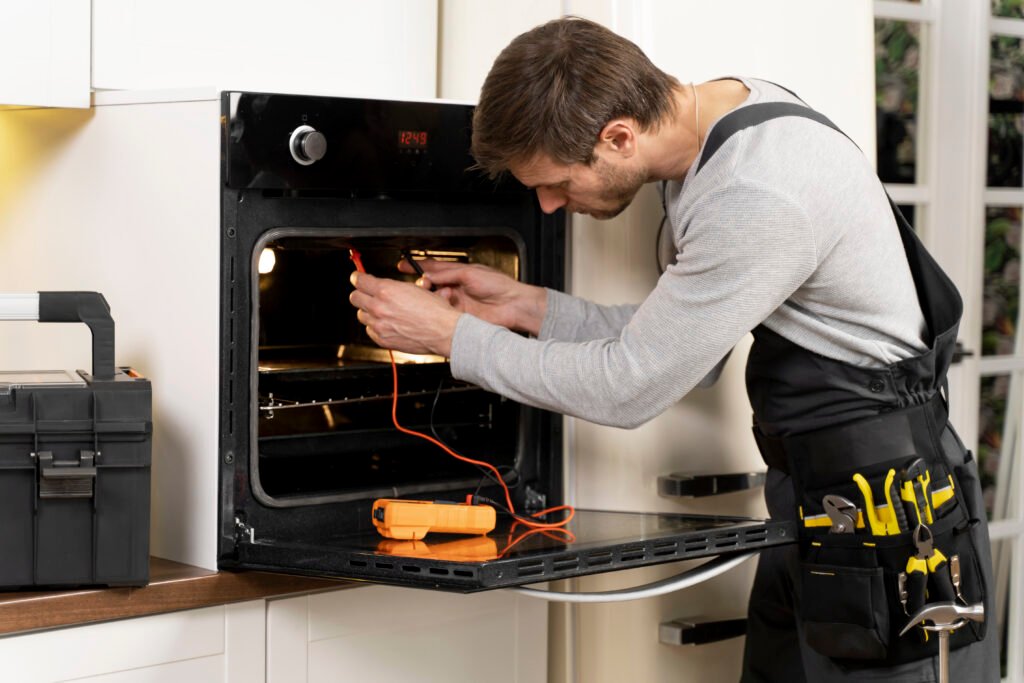
Oven repair in Dubai needs expertise. Your oven isn’t heating, or it’s heating unevenly, or the door won’t seal properly anymore, and you’re not sure whether that’s a five-minute fix or something that needs a technician today. The honest answer depends heavily on one factor most generic repair guides skip past: whether your oven runs on gas or electricity, because oven repair in Dubai splits into genuinely different troubleshooting paths depending on which one you have.
This guide walks through both paths separately, covers the safety line you should never cross on a gas appliance, and gives you real AED pricing rather than a vague “contact us for a quote.”
Gas or Electric: Why It Changes Everything
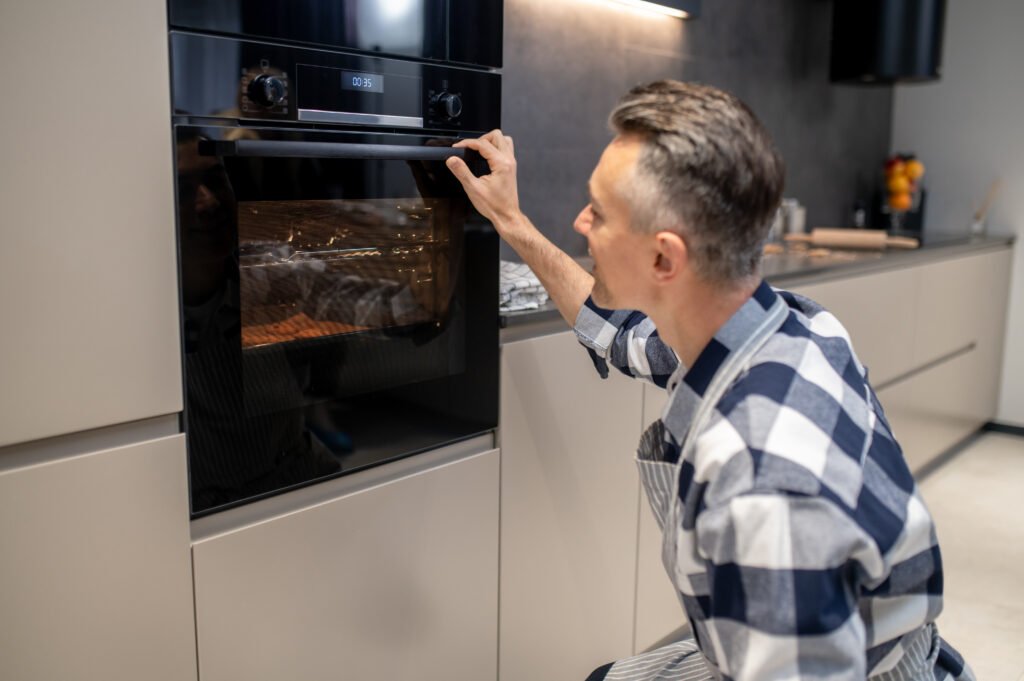
In Dubai, both oven types are common; gas ranges remain popular in villas and older apartment buildings, while newer developments and premium apartment fit-outs increasingly favour built-in electric or induction setups. The fault categories, the safety considerations, and even who’s legally allowed to touch what differ substantially between the two.
Electric ovens fail through electrical and mechanical wear: heating elements burn out, thermostats drift out of calibration, and control boards fail under voltage stress. None of that involves combustible gas, so the safety margin for troubleshooting yourself is wider, though still limited.
Gas ovens introduce an entirely different risk category. A faulty igniter, a blocked burner, or a failing gas safety valve isn’t just an inconvenience; it’s a potential gas leak or fire hazard. This is also where Dubai’s regulatory environment matters directly: gas appliance installation and repair work involving the gas supply line falls under Dubai Civil Defence and DEWA compliance requirements, and unlicensed tampering with a gas connection isn’t just risky; it can violate building and safety codes that apply specifically to gas installations in residential properties. Any repair involving the gas line itself needs a technician certified for that work, not a general handyman.
Electric Oven Troubleshooting
Oven won’t heat at all
Start with the basics: check that the circuit breaker for the kitchen hasn’t tripped, and confirm the oven’s control panel powers on. If the display lights up but the interior stays cold, the heating element (bake element at the bottom, broil element at the top) has likely burned through. This is usually visible as a break, blister, or dark scorch mark on the coil itself if you can safely see it with the oven off and cooled.
Oven heats unevenly, or food burns on one side
This often points to a failing element on one side of a dual-element setup, or a fan (in fan-assisted/convection ovens) that’s no longer circulating air properly. Dust and grease buildup on the fan blade, more common in Dubai kitchens where oil-based Middle Eastern and South Asian cooking generates more airborne grease than average, can throw the fan off balance or reduce its airflow over time.
Digital display glitches, resets, or shows an error code
Electronic control boards are the part most sensitive to Dubai’s occasional voltage fluctuations, particularly the sag that can occur during peak summer demand when every household’s cooling load spikes simultaneously. If your oven’s display resets mid-bake or throws an intermittent error that clears on its own, a voltage stabilizer plug is often a cheaper, more effective first step than replacing the control board outright.
Oven door won’t seal properly
A worn or torn door gasket lets heat escape, which means the oven runs longer to reach the set temperature and cooks unevenly as a result. This is a low-cost fix and one of the easiest for a technician to resolve in a single visit.
Self-clean function causes a fault afterward
High-heat self-cleaning cycles put unusual stress on components not designed for sustained extreme temperatures, and it’s a documented cause of subsequent element or control board failure across oven brands generally, not something unique to Dubai, but worth flagging since self-clean cycles run especially hot and using them sparingly (a few times a year at most) reduces this risk meaningfully.
Gas Oven Troubleshooting
Oven won’t light, or the igniter clicks but nothing happens
The igniter is the most common gas oven fault. It glows to reach ignition temperature and then should open the gas valve automatically. A weak igniter glows but never gets hot enough to trigger that valve, so you hear clicking with no flame. This needs a certified technician, not a DIY fix, since it involves the gas supply directly.
Burner flame is weak, yellow, or uneven instead of a strong blue
This usually indicates blocked burner ports, often from food residue or grease buildup that’s common in Dubai kitchens given cooking styles that use higher heat and more oil. A weak or discolored flame can also indicate incomplete combustion, which is a safety concern in itself since it can produce excess carbon monoxide in an enclosed kitchen. Don’t attempt to clean burner ports yourself with anything beyond gentle brushing; deeper blockages need a technician.
You smell gas near the oven, on or off
Stop everything. Turn off the gas supply valve if you can safely access it, ventilate the area by opening windows and doors, do not operate any electrical switches nearby (including light switches), leave the property if the smell is strong, and call a certified gas technician immediately. This is not a troubleshoot-it-yourself situation under any circumstance.
Oven heats inconsistently despite a steady flame
This can point to a failing thermostat that’s misreading internal temperature, or in some cases a gas pressure irregularity from the building’s supply line rather than the appliance itself. If multiple gas appliances in the same property show inconsistent performance simultaneously, the issue may sit upstream of the oven, worth mentioning to your technician so they check the supply line pressure, not just the appliance.
DEWA and Civil Defence compliance for gas appliance work
Any repair work that involves disconnecting, reconnecting, or modifying a gas line connection in a Dubai residential property should be carried out by a technician operating under the appropriate Dubai Civil Defence and DEWA gas safety framework.
This matters for two reasons beyond the obvious safety one: insurance claims related to gas incidents can be affected if the repair history shows unlicensed work, and landlords or building management in many developments require documented, compliant gas work for their own liability records. Ask your technician to confirm they’re equipped for licensed gas appliance work before booking, particularly for anything beyond a straightforward igniter or thermostat swap.
Built-In vs Freestanding: Oven Repair in Dubai
Beyond gas versus electric, how the oven is installed changes both the fault pattern and the repair process. Built-in ovens, standard in most new-build Dubai apartments and increasingly common in villa renovations, are recessed into cabinetry with limited airflow around the unit. That tighter enclosure traps heat from the oven’s own operation, which can shorten the working life of nearby components like control boards and wiring insulation, especially in a kitchen that already runs warm from Dubai’s ambient heat before the oven is even switched on.
Freestanding ranges, more common in older villas and some rental apartments furnished by a landlord rather than fitted during construction, get more airflow around the unit but are also more exposed to grease and dust settling on the back panel where the control wiring sits. A freestanding gas range in an older villa kitchen without strong extraction ventilation accumulates burner-port residue faster than a well-ventilated built-in unit, which is part of why villa kitchens tend to report burner-related faults more often than apartment kitchens do.
For built-in ovens specifically, a repair sometimes requires partially removing the unit from its cabinetry housing to access the back panel or wiring, which adds time to a visit that would otherwise be quick on a freestanding model. It’s worth mentioning to your technician upfront whether your oven is built-in, since it affects how much clearance and access they’ll need on arrival, particularly in a compact apartment kitchen where cabinetry fit can be tight.
When the Fault Isn’t the Oven at All
Occasionally what looks like an oven fault is actually a symptom of something happening elsewhere in the kitchen’s electrical or gas supply, and it’s worth ruling this out before assuming the appliance itself needs replacing.
If an electric oven’s control board keeps failing despite repeated replacement, and other appliances on the same circuit also show intermittent electronic glitches, the more likely culprit is the circuit itself, either an undersized breaker for the combined kitchen load, or, in older villas, wiring that predates a kitchen renovation and was never upgraded to handle a modern oven’s power draw alongside a dishwasher, microwave, and refrigerator on the same line. A technician who only looks at the oven in isolation can end up replacing the same part repeatedly without ever solving the underlying cause.
Similarly, for gas ovens, if flame quality is poor or inconsistent across multiple gas appliances in the same property, not just the oven, the issue may sit with the building’s gas supply line pressure rather than any single appliance. This is more common in older buildings or in villas where the gas installation hasn’t been inspected in several years. Mentioning this pattern to your technician, rather than just describing the oven’s symptom in isolation, helps them diagnose the actual source faster instead of treating the appliance as the sole point of failure.
Oven Repair Costs in Dubai (2026 Pricing)
Third-party market estimates for oven repair globally typically split gas and electric into different cost bands, with gas repairs running somewhat higher due to the additional safety handling required; roughly a similar pattern holds in Dubai’s market, where reported ranges commonly span from AED 100 for simple element or thermostat fixes up to AED 400-600 for more involved control board or gas valve work.
quickresponse simplifies this into one flat rate covering diagnosis and standard repair for both oven types.
| Service | Price (AED) |
|---|---|
| Oven repair & maintenance (diagnosis + standard repair, gas or electric) | 119 |
| Hourly technician rate (extended electrical or gas-line-adjacent work) | 99 |
| 4-hour half-day call-out (major component or multi-appliance jobs) | 349 |
| 8-hour full-day call-out (extensive kitchen appliance work) | 639 |
The AED 119 rate covers diagnosis and the standard repair for common faults on both gas and electric ovens: element and thermostat issues, door seal replacement, igniter diagnostics, and control board checks. Where a specific part needs sourcing or the issue requires certified gas-line work beyond the appliance itself, that scope and cost is confirmed with you before any work proceeds.
Repair or Replace: Oven Lifespan in Dubai
Ovens generally have one of the longer lifespans among kitchen appliances, often running well past a decade with reasonable care. That said, Dubai’s conditions shorten this somewhat for electric models exposed to repeated voltage stress and for gas models in kitchens without adequate ventilation, where grease and heat combine to accelerate wear on burner components.
As a general rule, if repair costs stay under roughly 50% of a comparable new oven’s price and the appliance is under 10-12 years old, repair remains the sensible choice. Control board failures on older electric ovens, or repeated igniter failures on an ageing gas oven, are the two most common tipping points where replacement starts to make more financial sense than continuing to repair.
Preventing Oven Faults in Dubai Kitchens
For electric ovens, keep the fan and vents free of grease buildup with a gentle wipe-down every few weeks rather than waiting for a deep clean to become necessary, and limit self-clean cycles to a handful of uses per year given the stress those high-heat cycles put on internal components. A voltage stabiliser is worth considering for households that have noticed recurring digital display issues across multiple appliances, since that points to a supply-side fluctuation rather than one faulty unit.
For gas ovens, clean burner ports regularly with gentle brushing to prevent the food-residue blockages that are especially common with Middle Eastern and South Asian cooking styles that use higher direct heat. Schedule an annual inspection with a certified technician even if nothing seems wrong, since gas safety valves and igniters degrade gradually and rarely give clear warning before failing outright. And if you ever smell gas, however faint, treat it as an emergency rather than something to monitor over the next few days.
One habit that catches problems early on with either oven type: note down what you were cooking and at what temperature when something seemed off- uneven browning, a longer preheat than usual, or an odd smell. That detail helps a technician narrow down whether the fault is thermostat calibration, element wear, or something environmental like a ventilation issue, rather than starting the diagnosis from scratch on arrival.
Is it more expensive to repair a gas oven or an electric oven in Dubai?
Generally gas oven repairs cost somewhat more due to the additional safety handling and certification required for any work touching the gas supply. With QuickResponse, both gas and electric ovens are covered under the same flat AED 119 diagnosis-and-repair rate, with additional parts or certified gas-line work quoted separately if needed.
Why does my electric oven’s display keep resetting in Dubai?
This is commonly linked to voltage fluctuation on the electrical grid, particularly during periods of peak summer demand when cooling loads across the city spike. A voltage stabilizer often resolves this more reliably than replacing the control board outright.
What should I do if I smell gas near my oven?
Stop immediately. Turn off the gas supply valve if safely accessible, ventilate the area, avoid operating any electrical switches nearby, and call a certified gas technician right away. Do not attempt to diagnose or fix this yourself.
Do I need special certification for gas oven repair work in Dubai?
Yes. Any work involving the gas supply connection should be handled by a technician operating under Dubai Civil Defence and DEWA gas safety compliance requirements, not a general appliance handyman. This matters for both safety and, in many cases, insurance and building management compliance.
How often should I service my oven in Dubai to avoid breakdowns?
An annual inspection is a reasonable baseline for both gas and electric ovens, with more frequent attention to burner port cleaning on gas models and fan/vent cleaning on electric convection models given local cooking habits and dust exposure.
Is it worth repairing an older oven, or should I replace it?
If repair costs stay under roughly 50% of a new oven’s price and the unit is under 10-12 years old, repair usually makes sense. Repeated igniter failures on aging gas ovens or control board failures on older electric ovens are common signals that replacement offers better long-term value.
Can I use an oven I brought from another country in my Dubai kitchen?
For electric ovens, check the voltage rating plate; units built for markets outside the 220-240V standard risk accelerated component failure on Dubai’s supply. For gas ovens, the gas connection type and pressure standard also need to match UAE specifications, so this is worth confirming with a certified technician before installation, not after.
Leave a Reply