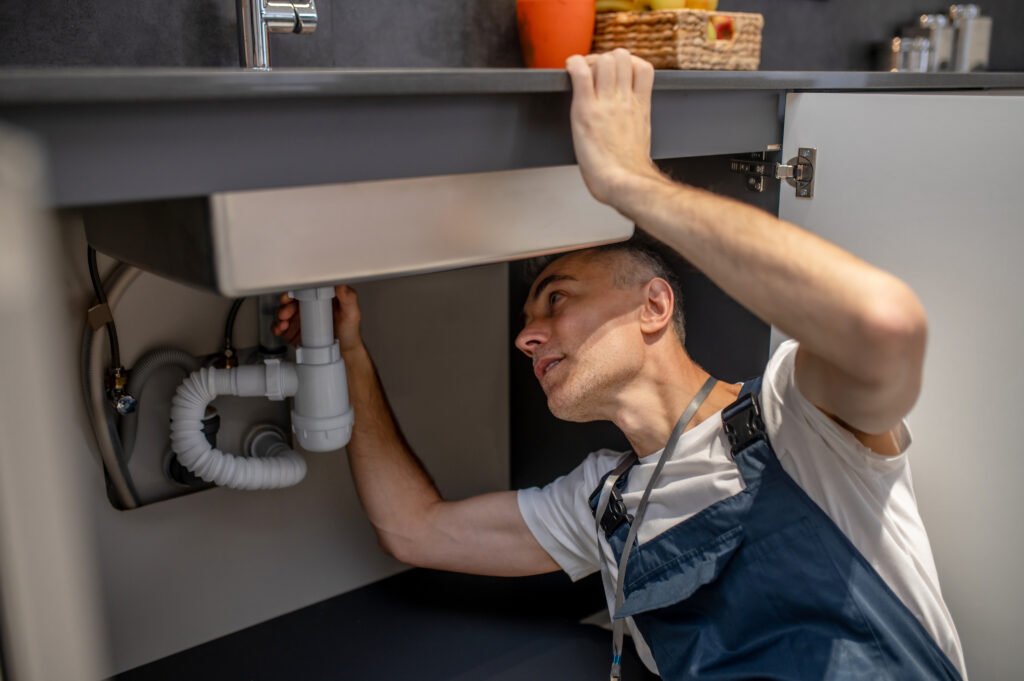
If you’ve replaced the same tap washer twice this year, or your water heater started making a popping sound out of nowhere, you’re dealing with Dubai hard water plumbing problems. It’s not bad luck and it’s not a faulty fixture. It’s mineral-rich water working through your pipes one deposit at a time, and it’s been doing that since the day your building was connected to the mains.
Dubai’s water comes from desalination plants along the coast. Seawater goes in, salt comes out, and what’s left gets remineralized before it’s sent into the supply network, because completely mineral-free water is corrosive to pipes. That remineralization step is exactly where the hardness comes from. So the very process that makes Dubai’s water safe to drink is the same process that leaves calcium and magnesium behind to build up inside your plumbing.
This guide breaks down what hard water actually does to a home’s plumbing system in Dubai’s specific climate and infrastructure, what it costs to ignore, and which fixes are worth the investment versus which ones just buy you a few extra months.
What Makes Dubai’s Water “Hard” in the First Place
Here’s where most articles on this topic get vague, and it’s worth being precise about it. DEWA’s water leaves its desalination plants with calcium carbonate hardness generally falling in the 100-200 mg/L range, classified as moderately hard. Total dissolved solids at the treatment point typically sit between 150 and 350 ppm.
But ask five different sources what Dubai tap water actually measures and you’ll get five different answers, some citing figures as low as 70 mg/L. That’s not an error. It’s the difference between water at the treatment plant and water that has already spent time in a rooftop storage tank, a pressure pump, and however many meters of pipe before it reaches your kitchen. Building-level factors change the number. Tank cleaning frequency, pipe material, and even how long water sits before use all shift the reading.
This matters practically because if you test your own water with a home TDS meter, expect a number, and get something different, the gap usually means one thing: your building’s tank or pipework is adding to (or occasionally reducing) what DEWA delivers. It doesn’t mean either reading is wrong. It means the journey from plant to tap is part of the equation, and in Dubai’s high-rise-heavy housing stock, that journey is longer and more variable than in most cities.
How Hard Water Actually Damages Your Plumbing
Dubai Hard Water Plumbing Problems: Limescale Buildup Inside Pipes
When hard water heats up or simply sits for long periods, calcium and magnesium drop out of solution and harden into limescale. This isn’t cosmetic. The deposits narrow the internal diameter of your pipes the same way plaque narrows an artery. Water has to push harder to move through, your pump or booster system works overtime, and the pipe walls take on more pressure than they were built for.
Older galvanized piping in Dubai villas takes this harder than copper or PPR does. Rougher internal surfaces give limescale more to grip onto. Apartment dwellers aren’t exempt either. Shared risers in towers across Dubai Marina, JLT, and Business Bay accumulate scale at every joint and bend, and by the time it’s noticeable on a top floor, the buildup further down the line is usually worse.
Dubai Hard Water Plumbing Problems: Faucet, Showerhead, and Valve Failure
Every fixture with a small opening is a target. Aerators clog first because they’re designed to mix air into the stream through tiny holes, and tiny holes are exactly what mineral deposits block fastest. Showerheads follow the same pattern, which is why a shower that sprayed evenly six months ago now sends water out in three uneven jets.
Valves are the quieter casualty. Mineral deposits cause valve seats to stick or fail to seal fully, and a valve that doesn’t seal completely is a slow leak waiting to become an expensive one. Worn washers and O-rings degrade faster under hard water than they would under softer conditions because the constant mineral exposure accelerates the breakdown of rubber seals.
Dubai Hard Water Plumbing Problems: Water Heater Sediment and Early Failure
This is where hard water does the most expensive damage. Sediment from dissolved minerals settles at the bottom of a water heater tank and just sits there, insulating the bottom from the heating element above it. The heater has to run longer to reach the same temperature, your DEWA bill climbs, and the unit ages faster than it should.
The warning signs are specific and worth knowing: popping or rumbling noises from the tank (that’s water boiling underneath a layer of sediment), inconsistent hot water temperature, and a noticeably longer wait for hot water to reach the tap. In Dubai’s summer months, when the unit is already managing incoming water that’s pre-warmed by ambient heat, sediment buildup pushes an aging heater toward failure faster than it would in a milder climate. A unit older than eight years showing any of these symptoms is usually past the point where repair makes financial sense.
Dubai Hard Water Plumbing Problems: Toilet Mechanism and Flapper Wear
Mineral buildup on a toilet’s flapper and fill valve is one of the most common, least diagnosed Dubai hard water plumbing problems. A warped or scaled flapper won’t seal flush against the drain, which means water trickles continuously from tank to bowl. Most homeowners don’t notice until the DEWA bill jumps, since a running toilet wastes water silently and constantly.
Appliance Strain: Washing Machines and Dishwashers
These Dubai hard water plumbing problems extend to appliances too. Hard water makes soap and detergent work less effectively. Appliances compensate by using more water and more product just to get the same result. Mineral deposits build inside washing machine drums and dishwasher spray arms over time, cutting efficiency further, and the appliances wear out sooner than their rated lifespan would suggest.
Why Dubai’s Specific Conditions Make Dubai Hard Water Plumbing Problems Worse
Hard water alone is a problem anywhere. Dubai hard water plumbing problems are compounded by the local environment in ways generic plumbing advice doesn’t account for.
Summer heat pushes ambient temperatures past 45°C, and pipes expand under that heat, then contract overnight as temperatures drop. That expansion-contraction cycle repeats daily for months, and joints already weakened by mineral deposits fail faster under the added mechanical stress. This is a major reason burst pipes spike during seasonal transitions, October-November and March-April, when temperature swings are sharpest.
Sandstorms add a second layer most homeowners never connect to plumbing at all. Fine particulate from sandstorms works into external drainage and ventilation systems, and combined with mineral scale already narrowing pipe diameter, the two issues compound each other. A pipe that’s 20% narrower from limescale handles sand-laden runoff far worse than a clean one.
Coastal salt-air exposure is a third factor specific to waterfront and Marina-adjacent properties. Salt-laden air accelerates corrosion on exposed metal fittings, pump housings, and exterior pipe connections, working alongside internal mineral buildup rather than against it. A fitting under attack from both directions – internal scale and external corrosion – fails well before its expected service life.
The Real Cost of Ignoring Dubai Hard Water Plumbing Problems
Most homeowners treat hard water plumbing problems one symptom at a time. Fix the dripping tap, then the slow drain, then the water heater six months later, never connecting the dots that one root cause is driving all three. Here’s roughly what that pattern costs versus addressing the source.
| Issue | Reactive Repair Cost (AED) | Root-Cause Cost (AED) |
|---|---|---|
| Dripping faucet (washer/valve replacement) | 150-400 per visit, recurring | Included in softener protection |
| Showerhead/aerator replacement | 50-200 per fixture, recurring | Included in softener protection |
| Water heater sediment flush | 200-500 per service, annual | Included in softener protection |
| Water heater early replacement (8-10 yrs vs 12-15 yrs lifespan) | 1,500-4,000 per unit | Extends lifespan significantly |
| Whole-house water softener (installed) | n/a | 6,000-15,000 one-time |
| RO + softener combination system | n/a | 6,000-15,000 one-time |
| Annual softener maintenance | n/a | 800-2,000 per year |
Pricing above is sourced from current UAE water treatment providers (ServiceMarket, Saniwater, AquaPro, Nasnet) and general Dubai plumbing service rates as of 2026. Always confirm current rates directly with quickresponse before quoting.
The pattern is consistent across every cost comparison: homeowners who fix symptoms as they appear spend more over a five-year window than homeowners who install a softener once. The break-even point typically lands between 18 and 30 months, depending on how hard the water is at a given property and how many fixtures are in active use.
Fixes That Actually Work
Whole-House Water Softener
For homeowners dealing with Dubai hard water plumbing problems, this is the only fix that addresses the cause rather than the symptom. A softener uses ion exchange to swap calcium and magnesium for sodium or potassium before water enters your home’s plumbing, which means every pipe, fixture, and appliance downstream benefits, not just the one you happened to repair. Installed cost for a quality system in Dubai generally runs AED 6,000 to AED 15,000 depending on property size and system capacity, with annual maintenance in the AED 800-2,000 range.
For villa owners in managed communities, there’s a step competitors don’t mention: developments under Emaar, Nakheel, or Trakhees jurisdiction often require an NOC (No Objection Certificate) before plumbing modifications, including softener installation, particularly where it involves tapping into the main supply line. Skipping this step can mean a failed snag inspection or a dispute at handover for newer properties. It’s a five-minute submission in most cases, but it’s a step that gets missed.
Point-of-Use Filtration (RO Systems)
When addressing Dubai hard water plumbing problems, reverse osmosis systems target drinking water quality rather than whole-house protection. They reduce TDS at the tap but don’t stop scale from forming in pipes elsewhere in the property. RO is the right call for households prioritizing drinking water taste and purity, typically AED 2,500-6,000 installed, but it’s not a substitute for a softener if the goal is protecting plumbing infrastructure.
Many Dubai villas run both: a main-line softener for the whole property plus an under-sink RO unit for drinking water, landing in the AED 6,000-15,000 combined range.
Regular Descaling and Sediment Flushing
For households not ready to invest in a softener to tackle Dubai hard water plumbing problems, scheduled maintenance slows the damage without stopping it. Annual water heater flushing clears sediment before it hardens into a thick layer. Quarterly aerator and showerhead descaling (a simple vinegar soak handles most light buildup) keeps flow rates from dropping further. This buys time. It doesn’t solve the underlying problem, and pipe-interior scale will keep accumulating regardless.
Professional Leak Detection
Hidden leaks inside walls are among the more serious Dubai hard water plumbing problems, especially in older high-rise buildings where joints have been weakened by years of mineral exposure. Thermal imaging and acoustic detection locate the source without tearing into walls speculatively, which matters in a market where unnecessary drywall damage adds real cost to a repair that should have been straightforward.
Signs Your Home Has a Hard Water Plumbing Problem
Understanding Dubai hard water plumbing problems early is critical. A few markers tend to show up before the bigger failures do: white or chalky residue around taps and showerheads, soap that won’t lather properly, glassware coming out of the dishwasher with a cloudy film, a water heater that’s noticeably louder than it used to be, and clothes from the wash feeling stiffer than they should. Any one of these on its own is minor. Two or three together usually means scale buildup has progressed past the point where a quick fix solves it.
Frequently Asked Questions
Yes. While Dubai hard water plumbing problems are real, hardness is a mineral content issue, not a safety issue. DEWA’s water meets WHO drinking water standards at the point it leaves treatment plants. Hard water causes plumbing and appliance wear over time, but it isn’t a health risk on its own.
If the concern is pipes, fixtures, and appliances wearing out faster than expected, a softener addresses that directly. If the concern is drinking water taste or purity, RO is the better fit. Many villa owners install both because they solve different problems.
Annually, at minimum. Properties with notably hard water or heavier daily usage benefit from a flush every six months, particularly units that are already five years or older.
If your property falls under a managed community like Emaar, Nakheel, or a Trakhees-regulated area, check whether an NOC is required before any plumbing modification, including softener installation. This is easy to overlook and can cause delays if it’s not handled upfront.
Indirectly, yes. Limescale buildup weakens joints and narrows pipe diameter, which increases internal pressure. Combined with Dubai’s seasonal temperature swings, that added stress is a real contributing factor in burst pipe incidents during transitional months.
Don’t Wait for the Expensive Failure — Address Dubai Hard Water Plumbing Problems Now
Dubai hard water plumbing problems rarely announce themselves with one dramatic event. They show up as a slightly slower drain, a tap that needs a little more force to shut off, a water heater that takes a few extra minutes to deliver hot water. Each one looks small in isolation. Together, they’re the early signs of a system working harder than it should, and the cost of waiting always outpaces the cost of fixing the cause.
quickresponse’s licensed plumbers handle everything from softener installation to water heater servicing and hidden leak detection across Dubai. Book an assessment and find out exactly what your home’s water is doing to your plumbing – before it turns into a repair you can’t put off.
Leave a Reply