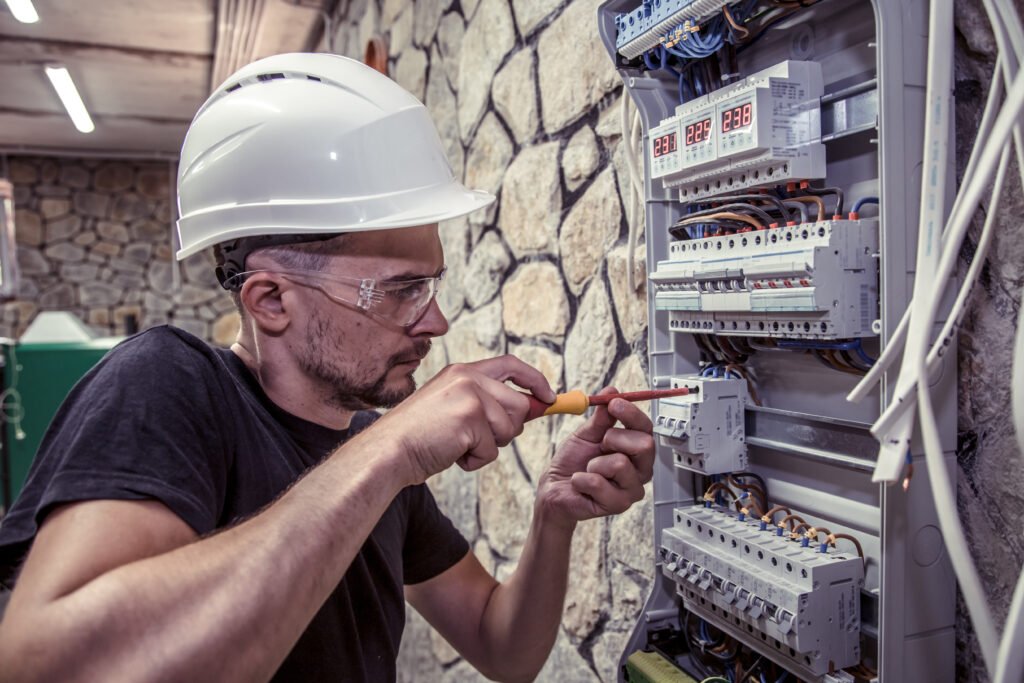
A burning smell from a socket at 11 pm doesn’t wait for business hours, and neither should your response to it. Electrical emergencies in Dubai range from a tripped breaker that won’t reset to a scorched outlet that’s one spark away from a serious problem, and knowing what to do in the first five minutes matters more than knowing who to call.
This guide walks through exactly that: what counts as an electrical emergency, the steps to take before help arrives, what an emergency electrician Dubai callout actually costs, and why the DEWA-approved part of that sentence isn’t a technicality you can skip.
What Actually Counts as an Electrical Emergency
Not every electrical issue needs a midnight callout. A single dead bulb can wait until morning. These can’t.
Complete loss of power when neighbours still have it. If the building or street has electricity but your unit doesn’t, the fault sits inside your property, in the consumer unit, the main fuse, or the supply cable, and it needs diagnosis before it gets worse.
A breaker that trips immediately on reset. This usually means a short circuit or earth fault somewhere on that circuit. Resetting it repeatedly doesn’t fix anything. It causes the breaker to overheat, and overheating breakers are a fire risk, not an inconvenience.
Burning smell or visible scorch marks. Around a socket, switch, or panel, this is never a wait-and-see situation. Scorching means heat has already built up past a safe threshold.
Water near live electrics. Flooding near sockets or appliances combined with electricity is one of the few situations where the instruction changes: switch off at the main board only if you can do it without touching water, then call immediately.
Sparking outlets or visible exposed wiring. Both indicate insulation failure or a loose connection carrying current somewhere it shouldn’t.
If you’re dealing with any of these, the next few minutes matter more than the next few hours.
What to Do Before the Electrician Arrives
If there’s immediate danger, smoke, flames, or a situation that feels genuinely unsafe, leave the property first and call Dubai Civil Defence on 997. Everything below assumes the situation is serious but contained.
Switch off the main consumer unit (the DB board) if you suspect a dangerous fault and can reach it safely. This isolates the property from the supply and stops an active fault from getting worse while you wait.
Don’t touch exposed wiring, scorched sockets, or any fitting involved in the fault. Skin contact with a live or recently-live component is the most common way a minor electrical fault turns into an injury.
If water is involved, only touch the main board if you can do so without stepping in or touching water yourself. Electricity and water together change the calculation entirely, and the safer move is almost always to wait outside the affected area and call for help rather than improvise a fix.
Unplug appliances that might be contributing to the fault, but only if it’s safe to reach them without crossing wet flooring or touching anything scorched.
Once the property is as safe as you can make it, call. A DEWA-approved emergency electrician should reach most areas of Dubai within 30 to 60 minutes, faster in central zones like Downtown, Dubai Marina, and Business Bay.
DEWA Outage vs. Property Fault: How to Tell the Difference
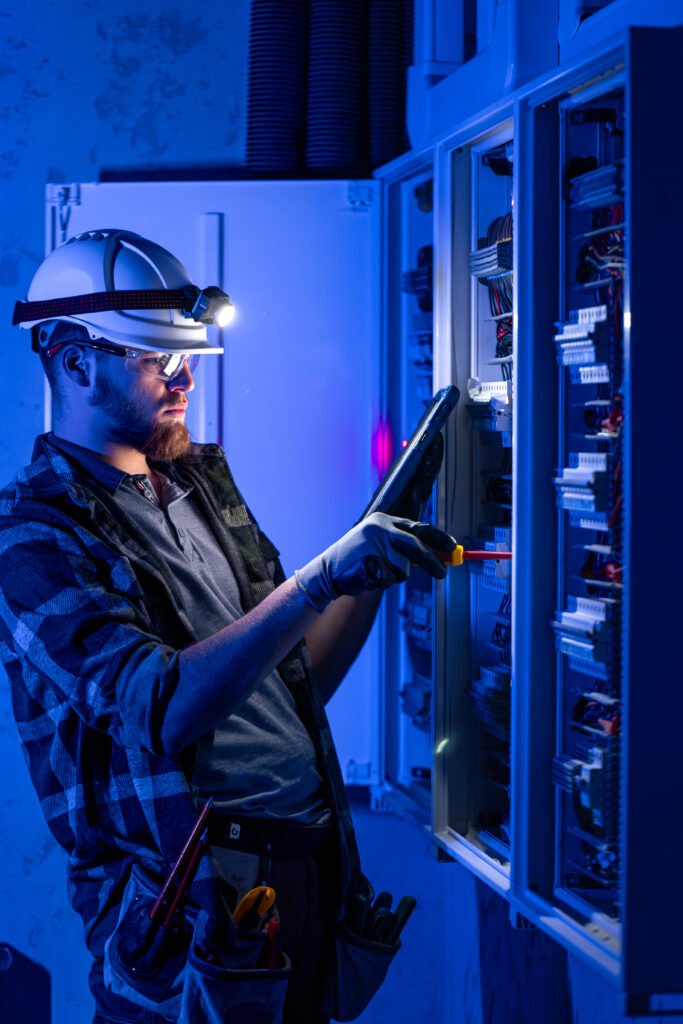
This is the question that decides whether you need an electrician at all, and it’s worth two minutes before you make the call. Step outside or check with a neighbour. If their power is also out, the issue is almost certainly a DEWA-side outage affecting the wider area, and DEWA resolves those directly rather than through a private electrician. If neighbouring properties have power and yours doesn’t, the fault lives inside your unit, in the consumer unit, the main fuse, or the cable feeding your property, and that’s exactly the kind of fault an emergency electrician diagnoses and fixes. Checking this first can save you the cost of a callout for a problem that isn’t yours to fix.
What an Emergency Electrician in Dubai Actually Costs
Hiring an emergency electrician in Dubai comes with pricing that varies by provider, time of day, and the nature of the fault, but the ranges across the market are consistent enough to budget around.
| Service | Typical Cost (AED) |
|---|---|
| Emergency attendance and fault diagnosis | 250–400 |
| Standard hourly rate (daytime, non-emergency) | 100–250 |
| Emergency/after-hours hourly rate | 250–400 |
| After-hours surcharge (added to callout) | 100–200 |
| Circuit breaker replacement | 150–350 per breaker |
| Socket or switch replacement | 100–250 per point |
| Distribution board (DB) inspection | 300–600 |
| New circuit installation | 400–1,200 per circuit, depending on routing |
| Short circuit diagnosis and repair | 250+ including diagnosis |
A few patterns hold across nearly every provider in this market. Morning and daytime callouts run cheaper than midnight ones, sometimes by AED 150–200. Apartments are generally less expensive to service than villas because wiring runs are shorter and access is simpler. And complex jobs, like rewiring a section of a villa or replacing a full DB board, push well past these baseline figures once labour hours and materials stack up.
Why an Emergency Electrician in Dubai Needs DEWA Approval
This is the part most emergency electrician Dubai content treats as a footnote, and it shouldn’t be.
Electrical work carried out by a contractor without DEWA approval is illegal in Dubai, and the liability for that doesn’t stop at the electrician. Property owners can face fines too, even if they didn’t know the contractor was unapproved. DEWA maintains a public register of approved contractors specifically so homeowners can verify this before work starts, not after something goes wrong.
The insurance angle is the part that catches people off guard. If an electrical fire or incident follows work performed by an unapproved electrician, home insurance providers can void coverage on the basis that the work was unauthorised. That means a homeowner who saved a few hundred dirhams on an unlicensed callout could end up paying for fire damage entirely out of pocket, on top of whatever the original fault cost to fix properly.
And the numbers behind this matter more than they might seem to in the moment. Dubai Civil Defence attributes roughly a quarter of household fires to electrical causes, most of them preventable through proper inspection and licensed work. That’s not a marketing statistic. It’s a reason the DEWA approval requirement exists in the first place, and it’s the difference between an electrician who follows BS 7671 wiring standards with UAE amendments and one who doesn’t.
Before any work begins, especially anything involving the main distribution board, new circuits, or changes to existing wiring, ask for the contractor’s DEWA approval or registration number. A legitimate provider will hand it over without hesitation. Anyone who hesitates or quotes a price that seems too good given the market ranges above is a reason to look elsewhere.
Common Causes Behind Dubai’s Electrical Emergencies
A few patterns show up again and again across emergency calls in this city, and most trace back to conditions specific to Dubai rather than generic wiring age.
Overloaded circuits during summer are the single biggest driver. AC units running near-constantly from May through September push household circuits closer to their limit, and a circuit that handled the load fine in winter can trip repeatedly once cooling demand peaks.
Heat and humidity accelerate wear on insulation and connections faster than they would in a milder climate, which means a fault that might take a decade to develop elsewhere can show up in half that time here.
Construction dust is a less obvious factor, but fine particulate works into sockets, panels, and connection points across Dubai’s ongoing construction zones, gradually compromising components that would otherwise last much longer.
Ageing consumer units in older buildings, particularly those without RCDs (residual current devices) that automatically cut power during a fault, leave a property more exposed when something does go wrong. Newer developments increasingly install these as standard, but plenty of older apartments and villas still run on boards that predate the requirement.
How Electricians Diagnose the Fault
Once an emergency electrician arrives, the diagnostic process is more methodical than it might look from the outside. For a breaker that won’t reset, the technician traces the affected circuit using insulation resistance testing and thermal imaging, which locates the fault without tearing into walls on a guess. For scorch marks or burning smells, the priority shifts to isolating the affected component first, then determining whether the damage is contained to a single fitting or has spread along the circuit. For complete property-side outages, the check moves from the main fuse to the consumer unit to the supply cable in sequence, ruling out each stage before moving to the next.
This sequence matters because it’s the difference between a 30-minute fix and an afternoon of unnecessary wall damage. A good electrician explains what they’re checking and why before they start opening panels or cutting into anything.
Preventing the Next Emergency
Most electrical emergencies don’t appear out of nowhere. They build for weeks or months before the moment that forces a midnight call.
An annual inspection, ideally scheduled before summer when AC load peaks, catches loose connections and early overheating before they become a tripped breaker or worse. Load balancing across circuits, so heavy appliances like AC units, washing machines, and water heaters aren’t all sharing the same circuit, reduces the chance of an overload trip becoming a recurring problem. And any flickering lights, warm sockets, or breakers that trip occasionally but reset fine are worth a non-emergency inspection rather than waiting for them to escalate, since a scheduled daytime visit costs less than an emergency one and catches the problem before it becomes one.
Frequently Asked Questions
How fast can an emergency electrician reach me in Dubai?
Most DEWA-approved providers quote 30 to 60 minutes for central areas like Downtown, Dubai Marina, and Business Bay, with response times running slightly longer for outlying areas depending on traffic and time of day.
How do I know if it’s a DEWA outage or a problem with my property?
Check whether neighbouring units or buildings have power. If they do and you don’t, the fault is on your property’s side, in the consumer unit, main fuse, or supply cable, and it needs an electrician. If everyone nearby has lost power too, it’s a DEWA-side outage that DEWA resolves directly.
Is it actually illegal to use an electrician who isn’t DEWA-approved?
Yes. Electrical work in Dubai must be carried out by DEWA-approved contractors. Using an unapproved electrician can result in fines for the property owner, and any resulting incident may void home insurance coverage on the grounds that the work was unauthorised.
What should I do if my breaker keeps tripping the moment I reset it?
Stop resetting it. A breaker that trips immediately on reset almost always indicates a short circuit or earth fault on that circuit, and repeated resetting causes overheating, which increases fire risk rather than resolving anything. Switch off the affected breaker and call for an emergency diagnosis.
Are emergency electrician callouts more expensive than scheduled visits?
Yes, typically AED 250-400 for emergency attendance versus AED 100-250 per hour for standard daytime work, plus an after-hours surcharge of AED 100-200 in many cases. The premium reflects the immediate response and after-hours availability, not a different quality of work.
When in Doubt, Don’t Wait
Electrical faults rarely get better on their own, and the gap between “this seems minor” and “this is now a fire risk” can close faster than it should. A breaker that won’t stay reset, a scorch mark you’re hoping is nothing, and a socket that’s warmer than it should be: each of these is worth a call before it becomes the emergency that forces one.
quickresponse’s DEWA-approved electricians handle fault diagnosis, breaker and panel repairs, and emergency callouts across Dubai, day or night. If something feels wrong with your home’s electrics, get it checked before it becomes the call you make at 2 am.
Leave a Reply