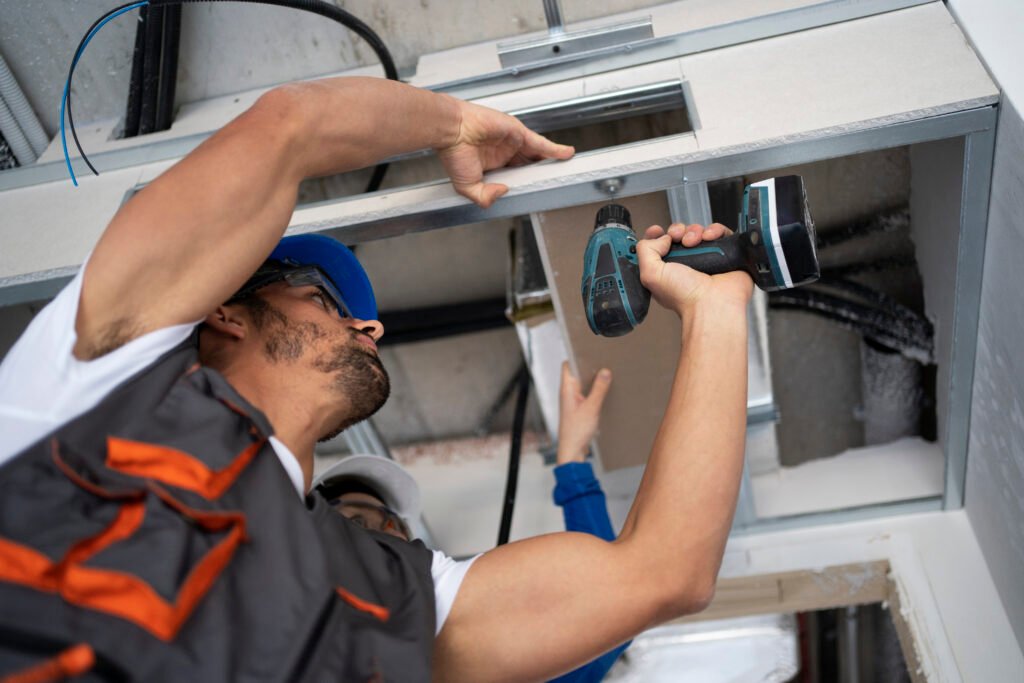
Your AC Service in Dubai! How often should you have it?
Here’s the direct answer: Most homes need servicing every 3 to 4 months, not the generic “twice a year” plastered across half the websites in this city. Dubai’s dust load and nine-month cooling season don’t match a maintenance calendar built for milder climates. The “every 6 months” line gets repeated so often that it’s become the wrong kind of common knowledge.
The real answer depends on three things. What kind of AC system do you have? How many hours a day does it run, and where in Dubai do you live? A split unit in a quiet JBR apartment with light use behaves nothing like a villa AC in JVC running 14 hours a day next to a construction site. This guide breaks down the frequency you actually need, what a proper service includes, what it costs in AED, and the Dubai-specific factors that wreck AC units faster here than almost anywhere else.
The Short Answer: AC Service Frequency by System Type
Quick Response gets this question constantly, and the honest answer changes depending on what’s sitting on your wall or roof.
Split AC units (the most common residential setup):
Every 3 to 4 months for filter and coil cleaning, with a full electrical and performance check at least twice a year. Running the unit more than 8 hours a day during summer, which most Dubai homes do, pushes you toward the 3-month end of that range.
Central or ducted AC (common in villas):
Quarterly coil and filter service, plus an annual duct inspection. Central systems carry a heavier dust load across more surface area, so neglect shows up faster as uneven cooling from room to room.
District cooling fan coil units, common in Marina, JLT, and Downtown high-rises:
Every 3 to 6 months for the FCU itself, even though the chiller plant is maintained by building management. This is the one residents get wrong most often. Just because the building “handles the AC” doesn’t mean your individual FCU is covered. Two separate maintenance responsibilities, one chiller plant and one in-apartment FCU, and a poorly serviced FCU leave you with weak cooling even when the building’s central system is working perfectly.
| System Type | Filter/Coil Clean | Full Service | Duct Inspection |
| Split AC, light use | Every 4 months | Twice yearly | N/A |
| Split AC, heavy use (8+ hrs/day) | Every 3 months | Quarterly | N/A |
| Villa central/ducted AC | Quarterly | Twice yearly | Annually |
| District cooling FCU | Every 3-6 months | Twice yearly | Per building schedule |
| Commercial/retail | Monthly to bi-monthly | Quarterly | Per Dubai Municipality requirements |
Why Dubai Breaks the “Standard” AC Maintenance Schedule
Most AC maintenance advice online comes from climates that don’t push a unit the way Dubai does. Three local factors change the math entirely.
Sand and Dust Are a Different Category of Problem
Dubai’s air carries fine desert dust year-round. The periodic shamal windstorms bring concentrated sand loading that clogs filters and condenser fins far faster than ordinary urban dust does. A filter that would last 8 weeks in a European city gets saturated in roughly half that time during a Dubai summer. Not a minor seasonal inconvenience. It’s the single biggest reason the “every 6 months” rule fails here. Outdoor unit near a construction site, an unpaved lot, or a ground-floor exposure with heavy foot traffic? You’re looking at the 3-month end of every frequency range in this guide.
Nine Months of Near-Continuous Operation
In most of the world, AC is seasonal. In Dubai, it’s closer to a year-round utility, with peak load running from April through October and lighter but still real demand the rest of the year. A system that runs 10+ hours a day for nine months accumulates more wear in a single Dubai year than a comparable unit in a four-season climate accumulates in two or three. Components don’t get a real off-season to coast through. That’s why technicians here see compressor and capacitor failures at unit ages that would be unremarkable elsewhere.
Humidity Spikes Drive Drain and Mould Issues
Coastal humidity in Dubai climbs to 90% or higher on many days between July and September. That moisture load doesn’t just make the air feel heavier. It dramatically increases the condensate volume your AC’s drainage system has to handle. Clogged drain lines, water leakage around indoor units, and the musty smell that signals mould growth all trace back to this humidity spike. A drain line that never gets flushed during a service visit is one of the most common reasons “the AC was just serviced” and still leaks two months later.
What a Proper AC Service Actually Includes
Here’s where a lot of Dubai residents get shortchanged. A filter rinse is not a service, even though plenty of companies sell it as one. A genuine service covers six things.
Filter cleaning or replacement comes first, the cheapest fix with the biggest immediate impact on airflow. Chemical coil cleaning on both the evaporator and condenser side follows, removing the dust, biological residue, and mineral scale that a simple water rinse won’t touch. This step alone can restore 10 to 20 percent of lost cooling efficiency on a neglected unit. Then a drain line flush, clearing the condensate path and testing the float switch, which matters enormously given Dubai’s humidity.
An electrical check comes next: tightening terminals, measuring running amps, checking capacitor condition, and catching the small failures before they become a dead compressor. A performance test measures the temperature differential between supply and return air, with 10 to 14 degrees Celsius as the target on a healthy split system.
For outdoor units specifically, technicians should clear debris, straighten bent fins, and check refrigerant line insulation. Deteriorated foam insulation on those lines is a quiet contributor to higher DEWA bills.
If your last “service” took less than 30 minutes per unit, you almost certainly got a clean, not a service.
Cost of AC Service in Dubai?
Pricing varies by system and provider, but here’s roughly where the market sits as of 2026.
(Note: These figures come from broader UAE market research, not Quick Response’s own rate card. Confirm current pricing directly with our team before booking.)
A basic one-time split AC service typically runs AED 150 to 350 per unit. Full chemical coil cleaning and service for the same unit costs closer to AED 300 to 500. Central FCU servicing usually costs AED 450 to 900, reflecting the larger surface area and more involved access.
Annual Maintenance Contracts for a typical apartment with 2 to 4 split units generally range from AED 600 to 2,000, depending on visit frequency and coverage. Villa AMCs with multiple units and central systems often run AED 1,500 to 4,000 or more per year.
Worth doing the math before choosing between pay-per-visit and an AMC. Four quarterly visits at AED 200 to 350 each add up to roughly AED 800 to 1,400 a year for a single unit. If an AMC covering the same unit count costs about the same or less and throws in priority emergency response plus a repair discount, it’s the better deal almost every time.
The AMC advantage gets stronger the more units you have, and the older your system is, since older units fail more often, and an existing contract usually means no callout fee on those repair visits.
Signs Your AC Needs Service Now, Regardless of Schedule
Frequency tables are a guideline, not a guarantee. Some signs mean you shouldn’t wait for the next scheduled visit.
Rising electricity bills with no change in usage pattern usually point to declining efficiency from dirty coils or low refrigerant. Water leaking around an indoor unit suggests a clogged drain line or, in more advanced cases, a frozen evaporator coil. Ice forming on refrigerant lines signals an airflow restriction or refrigerant issue that needs attention before it damages the compressor.
A musty or sour smell from the vents is a strong indicator of mould or mildew inside the system, both a comfort issue and, left long enough, a health one. And if the AC simply isn’t dropping the room to your set temperature despite running constantly, that’s a capacity or refrigerant problem that no filter clean will solve.
Catching any of these early is dramatically cheaper than waiting. A reactive emergency repair in Dubai routinely costs three to five times more than a routine service visit would have, partly because emergency callouts carry a premium and partly because the underlying problem has had time to damage other components.
A Note on Refrigerant and Older Systems
AC more than 8 to 10 years old? There’s a regulatory angle worth knowing about. Older systems in the UAE often still run on R-22 refrigerant, which is being phased out under the Montreal Protocol, with the UAE working toward a 2030 deadline for full transition. R-22 is becoming harder and more expensive to source for top-ups. A refrigerant leak on an older unit can turn a routine repair into a genuinely costly one. If your technician mentions R-22 during a service and your system needs frequent top-ups, that’s a signal to start budgeting for replacement rather than continuing to patch the same leak.
So, How Often Should You Really Service Your AC in Dubai?
Strip away the generic advice, and the answer is this: every 3 to 4 months for most Dubai homes, especially anything running heavily through summer, with a full service at a minimum twice a year. Light-use secondary units in spare rooms can stretch toward the 6-month mark. But anything carrying a real daily load in this climate needs a tighter cadence. Treat the frequency table earlier in this guide as your starting point, then adjust upward in frequency if you’re near a construction site, in a high-dust area, or running an older system already showing signs of strain.
Skipping service isn’t really saving money. It’s just moving the cost from a predictable AED 200 to 400 visit now to an unpredictable AED 1,000+ emergency repair later, usually in August, usually at the worst possible time.
Ready to get your AC on a schedule that actually matches Dubai’s climate instead of a generic recommendation written for somewhere else? Quick Response handles split, central, and FCU servicing across Dubai, with AMC options built around how your specific system is actually used. Book a service or ask about our maintenance contracts today.
How often should I service my AC in Dubai?
Most Dubai homes need a filter and coil service every 3 to 4 months, with a complete service including electrical checks and performance testing at least twice a year. Heavy daily use, dusty locations, or older units push you toward the more frequent end of that range.
Is twice a year enough for AC servicing in Dubai?
Twice a year is the minimum, not the ideal, for most occupied homes. It works reasonably well for light-use secondary units, but it isn’t frequent enough for a primary AC running 8+ hours a day through a Dubai summer.
How many times should I clean my AC filter in Dubai?
Every 2 to 4 weeks during peak summer months, separate from the full professional service. Dubai’s dust load clogs filters faster than most manufacturer guidelines, which are usually written for less dusty climates.
Does my district cooling FCU need separate maintenance from the building’s chiller?
Yes. Building management maintains the central chiller plant, but your individual fan coil unit is typically your responsibility. Many residents skip FCU servicing because they assume the building covers everything, then wonder why their unit cools poorly despite a well-functioning central system.
Is an AMC worth it compared to paying per visit?
For most homes with 2 or more AC units, an AMC usually costs about the same or less than paying per visit across the year, while adding priority emergency response and discounted repairs. The math favours an AMC even more strongly for villas and older systems.
What happens if I don’t service my AC regularly in Dubai?
Efficiency drops, electricity bills climb, and the risk of a major breakdown during peak summer heat rises sharply. Neglected units also tend to fail years earlier than well-maintained ones, turning a maintenance cost you could have budgeted for into an unplanned replacement expense.
Leave a Reply